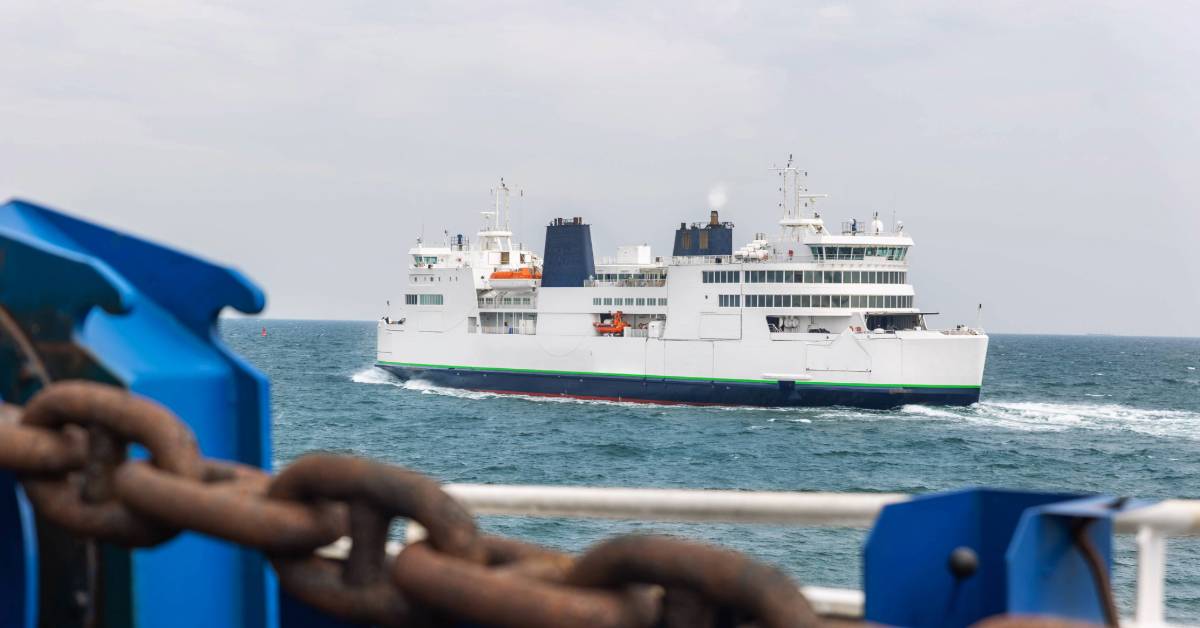
Denmark’s ferry sector carries around 30 million passengers annually, according to the Danish Ferry Association, yet relies on a relatively small workforce to keep every crossing running. Behind a short passage to Fur island sits an ageing, male-dominated profession where a 24-year-old female navigator represents a rare exception in a sector critical to 37 inhabited islands without fixed links but increasingly hard to staff.
The young woman steering passengers and vehicles across the narrow Limfjord passage between Fur and Branden is part of a shrinking workforce. According to Danish maritime labour reports, the officer workforce on domestic passenger vessels has aged steadily over the past decade, with the average age now pushing 50. Around one in five Danish ship officers are women, compared with roughly one quarter across the EU overall, according to reports from EMSA and Danish Shipping. For Jutland islands like Fur, that gap matters. When a navigator calls in sick, school children, commuters and emergency services cannot cross.
Ferries Are Public Infrastructure, Not Private Boats
Denmark has 37 inhabited islands without bridges or causeways, according to Ministry of Transport island support documentation. Ferries are their primary link to jobs, schooling and healthcare on the mainland. The Fur to Branden route operates under a public service obligation contract between Skive Municipality and Region Midtjylland, which commits both authorities to maintaining regular year-round service. Danish transport policy treats PSO ferries as extensions of the national road network, not optional extras.

That designation comes with strings. A 2019 amendment to the Transport Act, as published on Retsinformation, tied public subsidies to safety and staffing standards. Operators must employ appropriately qualified personnel under Danish Maritime Authority regulations. Navigators must hold an appropriate certificate of competency, such as Officer in Charge of a Navigational Watch or an equivalent restricted domestic certificate, and must undertake recurrent safety and emergency training at specified intervals. Short routes are deceptively demanding: frequent docking, tight passages, constant passenger interaction and strong Limfjord currents.
Recruitment Gaps Threaten Reliability
Industry reports from Danish Shipping warn that retirements could outpace new entrants by 2030 if training and outreach do not improve. According to those same reports, employment has declined as some routes closed, merged or automated. Smaller operators struggle to attract young officers to rural areas. Fur’s service is vital to island life but less visible than international shipping.

At the same time, ferries are becoming more complex. National climate policy, under Denmark’s Climate Act, aims to cut overall greenhouse gas emissions by 70 percent by 2030, and domestic ferries are included among the sectors targeted for major reductions. Several electric or hybrid ferries have entered service on short domestic routes since 2015. Crew must learn new operational procedures, battery management and safety protocols. Meanwhile island support budgets have increased significantly compared with a decade ago, according to Ministry of Transport island support agreements, but stricter qualification requirements and rapid technological change can deter candidates who might otherwise consider local maritime careers.
What This Means for Internationals
Domestic ferry work is legally classified as employment in Denmark if the vessel is Danish flagged and operates between Danish ports. EU, EEA and Swiss citizens need a residence document for stays longer than three months. Non-EU nationals require a residence and work permit, typically tied to a specific job contract. The Danish Maritime Authority recognizes some foreign certificates under international conventions but may demand supplementary training for domestic restricted certificates.

Language is a practical barrier. Crew handle safety announcements, coordinate vehicle loading and interact constantly with passengers, almost always in Danish. Maritime training is available in English at some academies, but smaller operators recruit locally and expect Danish fluency. In Skive Municipality, which includes Fur, 7.5 percent of residents were foreign nationals in 2024, below the national average of 11.1 percent, according to Statistics Denmark population tables FOLK1A and FOLK1P. Sector reports indicate that most crew on domestic ferries are residents in Denmark.
Getting a Foot In
Prospective workers should check certificate recognition with the Danish Maritime Authority, explore trainee positions with regional operators and municipalities, and invest in Danish language learning. According to SKAT, the expat tax scheme applies only to high-salary positions requiring a minimum of around DKK 78,000 gross per month, which is typically well above entry-level ferry crew pay. Practical details on residence permits and employment rights are on the Life in Denmark portal.

Denmark’s island ferries are quiet infrastructure. They do not make headlines until they stop running. Behind every reliable crossing is an ageing group of qualified navigators and relatively few younger recruits, like Fur’s young female navigator, keeping the boats moving and the islands connected.