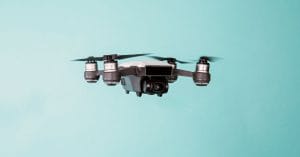
Danish authorities logged 107 illegal drone flights near airports in 2025, up from 92 the year before. That official count reveals a rising security problem far broader than this week’s airspace closures.
The headline news this week is another round of drone sightings that briefly shut down Danish airspace. But the real story is in the numbers. Denmark’s Civil Aviation and Railway Authority recorded 107 illegal drone flights near airports last year, a jump of more than 15 percent from 2024. That pattern explains why officials treated this week’s incidents as a security threat rather than a one-off nuisance.
From airports to military bases
The latest cluster of drone activity moved beyond civilian aviation. Multiple military installations reported unauthorized drones in late September 2025, including Karup air base. That shift prompted a harder response. Denmark banned all civilian drone flights nationwide from Monday to Friday during the security period.
The timing matters. Copenhagen Airport had already closed for nearly four hours earlier that month after drone sightings triggered an airspace shutdown. Oslo also saw a brief closure the same night, suggesting the threat was not limited to Denmark.

Professional but unidentified
Danish officials called the activity a hybrid attack and described the actor as professional. But they stopped short of formal attribution. The Defence Minister told reporters the incidents looked coordinated, yet authorities said they lacked concrete evidence linking the drones to any foreign power.
Russia’s embassy in Copenhagen dismissed the allegations as absurd speculations. That leaves the investigation open and the risk model uncertain. For anyone living or traveling here, the practical consequence is that airspace restrictions can appear suddenly and last for hours.
The data behind the disruptions
Denmark is not alone. Germany’s air navigation service recorded 192 drone-related airport disturbances in 2025, up from 141 the previous year. Across Europe, drone incidents at airports quadrupled between January 2024 and November 2025, according to fact-checking data from Euronews.
Denmark’s count is smaller in absolute terms, but the increase is proportionally sharp. And the shift from airports to military sites suggests the problem is evolving beyond aviation safety into national security.

What it means for expats and travelers
If you fly drones in Denmark, the message is clear. Airport-adjacent airspace is tightly regulated even in normal times. During security alerts, civilian operations can be banned outright. The Danish Civil Aviation Authority requires incident reporting through ECCAIRS 2, and operators are expected to stop flights immediately if a security concern arises.
For travelers, the lesson is equally blunt. A drone sighting can ground flights for hours. Check with your airline and the airport directly rather than assuming the disruption will clear quickly. The September closures affected both departures and arrivals, and passengers had little advance warning.
No quick fix
The investigation continues, but the official response is already shifting from reactive closures to proactive restrictions. That may mean more temporary bans or tighter airspace rules in security-sensitive zones. The lack of a named suspect makes it harder to predict when the pattern will end.

I have lived in Denmark long enough to know that security concerns here are taken seriously and quietly. The fact that authorities escalated from airport closures to a nationwide drone ban without naming an adversary tells you how seriously they view the threat. The 107 logged flights give that threat a measurable shape, and the upward trend suggests it is not going away soon.