Denmark’s intelligence service has for the first time included the United States as a negative factor in its annual threat assessment. Yet, the agency stresses that the U.S. remains Denmark’s closest ally despite growing uncertainty in global power dynamics.
FE Acknowledges a New Dilemma in Alliance with the U.S.
Denmark’s Defense Intelligence Service (FE) released its latest “Udsyn” report, describing the external conditions shaping the Kingdom of Denmark’s security outlook. For the first time, the assessment identifies the United States as a partly negative component in the threat landscape for Denmark.
According to the report, Washington’s increasing focus on the Pacific region has created uncertainty about its role as “the primary guarantor of security in Europe.” At the same time, FE emphasizes that the U.S. remains Denmark’s closest and most important ally.
On one hand, Denmark and other European nations rely heavily on American security guarantees, especially within NATO. On the other hand, the U.S. now takes a more self-centered approach to foreign policy, using its economic and technological power as leverage even against allies. This duality, FE notes, reflects a growing complexity in transatlantic relations and underlines why Denmark must strengthen its defense policy across political and strategic dimensions.
The Most Serious Threat Environment Since the Cold War
Overall, the report concludes that Denmark faces the most severe threat landscape since the end of the Cold War. The assessment points primarily to Russia’s aggressive behavior in Europe and its ongoing war against Ukraine. FE warns that Moscow is rebuilding its capabilities and could attack elsewhere in Europe once the war in Ukraine ends or reaches a frozen state.
Power balances are shifting globally, and uncertainty about future American engagement in European defense adds to the security strain. China and Russia, according to the report, form the core of a group of nations aiming to reduce the influence of the West, especially that of the United States.
Growing Risks in the Arctic and Across the Realm
FE also highlights that rising competition between Russia, China, and the United States extends into the Arctic. This rivalry has increased the risk of espionage, cyberattacks, and influence operations targeting all parts of the Kingdom of Denmark, including Greenland and the Faroe Islands.
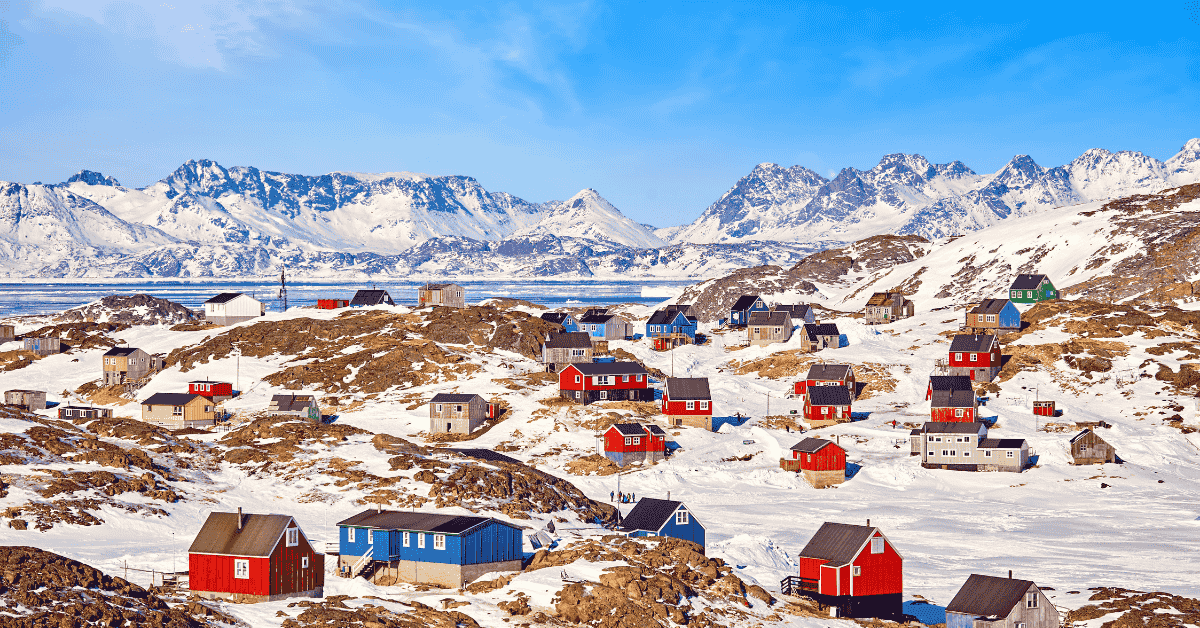
The United States has shown steadily growing interest in Greenland in recent years. From Washington’s perspective, Greenland is strategically vital to maintaining a dominant North American position in Arctic security affairs. However, this attention raises questions in Copenhagen about how closely American and Danish interests align in the region.

A Need for Stronger Strategic Self-Reliance
Denmark’s dependence on U.S. defense capabilities remains a core tenet of its national security. Still, FE’s findings suggest that Denmark must adapt to a more unpredictable ally. The country is considering new defense investments and political cooperation strategies with European partners to reduce vulnerability to changes in Washington’s international priorities.
This shift fits within a broader European debate about strategic autonomy. While NATO remains the cornerstone of Danish defense, leaders in Copenhagen acknowledge that Europe’s security environment is evolving, and past assumptions about permanent American engagement can no longer be taken for granted.
Implications for Greenland and the Entire Kingdom
Greenland’s strategic location places it at the center of this geopolitical contest. The island’s growing exposure to U.S. and Chinese interest reinforces Copenhagen’s argument for unified defense planning across the Danish Realm. Balancing national sovereignty, regional interests, and partnership obligations has become a crucial test for Danish diplomacy and Arctic policy.
At the same time, the tension between dependency and independence echoes Greenland’s own discussions about autonomy. As FE observes, security concerns and foreign power attention complicate these conversations, highlighting issues also explored in Denmark’s political perspective on Greenland’s independence.

Looking Forward
Even though FE’s report paints a sobering picture, it also underscores Denmark’s confidence in its long-term alliance with the United States. The intelligence service expects continued close cooperation while recognizing the need to safeguard Danish and European interests in a changing world.
The challenge now is maintaining trust within NATO, strengthening regional partnerships, and ensuring that Denmark has the defense resilience and political strategy to navigate future uncertainties.
Sources and References
The Danish Dream: The real reason Denmark needs stronger defence strategy now
The Danish Dream: What’s stopping Greenland from gaining independence from Denmark, Danish perspective
DR: Til trods negativ omtale af USA fastholder FE-chef: USA er stadig Danmarks tættest allierede