
President Trump’s controversial Golden Dome Project has put Greenland at the center of American strategic planning. Experts explain why the island’s location, atmospheric conditions, and geography make it crucial for Trump’s vision of ultimate American security, even as critics call the project unrealistic.
Why Greenland is key to Trump’s Golden Dome Project
When Donald Trump unveiled his Golden Dome missile defense system last spring, critics dismissed it as economically unrealistic and pure fantasy. But for Trump, the dream remains very much alive, and it places Greenland squarely in the crosshairs of American strategic planning. In fact, the U.S. defense strategy mentions Grønland multiple times as a key area.
The question remains: why has Trump singled out Greenland as an optimal location for his ambitious missile defense project? According to experts, the answer lies in three key factors involving geography, atmospheric science, and presidential ambition.

Greenland Lies Directly on the Missile Path
Anyone who has flown from Denmark to New York knows the route typically passes over Greenland. That’s because it represents the shortest distance between the two points. The same principle applies to potential missile trajectories, explains Rasmus Sinding Søndergaard, a senior researcher at DIIS who specializes in U.S. foreign policy.
Because Earth is a sphere, missiles don’t travel around the globe like a car following a road. Instead, they take the most direct route, which means flying over Greenland represents the shortest path between potential adversaries and the United States.
From a traditional flat world map, this might not seem obvious. However, when viewed on a globe, Greenland sits strategically between the United States on one side and Europe and Russia on the other. The shortest route from China and Russia to the U.S. passes directly over or near Greenland.
Therefore, according to Trump’s logic, Greenland offers the best location to establish capabilities for detecting and neutralizing incoming missiles. The U.S. already maintains a military presence in Greenland through Pituffik Space Base, which currently uses the island’s strategic location to monitor potential missile threats.
The Northern Route for Potential Threats
Military planners have long understood that any attack on the continental United States from adversaries like Russia or China would likely come over the Arctic. This makes Greenland’s position invaluable for early warning systems and defensive capabilities. Establishing additional defensive infrastructure on the island would simply extend existing strategic advantages.

Atmospheric Conditions Create Ideal Communication Environment
The Golden Dome project relies on a network of satellites positioned both on Earth and in space. For effective communication with orbital satellites, the area around Greenland and the broader Arctic region offers optimal conditions, according to Søndergaard.
Greenland’s cold, dry air creates favorable conditions for satellite communication. This atmospheric clarity allows for better signal transmission between ground stations, such as Pituffik Space Base, and satellites orbiting in space. In fact, there’s far less atmospheric interference compared to more populated or temperate regions like Denmark or New York.
Søndergaard compares this advantage to rocket launches, which also have better success rates from certain locations due to atmospheric and geographical factors. Major Karsten Marrup from the Center for Air and Space Operations at the Danish Defense Academy agrees that Greenland provides an exceptional location for ground stations communicating with satellites.
Clear Signals Through Clean Air – A Prerequisite for the Golden Dome Project
When radio waves travel through the atmosphere, signal clarity improves when there’s less interference. Urban smog, humidity, and atmospheric pollution all degrade communication quality. Greenland’s pristine arctic environment eliminates most of these concerns, providing crystal-clear channels for satellite communication.
Beyond communication advantages, the satellites themselves must be positioned to intercept potential missiles crossing the North Pole. Satellites orbiting over the northern hemisphere offer optimal positioning for this mission. A satellite positioned over the southern hemisphere would struggle to target a missile launched across the Arctic, making Greenland’s northern location strategically essential.

Presidential Legacy and Ultimate American Security
When Trump sat in the White House last May explaining his Golden Dome plans, he displayed a chart showing the geographical area the missile defense system would protect. The system aims to provide comprehensive coverage for the continental United States and parts of Canada, promising what Trump calls ultimate security.
Søndergaard notes that Trump’s interest in the Golden Dome Project extends beyond pure military strategy. The U.S. defense plan specifically refers to “President Trump’s Golden Dome Project for America,” indicating this represents a personal legacy project for the president.
A Monument to Trump’s Presidency
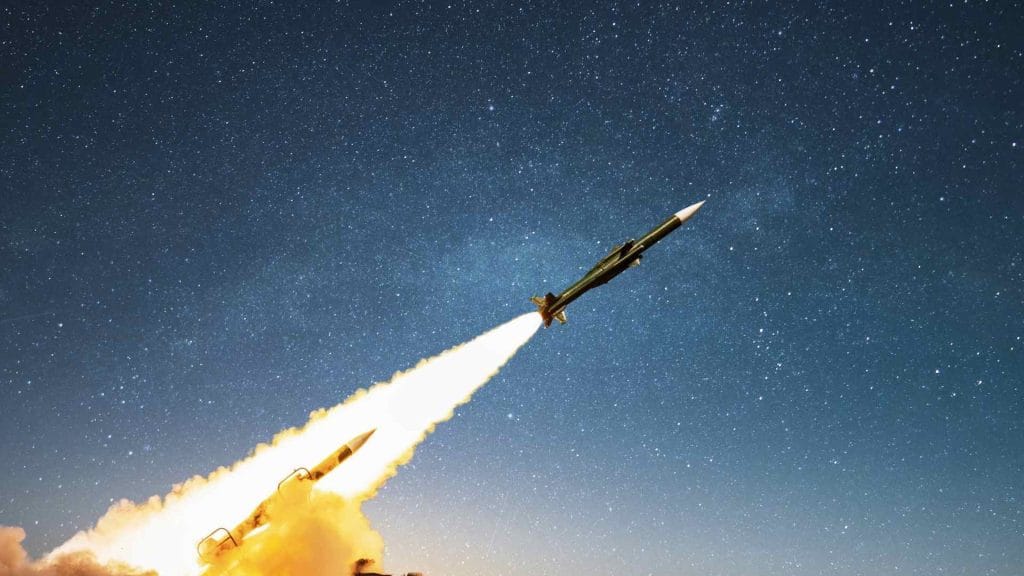
Trump remains deeply focused on cementing his historical legacy. The Golden Dome project, bearing his name, offers an opportunity to position himself as the president who delivered ultimate security to the American people. Successfully gaining control over Greenland while building the missile defense system would represent a major accomplishment by his own standards.
This ambition aligns perfectly with Trump’s “Make America Great Again” mission, according to Marrup from the Defense Academy. However, Marrup points out that an American military base already operates in Greenland. While the island does hold strategic value, Trump may also be manufacturing justifications for expanded involvement in Greenland.
Questions About Global Stability
The Golden Dome project raises significant questions about international security and global stability. If one superpower achieves complete protection from missile attacks, what happens to the delicate balance of deterrence that has prevented nuclear war for decades?
Experts warn that making the United States completely “bulletproof” could paradoxically threaten world peace. Other nations might feel compelled to develop countermeasures or pursue their own defensive systems, potentially triggering a new arms race. The concept of mutually assured destruction has kept nuclear powers in check for generations. Disrupting that balance carries unpredictable consequences.
Despite these concerns, Trump continues pushing forward with his vision. Whether the Golden Dome project ever becomes reality remains uncertain. The project faces enormous technical, financial, and diplomatic hurdles. Nevertheless, Trump’s interest in Greenland shows no signs of fading, driven by the island’s unique strategic advantages and the president’s determination to build a lasting legacy.
Presence in Greenland makes the Golden Dome Project possible
The United States already maintains Pituffik Space Base in northwestern Greenland, the northernmost American military installation. Approximately 650 civilian and military personnel work at the base, which plays a crucial role in missile warning systems and satellite tracking. This existing infrastructure demonstrates America’s long-standing recognition of Greenland’s strategic importance, predating Trump’s current ambitions by decades.
Sources and References
The Danish Dream: Trump Revives Greenland Takeover Talk Sparks Outrage
The Danish Dream: Best Lawyer in Denmark for Foreigners
DR: Derfor mener Trump, Grønland er det optimale hjem for hans Golden Dome