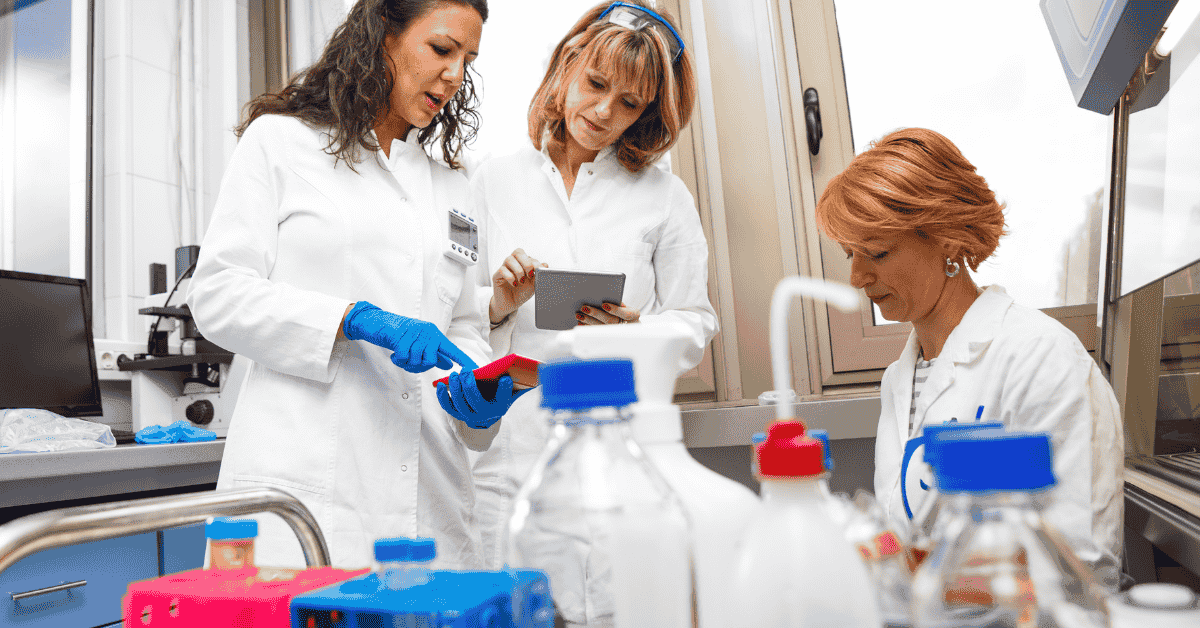
Danish Scientists at the University of Copenhagen have developed a breakthrough technique that transforms plastic waste into a highly efficient material for capturing carbon dioxide. This groundbreaking innovation offers a dual environmental benefit: reducing plastic pollution and contributing to the fight against climate change.
A Circular Solution to Two Global Crises
The world faces two interconnected environmental problems: growing plastic pollution and rising atmospheric CO₂ levels. Now, Danish scientists from the Department of Chemistry at the University of Copenhagen have found a way to tackle both simultaneously by converting waste PET plastic, ubiquitous in water bottles and textiles, into a material that can capture carbon dioxide efficiently.
Every year, about 400 million metric tons of plastic are produced globally, and PET accounts for a significant portion. A high percentage of this ends up in landfills or the oceans, where it breaks down into harmful microplastics. Meanwhile, carbon dioxide emissions continue despite decades of climate agreements, accelerating the planet’s warming. This new invention offers a meaningful step toward solving both problems.
Danish Scientists Turn Trash into a Climate Tool
The innovation centers around a new material called BAETA, created through a chemical process that “upcycles” degraded PET plastic. Chemically treated with ethylenediamine, the BAETA material gains the ability to bind carbon dioxide from the atmosphere or industrial emissions. Laboratory tests show that BAETA is capable of capturing CO₂ as effectively as current market-leading carbon capture technologies.
PET plastic is especially suited to this process because carbon constitutes over 60% of its molecular structure. BAETA takes advantage of this carbon-rich base, harnessing its structural properties to absorb and contain CO₂. The transformation from PET to BAETA can be carried out at room temperature, making it more energy-efficient and environmentally friendly compared to other carbon capture technologies, which often require high temperatures and toxic solvents.
Functional and Scalable for Industrial Use
BAETA is created in powder form and can be compacted into small pellets. These pellets are then used in industrial settings by attaching them to smokestacks and exhaust systems to trap carbon dioxide before it’s released into the atmosphere. Once the material becomes saturated with CO₂, it can be regenerated through a controlled heating process that releases the gas for storage or repurposing. After regeneration, BAETA regains its original effectiveness and can be reused multiple times.
One of the standout features of this technology is its flexibility. BAETA performs well across a wide temperature range, from room temperature up to 302°F (150°C), making it suitable for integration into various industrial systems where exhaust gases tend to be hot.
From Lab to Market
The research team is already planning the next phase: scaling up production for commercial applications. Producing BAETA in tons rather than grams will be essential to meet industrial demand. The researchers are currently seeking investors and strategic partners to help commercialize the product, aiming to deploy the material in full-scale carbon capture facilities.
The material is especially well-suited for processing degraded or low-quality PET plastic, which is typically unsuitable for conventional recycling. In this sense, BAETA complements rather than competes with existing recycling strategies. Instead of discarding non-recyclable plastics, these can now be transformed into a high-value tool for climate protection.
Environmental and Economic Incentive
The technology opens up an economic incentive to remove PET waste from the environment, particularly from the ocean, where large amounts of plastic continue to accumulate. Once collected, this waste could serve as a raw material for producing BAETA, adding financial motivation to environmental clean-up efforts globally.
This research is financially supported by the Novo Nordisk Foundation’s CO₂ Research Center in collaboration with Aarhus University. The study was recently published in the peer-reviewed journal Science Advances.
What’s next for Danish Scientists
With approximately 8 million tons of plastic entering the oceans annually, and global CO₂ emissions exceeding 36 billion metric tons per year, technologies like BAETA could significantly alter the trajectory of environmental degradation. The successful utilization of plastic waste for carbon capture not only addresses immense ecological problems but also positions Denmark as a pioneer in sustainable chemistry and circular innovation.