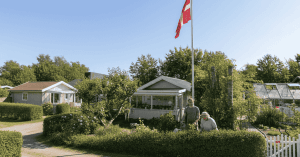
New figures suggest that Danish households are finally feeling a bit of financial relief. Fewer people now classify as economically vulnerable, and economists expect the positive trend to continue into 2026.
Fewer Danish Households Struggle Financially
The latest survey from Statistics Denmark shows that economic conditions for Danish households are improving. According to the annual living conditions report, 8.3 percent of Danes now fall into the category of economically vulnerable, down from 9.5 percent the previous year. The study, based on interviews with nearly 6,000 households, reflects how people perceive their own financial situation.
Interestingly, the improvement appears broad-based. Many wage earners have seen higher pay in recent years, and those living on public benefits are also beginning to feel some relief. Together with the slowdown in inflation, lower interest rates, and steady employment, Danes have slightly more room in their budgets again.
Denmark’s economy continues to show resilience, contributing to this gradual improvement in private finances.

Lower Inflation and Falling Interest Rates Ease Pressure
Inflation in Denmark has slowed to about two percent after sharp price increases in 2022. Together with falling interest rates, that shift helps reduce household expenses on mortgages and consumer debt. Even so, not everyone feels the effect right away. Some Danes, especially families relying on welfare or low incomes, lost much of their purchasing power during the price hikes of recent years.
Because of that, many still feel stretched. Charities have reported that record numbers of families continue to request Christmas assistance, showing that financial strain persists for several groups despite the general recovery.
What It Means to Be Economically Vulnerable
In Denmark, being classified as economically vulnerable means experiencing at least three of five specific financial hardships. These include being unable to afford a week’s vacation away from home, paying an unexpected bill of 10,000 kroner, owning a car, paying regular bills on time, or making money last until the end of the month.
The survey found that 20 percent of respondents cannot cover an unplanned expense of that size, while one in eight struggle to make ends meet. Eight percent cannot afford a car, 14 percent cannot pay for a vacation, and six percent face problems covering their bills. Such numbers show that although conditions are improving, many families continue to live with tight budgets.
Still a Long Way to Real Financial Stability
While the share of vulnerable households is lower than last year, it remains above the levels seen before the inflation surge in 2022. Back then, about seven percent were in economic difficulty. The current figure around eight percent is roughly average for the past decade, which means the latest development is encouraging but not exceptional.
On the other hand, economists believe the positive direction will strengthen in 2026. Predictions of further benefit increases and stable prices suggest continued growth in real income. As public programs adjust to inflation, more households on fixed incomes are expected to catch up with cost-of-living pressures.
For most Danes, economic confidence grows when everyday costs stay predictable. Lower borrowing costs also support housing stability and consumer spending. When people face fewer surprises in their budgets, they tend to save and plan more effectively, creating a healthier economy overall.

Outlook for 2026: Gradual and Steady Progress
Experts expect that the coming year will continue this slow but steady progress for Danish households. Export growth and stronger employment figures further reinforce optimism. While challenges remain for lower-income families, trends point toward a more balanced and stable national economy.
In the end, the data reveal that Danish households are cautiously recovering from the financial turbulence of recent years. Relief may be gradual, but it is evidently gaining momentum across much of the population.
Sources and References
The Danish Dream: Denmark’s Economy Rebounds with Strong Export Growth
The Danish Dream: Banking in Denmark for Foreigners (Updated 2025)
DR: Pilen peger i den rigtige retning for danskernes økonomi, vurderer privatøkonom