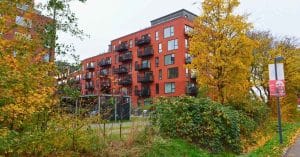
Copenhagen’s apartment prices stood completely still in July after two years of record gains, marking the first pause in a market that has seen prices surge more than 40 percent since 2024.
The numbers are stark. Zero percent growth. Not a krone up, not a krone down. After months of gradually slowing increases, Copenhagen’s apartment market hit the brakes in July 2026. Both Copenhagen Municipality and Frederiksberg recorded 0.0 percent price changes from June to July, according to new data from Boligsiden’s Market Index.
This is what a soft landing looks like. Or at least what we hope is a soft landing.
The pause arrives at a record high plateau
The stagnation comes after an extraordinary run. Prices are still 21 percent higher than a year ago. The average square meter price in Copenhagen now hovers around 58,000 kroner, nearly double the national average. In the first half of 2026 alone, Copenhageners bought apartments worth 20.5 billion kroner, almost half the national total.
I have watched this market for years. The speed of the rise has been unsettling. Friends who saved diligently found themselves priced out within months. The psychology shifted from “can I afford this?” to “will I ever afford anything if I wait?”

Birgit Daetz, housing economist at Boligsiden, frames the shift as a rebalancing. “After a long period with strong price increases, there is now more calm in the apartment market in Copenhagen,” she notes. Supply has grown while demand has cooled slightly. Buyers now have options, and that changes everything.
Why the sudden stop?
Three forces converged. First, more apartments hit the market. Finans Danmark reports a noticeable increase in listings across Copenhagen and Frederiksberg, giving buyers breathing room they haven’t had in two years.
Second, the price level itself became a brake. When apartments in Christianshavn and Indre By push past 70,000 kroner per square meter, even well paid professionals hit their limits. Banks tightened lending standards after the National Bank warned in June that excessive price growth “underscores the need for sound credit principles.”

Third, expectations shifted. Nykredit’s latest forecast predicts apartment prices nationwide will rise only 2 percent in 2027 and 3 percent in 2028, a dramatic slowdown from the double digit gains of recent years. When buyers stop expecting endless appreciation, they stop bidding over asking price.
The National Bank’s analysis was blunt. Copenhagen prices in April stood more than 40 percent above the level two years earlier. That kind of speculation driven growth, the bank warned, increases vulnerability to rate shocks or economic downturns.
The rest of Denmark tells a different story
While Copenhagen paused, Aarhus apartment prices climbed 2.0 percent in July alone. Nationwide, house prices continue rising at a steady clip. The average Danish house now costs over 20,000 kroner per square meter for the first time, crossing a symbolic threshold.
This split reveals something fundamental about Denmark’s housing market. Copenhagen operates in its own reality, detached from provincial rhythms. The capital absorbs international money, high earners, and speculative energy in ways Aarhus or Aalborg simply do not.

For expats, this matters enormously. If you work in Copenhagen, you face a market that has become punishingly expensive and may now stagnate at that high level. If you settle in Aarhus or beyond, growth may continue but at more manageable levels.
What comes next
One month does not make a trend. July could be a summer blip, or it could mark the end of Copenhagen’s apartment boom. The data suggests the latter, but the uncertainty is real.
What is certain is that the easy money has been made. Sellers who bought in 2024 and expected another year of 20 percent gains will be disappointed. Buyers who waited now face a choice: jump in while momentum stalls, or wait for possible declines that may never come.

I spoke with a colleague recently who has been renting in Nørrebro for five years, saving obsessively. She said the July numbers gave her the first glimmer of hope she has felt in months. Not because prices fell, but because they stopped accelerating away from her.
That is the emotional reality behind these statistics. For many of us who live here, homeownership in Copenhagen has felt like chasing a train that keeps speeding up. The train has not reversed. But for the first time in two years, it has stopped accelerating.
Sources and References
The Danish Dream: Exploring Danish Architecture Copenhagen
The Danish Dream: Cycling in Copenhagen A Comprehensive Guide
The Danish Dream: Shopping in Copenhagen Comprehensive Guide Expats
Ritzau: Lejlighedspriserne står stille i København