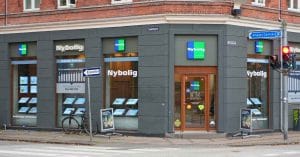
A young couple with steady jobs and two children was rejected by four Danish banks when trying to buy an affordable home in rural Vestjylland. They could only secure their dream house in Harboøre by borrowing from family, highlighting growing tensions over lending rules in Denmark’s rural areas.
When Banks Say No to Rural Dreams
Jesper Jacobsen and his wife both work full time. They have stable incomes, two children, and enough savings for a down payment. Yet four banks refused to lend them money for a house in the small coastal town of Harboøre in western Jutland.
The couple wanted to borrow 750,000 kroner. The house itself cost 590,000 kroner, with the rest earmarked for renovations. One bank told them they could easily borrow two million kroner if the house were located in Lemvig, the nearest larger town. But that was not where they wanted to live.
A Family Member Steps In
Eventually, a family member became so frustrated with the situation that he offered to lend them the money himself. The couple accepted, grateful for the opportunity but troubled by the principle. They now have a better interest rate than any bank offered and will be debt free in 13 years instead of 30.
Still, Jesper Jacobsen believes something is fundamentally wrong with a system that forces people to rely on family loans. He points out that their disposable income was adequate and they had saved enough for the down payment. The only problem was the location.
Not Alone in Their Struggle
This couple’s experience reflects a broader pattern across rural Denmark. In recent years, banks have become increasingly reluctant to finance homes in less populated areas. They view properties in these locations as poor investments, regardless of the buyer’s financial stability.
The rejection often has nothing to do with whether applicants can afford monthly payments. Instead, banks worry about property values declining in areas with shrinking populations. This creates a catch-22 situation where rural communities struggle to attract new residents because financing is unavailable.
The Numbers Behind the Rejections
Danish banks have significantly tightened lending standards since 2023. Following inflation spikes and regulatory reforms, financial institutions now prioritize risk reduction over market access. This shift has hit young buyers particularly hard.
Youth Face Steeper Barriers
Approximately 20 to 25 percent of first-time homebuyers under 30 faced loan rejections in 2025. Financial regulations require down payments of 5 to 10 percent and limit debt-to-income ratios to four or five times annual income. These rules aim to prevent the over-indebtedness that contributed to past financial crises.
According to recent data from Finans Danmark, 60 percent of young Danes between 18 and 29 carry consumer debt averaging 25,000 kroner. Only 12 percent of people aged 18 to 24 have savings exceeding 50,000 kroner. These figures help explain why banks remain cautious about lending to younger applicants.
Denmark’s Household Debt Challenge
Denmark has the highest household debt-to-GDP ratio in the European Union at 295 percent. This creates significant concerns for regulators and financial institutions. About 15 percent of borrowers under 30 occasionally miss payments, reinforcing bank reluctance to extend credit.
The average age for first-time homeownership has risen from 28 in 2010 to 32 today. Young people increasingly depend on family assistance or remain in rental housing longer than previous generations. In Copenhagen, the average first home costs 2.5 million kroner, making entry into the property market even more challenging.
Political Solutions Emerge
Several political parties acknowledge the problem but disagree on solutions. The debate centers on whether to introduce state guarantees or relax existing regulations. Each approach carries different implications for both buyers and the broader financial system.
State Guarantees Versus Flexible Rules
The Social Democrats propose expanding a loan guarantee program to cover 100 percent of mortgages in rural areas. Their candidate Katrine Evelyn Jensen argues that banks have a social responsibility to serve all parts of Denmark. She acknowledges that banks need to protect their investments but insists that qualified buyers should not face rejection based solely on location.
The Moderates and Venstre favor a different approach. They want to ease the regulations imposed after the 2008 financial crisis. Morten E. G. Brautsch from the Moderates argues that post-crisis tightening went too far. He believes more flexible rules would help people like the Jacobsen family secure financing without requiring state intervention.
Industry Pushes Financial Education
Finans Danmark, representing banks and credit institutions, denies treating rural and urban buyers differently. They report that nine out of ten mortgage applications succeed nationwide, with rejections based primarily on financial factors rather than location. However, they acknowledge that borrowers perceive geographic discrimination.
The organization supports establishing a working group to examine whether lending rules are unnecessarily rigid. Meanwhile, they promote financial literacy through programs like Pengeuge, or Money Week, which reaches over 50,000 students in grades seven through ten each year. This initiative aims to build savings habits and debt awareness from an early age.
Why Banks Refuse Rural Mortgages
Banks base lending decisions on risk assessments that weigh property values against loan amounts. In rural Denmark, declining populations and limited economic growth create concerns about future property values. Even when buyers demonstrate financial stability, banks worry about recovering their investment if borrowers default.
The Urban-Rural Divide Deepens
Urban property values have increased by roughly 8 percent annually in recent years. Rural areas show flat or declining values. This disparity makes rural properties less attractive as collateral. Banks can lend larger amounts for urban properties because they expect values to rise or at least remain stable.
Harboøre, where the Jacobsen family wanted to buy, has just 1,300 residents. The nearest town, Lemvig, has about 6,700 people. The entire municipality counts 18,800 inhabitants. Small population centers face demographic challenges as young people move to cities for education and employment.
Regulatory Framework Constrains Flexibility
Financial stability regulations updated in March 2023 limit housing costs to 45 percent of income for new loans. These rules give banks little room for exceptions based on local knowledge or individual circumstances. The regulations emerged from concerns about household debt levels and aim to prevent defaults during economic downturns.
Critics argue these blanket rules fail to account for lower living costs in rural areas. While a Copenhagen resident might struggle with housing costs at 45 percent of income, someone in Harboøre faces much lower expenses for other necessities. The regulations do not distinguish between these different economic realities.
The Case for Strict Lending Standards
Supporters of current regulations emphasize the risks of loosening lending standards. Denmark’s extremely high household debt makes the economy vulnerable to interest rate increases or economic shocks. Protecting young buyers from taking on unmanageable debt serves their long-term interests, even if it frustrates short-term homeownership goals.
Preventing Another Financial Crisis
The 2008 financial crisis stemmed partly from lax lending standards that allowed people to borrow more than they could realistically repay. Danish regulators learned from that experience and implemented safeguards. These protections have helped maintain financial stability even as other European countries struggled.
The 15 percent delinquency rate among young borrowers justifies caution. Banks and regulators worry that easier access to credit would push this figure higher. Defaults harm not only individual borrowers but also financial system stability. In a country with such high household debt, even small increases in defaults could trigger broader problems.
Education Over Easy Credit
Financial literacy advocates argue that the solution lies in better money management skills rather than relaxed lending. Young people who understand budgeting, savings, and debt management make better borrowing decisions. Programs targeting students before they enter the housing market may prevent future problems.
However, education alone cannot solve the challenge facing rural areas. Even financially savvy buyers cannot overcome bank policies that categorically view rural properties as poor investments. The Jacobsen family demonstrated financial responsibility but still faced rejection. This suggests that factors beyond individual capability drive the problem.
A Personal Take
I find myself torn on this issue. On one hand, the Jacobsen family clearly had the financial capacity to handle a modest loan, and denying them based purely on location seems to undermine rural Denmark’s future. If young families cannot settle in these areas, the demographic decline becomes a self-fulfilling prophecy. On the other hand, I understand why banks hesitate after seeing household debt reach 295 percent of GDP. Loosening standards could expose vulnerable borrowers to risks they do not fully appreciate, especially if interest rates rise again.
Sources and References
The Danish Dream: Best Bank for Home Loan in Denmark
The Danish Dream: Mortgage in Denmark for Various People
The Danish Dream: How to Buy a House in Denmark
The Danish Dream: Best Mortgage Loan in Denmark for Foreigners
DR: Ungt par fik nej i fire banker: Det kan ikke passe man er nødt til at låne af familien
Finans Danmark