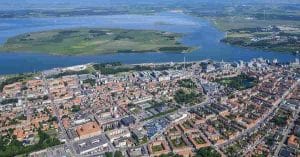
Amagertorv is the beating heart of Copenhagen, a medieval marketplace turned design pilgrimage on Strøget, anchored by the Stork Fountain and a famous pentagonal stone floor.
Amagertorv: Copenhagen’s Most Central Square Explained
After years of walking past Amagertorv almost daily, I still slow down when I cross it. The square sits at the dead center of Copenhagen’s inner city, halfway along Strøget. It is small, irregular, and quietly confident about its place in Danish life.
Most tourists do not even register they have arrived. They are too busy looking at the shop windows of Royal Copenhagen or eating ice cream by the Stork Fountain. Yet this little plaza has been the social engine of the city for more than 700 years.
Where Amagertorv Sits in the City
Amagertorv lies in Indre By, the old fortified core of Copenhagen. It forms part of Strøget, the 1.1 kilometer pedestrian spine. The street links Rådhuspladsen to Kongens Nytorv in a near straight line.
You will find it sandwiched between Højbro Plads and Gammeltorv. If you are cycling in Copenhagen, leave the bike behind, since the whole zone is car free and bike free. The closest metro stop is Gammel Strand, with Kongens Nytorv a short walk east.
A Medieval Marketplace That Refused to Die
The name tells you everything. “Torv” means square, and “Amager” refers to the flat farming island just south of the harbor. Farmers from Amager rowed across with vegetables, dairy, and grain, then set up stalls right here.
From Dutch Farmers to Royal Decrees
In the 1500s, King Christian II invited Dutch settlers to Amager to improve farming. Their descendants supplied Copenhagen with food for centuries. The square became the official wholesale market for their produce.
By the time of the British bombardment of 1807, Amagertorv had already survived plague, fire, and war. The Great Fire of 1795 leveled much of the surrounding neighborhood. The Neoclassical buildings you see today, like the elegant Amagertorv 11, were rebuilt between 1798 and 1802.
How a Market Became a Living Room
Strict market regulations were lifted in the 19th century, and the produce stalls eventually moved out. What replaced them was a new kind of square, half commerce and half theater. Today it functions as the city’s outdoor living room, a stage for buskers, protesters, midwives, and shoppers.
I have watched Greenpeace activists, climate strikers, and even a roaming brass band claim this space within a single afternoon. The square absorbs everything and remains, somehow, Danish.
The Stork Fountain: More Than a Pretty Photo Op
If Amagertorv has a single icon, it is Storkespringvandet, the Stork Fountain. The bronze birds have stood here since 1894. They were a silver wedding gift to Crown Prince Frederik, later Frederik VIII, and Crown Princess Louise.
The Midwife Tradition Nobody Tells Tourists About
Here is the quirky local detail. Newly graduated Danish midwives traditionally dance around the fountain on the day they qualify. Some even wade into the basin, despite repeated municipal pleas to stop.
The ritual ties the storks, ancient symbols of childbirth, to the women who deliver Denmark’s babies. It is one of those small customs that makes the Danish monarchy and Danish civic life feel weirdly intimate. Tourists snap photos. Locals smile knowingly.
The Famous Pentagonal Pavement
Look down. The floor of Amagertorv is one of the most photographed surfaces in Scandinavia. It was designed in 1993 by the Danish artist Bjørn Nørgaard, working with the Office of the City Architect.
Why That Floor Won a Design Award
The pavement uses pentagonal granite stones in five colors, fitted into a complex geometric pattern. According to Danish Design Review, the project won the City of Copenhagen’s prize for architecture in 1994. It was one of the first major Danish public spaces designed using CAD software.
You cannot replicate this look anywhere else in Copenhagen. The pentagons echo Nørgaard’s lifelong fascination with sacred geometry. They also handle bicycle wheels and high heels better than the wobbly cobblestones outside the National Museum.
Shopping at Amagertorv: Danish Design in One Block
If you came to Denmark partly to shop in Copenhagen, this is your spot. The square concentrates more Danish design heritage per square meter than anywhere else in the country.
The Big Three Design Houses
Royal Copenhagen has anchored the corner since 1911. Next door, Georg Jensen sells the silver designs that defined 20th century Nordic style. Illums Bolighus, just steps away, stocks every iconic Danish object you have ever seen on Instagram.
The Danish outerwear brand Rains opened a flagship here too. As reported on the Rains site, the store was completely redesigned to celebrate the square’s natural light. Even fast moving brands treat Amagertorv as prestige real estate.
The Café Norden Question
The big yellow building on the corner houses Café Norden. It is touristy. The prices are steep. The Danish pastries are not the best in town.
That said, the upstairs window seats overlooking the square are worth one overpriced coffee. For better pastry, walk five minutes to one of the best bakeries in Copenhagen. Sankt Peders Bakery on Sankt Peders Stræde is my personal pick.
What Expats Should Know About Amagertorv
Living here changes how you see the square. For visitors, it is a postcard. For residents, it is a route to work, a meeting point, and occasionally an obstacle course of tour groups.
The Crowds Are Real
According to VisitDenmark, Denmark recorded 65.2 million overnight stays in 2024, up 2.3 percent year on year. A large share of those visitors funnel through Strøget and Amagertorv. In July, the square can feel like a Tokyo train platform.
I avoid it between 11am and 4pm in summer. Early morning, just after the shops have set out their A frames, is the only time you can really feel the place breathe. Sunday mornings in February are even better, though you need a coat.
Practical Tips From Someone Who Lives Here
A few honest suggestions for making the visit count:
- Go early or go late. Before 10am or after 8pm beats the crowds.
- Look up. The Neoclassical facades above the shopfronts are the real architecture lesson.
- Look down. Photograph the pentagonal pavement. Nobody does, and it is the most unique thing here.
- Skip the souvenir shops. Visit Illums Bolighus or Hay House on Østergade instead.
- Sit on the fountain steps. It is free, it is central, and it is the most Danish thing you can do.
Combining Amagertorv With Other Sights
The square is a hub, not a destination on its own. You can hit five major attractions in a 20 minute walk from here.
A Self Guided Walking Route
Start at Nytorv and walk east along Strøget. Pause at Amagertorv for the fountain and the pavement. Cross Højbro Plads, then turn left to Christiansborg Palace or right toward Nyhavn.
For a longer route, continue to top photography spots in Copenhagen like the Round Tower. The whole loop fits inside one day in Copenhagen. If you want guided context, plenty of guided tours in Copenhagen start nearby.
The Cultural Meaning of Amagertorv for Expats
There is a reason I keep coming back. Amagertorv embodies a specifically Danish idea of public space. It is small. It is functional. It refuses to perform.
Hygge Without the Cliché
You will not find candles and woolen blankets here. The Danish hygge on display is a colder, sharper version. It is the warmth of being in a crowd of strangers who all understand the unwritten rules.
People sit on the fountain steps without speaking. Children chase pigeons. Pensioners read newspapers. Nobody pushes, nobody performs. After ten years here, that quiet civic confidence still moves me.
Why It Matters for Newcomers
If you are new to Denmark, spend an afternoon here just watching. You will learn more about Danish social codes in two hours than from any book. The personal distance, the casual elegance, the refusal to be impressed by anything: it is all on display.
It is also a useful piece of Danish architecture in Copenhagen to anchor your mental map. Once you can find Amagertorv from any direction, you have basically conquered Indre By.
Frequently Asked Questions About Amagertorv
What does Amagertorv mean in English?
Amagertorv means “Amager Square” in English. The name comes from the farmers of the nearby island of Amager. They sold their produce here starting in the Middle Ages.
Where is Amagertorv located?
Amagertorv sits in the middle of Strøget in central Copenhagen. It is in the Indre By district, the historic core of the city. The nearest metro station is Gammel Strand, with Kongens Nytorv a short walk away.
What is the Stork Fountain at Amagertorv?
The Stork Fountain, or Storkespringvandet, is a bronze sculpture from 1894. It was a silver wedding gift to Crown Prince Frederik and Crown Princess Louise. Newly graduated Danish midwives traditionally dance around it.
Who designed the pavement at Amagertorv?
The pentagonal stone pavement was designed by Danish artist Bjørn Nørgaard in 1993. He worked with the Office of the City Architect. The design won a Copenhagen architecture award in 1994.
Is Amagertorv worth visiting?
Yes, especially if it is your first time in Copenhagen. The square offers history, design, and a free seat by the fountain. It also puts you within a short walk of Nyhavn, Christiansborg, and the Round Tower.
What shops are at Amagertorv?
Royal Copenhagen, Georg Jensen, Illums Bolighus, and Rains all have stores on or beside the square. Café Norden occupies the prominent yellow corner building. Strøget extends in both directions with international brands and Danish boutiques.
When is the best time to visit Amagertorv?
Early morning or evening offers the calmest experience. May through September provides the best weather. December is magical when Strøget lights up for Christmas markets.
Is Amagertorv free to visit?
Yes, the square is a public space with no entry fee. Sitting by the Stork Fountain costs nothing. Only the shops and cafés will charge you anything.
The Final Word on Amagertorv
After years of cutting across this square in every season, I have stopped trying to define it. Amagertorv is a marketplace, a monument, a meeting point, and a mirror. It reflects whatever version of Copenhagen you happen to be looking for.
Visit once and you will photograph the fountain. Visit ten times and you will start photographing the people instead. That, in the end, is what Amagertorv has always done best.