Researchers from the University of Copenhagen have created the first high-resolution map of Europe’s wetlands, pinpointing where Denmark and other EU countries can achieve the greatest climate and biodiversity gains by restoring degraded bogs and marshes before the 2030 deadline.
Denmark has lost more than 75 percent of its wetlands to drainage, farming, and development. Now the country has four years to restore at least 30 percent of what remains in poor condition. That is the target set by the EU’s nature restoration law, which became binding in 2024. But until now, policymakers had no detailed blueprint showing where to focus their efforts.
A new study published in Nature changes that. Researchers from the Global Wetland Center at the University of Copenhagen used satellite imagery and machine learning to map six types of wetlands across 38 European countries at a resolution of 10 meters. The map shows not just where wetlands are, but also their condition and which areas offer the most potential for restoration.
“To meet the restoration target, you need a high resolution map showing the size and type of wetlands, and what is disturbing them today,” says Gyula Mate Kovács, a postdoc at the institute and lead author of the study. “Without that knowledge, it is difficult to assess their real climate effect.”
Peatlands Hold the Biggest Climate Prize
The map points to peatlands as the most important wetland type to restore, especially for climate gains. Peatlands store vast amounts of carbon in their waterlogged soils. When drained for farming, they flip from carbon sinks to major sources of greenhouse gases. In Europe, around one fifth of peatlands are now degraded by human activity. In Denmark, that figure is much higher.

“Peatlands are especially concentrated in Northern Europe and are particularly effective carbon stores,” says Stéphanie Horion, associate professor at the institute and co-author. “But this is also where the potentially largest carbon losses come from.”
The researchers estimate that up to 5 billion tons of CO₂ equivalent have been released from degraded European wetlands. That equals roughly 18 months of the EU’s total emissions.
Denmark’s Wetland Challenge
Denmark sits at the sharp end of this problem. More than three quarters of the country’s wetlands have been drained over centuries, turned into some of Europe’s most productive farmland. The soil is rich, but it bleeds carbon. Restoring even a fraction of these areas means taking land out of agricultural production, a deeply political and divisive prospect.
Under the Green Tripartite agreement, Denmark has pledged to rewet 140,000 hectares of drained peatland and surrounding areas. A new national subsidy scheme launched in 2026 consolidates support for wetland and lowland projects, aiming to simplify bureaucracy for municipalities and landowners. But the pace remains slow, and resistance from parts of the farming sector is real.
I have watched this debate unfold for years. The friction is not just about carbon accounting or biodiversity targets. It is about identity, economics, and control over the landscape. Danish farming communities built their livelihoods on drained land. Asking them to flood it again, even with compensation, feels to many like erasure.
Climate Change Raises the Stakes
Climate projections make the case for wetlands more urgent. Denmark is getting wetter. The Danish Meteorological Institute expects precipitation to increase by 6 to 23 percent annually, with more intense downpours. A recent DMI study found that the kind of extreme rain that hit Esbjerg is now 60 percent more likely because of climate change.
More rain means more nitrogen washes off fields into streams, lakes, and coastal waters. Danish researchers estimate that nitrogen pollution could rise by 20 percent by 2100 if current practices continue. Wetlands can intercept and break down nitrogen before it reaches vulnerable fjords and bays. They also absorb floodwater, reducing the risk of urban flooding and erosion.
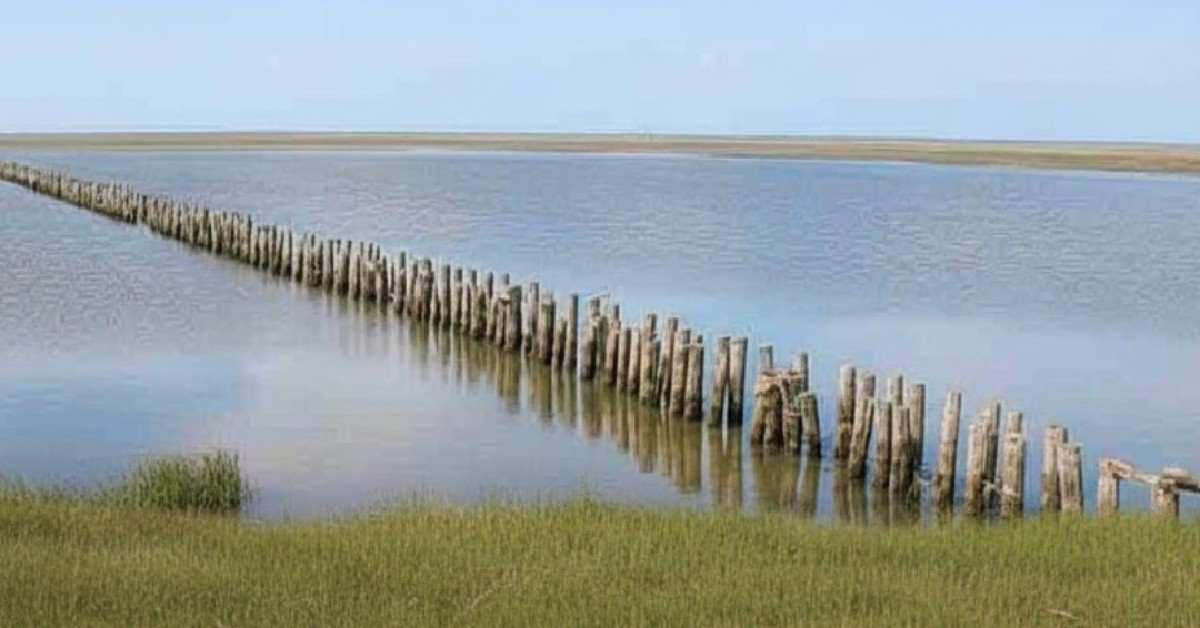
At the same time, sea levels around Denmark are expected to rise by 50 to 60 centimeters by 2100, potentially up to 120 centimeters in the worst case. Nearly a third of Denmark’s land area could be affected by water. More than 440,000 year round homes sit in zones at risk. Coastal wetlands and salt marshes offer natural buffers, but only if we stop fighting the water and start planning for it.
A Tool for Hard Choices
The new Copenhagen map does not make the politics easier. But it does make the choices clearer. It harmonizes definitions of wetlands across countries and allows policymakers to compare apples to apples. That matters when national governments submit their restoration plans to Brussels.
“Our work can directly help implement the EU’s nature restoration law,” Horion says. “Several countries have not yet identified specific areas or set national targets. They can use this map as a starting point.”
The map also highlights how fragmented Europe’s wetlands have become. Between 27 and 33 percent exist in patches smaller than 25 hectares. Many are tiny islands in an ocean of fields and roads. Restoring these scattered fragments will be harder and less effective than focusing on larger, connected areas.
What Comes Next
Denmark’s updated water management plans came into force in January 2026 after a revision process. They set out how the country will meet EU water quality standards, including through wetland restoration and adjusted nitrogen limits. The plans are part of a broader push to align climate, nature, and water policy.
But the gap between ambition and reality remains wide. Green organizations like the Danish Society for Nature Conservation argue for 10 meter buffer zones along all watercourses, a 20 percent cut in nitrogen norms, and a tax on drained peatland. The agricultural sector pushes back, calling for technological solutions and gradual transitions.
The researchers at Copenhagen are already working on a global version of their wetland map. The goal is to improve greenhouse gas estimates worldwide. For Denmark, the immediate task is simpler and harder: deciding which fields to flood, which communities to compensate, and how fast to move before the 2030 deadline arrives.
I think we will get there. Slowly, messily, with plenty of arguments along the way. That is how change happens in Denmark. But the map is now on the table, and the choices are coming into focus.
Sources and References
Ritzau: Danmark skal have vådområderne tilbage: Nyt studie viser, hvor klimaeffekten er størst
The Danish Dream: Lille Vildmose – Denmark’s Largest Bog
The Danish Dream: Amosen Nature Park – Denmark’s Timeless Blend of Natural Beauty and Ancient History
The Danish Dream: Thy National Park – Denmark’s First