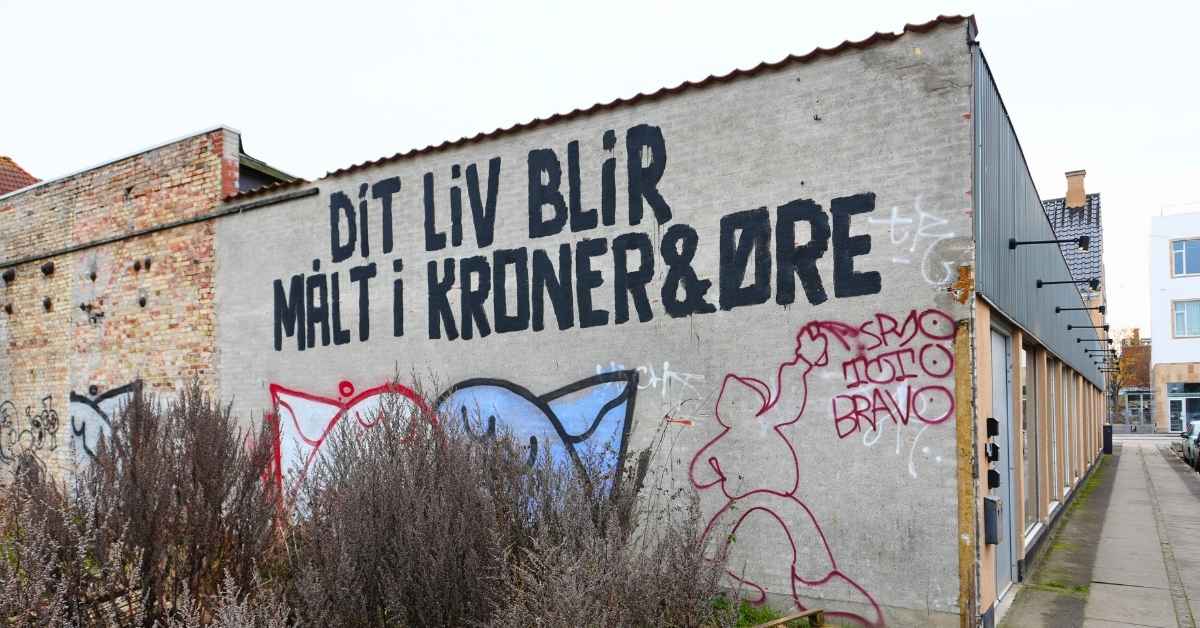
A Danish municipal council has rejected an action plan to address racist vandalism, even as hate crimes nationwide have surged 80% in just two years and prosecution rates remain critically low.
The decision leaves a gap in local response to hate incidents at a time when national data shows a crisis of both rising attacks and inadequate enforcement. According to Arbejderen, the council voted down the proposed plan without explanation. The refusal comes as Denmark registered 877 hate crimes in 2024, up from 487 just two years earlier.
That 80% jump tells only part of the story. The Justice Ministry estimates roughly 25,000 people experience hate crimes annually in Denmark. Only a fraction ever appears in police statistics. The gap between reported and actual incidents reveals a system failing to capture the scope of the problem.
Racist Incidents Dominate the Numbers
Racially motivated crimes form the largest category of documented hate crimes. In 2018, police registered 260 racist incidents, more than double the 104 cases recorded in 2015. Of those 260 cases, just 13 targeted ethnic Danes. The remaining 247 targeted people of non-Danish origin.
I have watched this pattern play out across years of reporting here. The numbers reflect what minority communities already know. They face harassment, threats, and vandalism at rates that dwarf incidents targeting the ethnic Danish majority.
The incidents take many forms. Racist slurs hurled at football stadiums. Property defaced with hateful symbols. Campaign posters bearing racist messages. Some acts reflect isolated prejudice. Others show coordinated planning by organized groups with explicit political agendas.
Prosecution Rates Reveal Enforcement Failure
The justice system shows little ability to respond effectively. Between 2014 and 2023, prosecutors filed charges in only 657 of 1,250 reported violations of the racist speech law. Just 232 cases resulted in convictions.
In 2024, courts issued only four convictions for hate-motivated violence. Four convictions against an estimated 25,000 annual victims. The math does not work. Danish law provides tools to prosecute hate crimes under Penal Code section 266 b, which carries penalties up to two years imprisonment. But tools mean nothing without enforcement.
Why Municipalities Matter
This enforcement gap makes municipal action plans more important, not less. When formal prosecution fails to address widespread incidents, local responses become essential. Action plans typically include community dialogue, victim support, prevention programs, and coordination with police on documentation.
A council rejecting such a plan signals either resource concerns, political division, or indifference. None of those explanations reassures communities facing repeat attacks. The decision suggests local leaders believe doing nothing is preferable to taking action.
The Under-Reporting Problem
Official statistics capture perhaps 3% of actual hate crimes. Victims face multiple barriers to reporting. Language difficulties. Distrust of police. Immigration status fears. The barriers disproportionately affect the same communities already targeted by attacks.
Denmark has international obligations under the Convention on the Elimination of Racial Discrimination to criminalize and prosecute hate crimes. The country has the legal framework. Implementation remains inadequate at both national and apparently local levels.
I have seen how visible hate incidents affect community cohesion. A defaced mosque. Racist graffiti on a school. These acts send messages beyond their immediate victims. They tell entire communities they are unwelcome. Municipal indifference amplifies that message.
The rejected action plan may have been flawed. Councils face legitimate resource constraints. But rejecting a response entirely, amid rising documented hate crimes and falling prosecution rates, represents a choice. It is a choice to leave vulnerable communities without local institutional support.
Denmark can do better than a 3% documentation rate and four annual convictions. Municipalities refusing to act make that improvement less likely.
Sources and References
The Danish Dream: Vandals tear up soccer fields on Christmas night
The Danish Dream: Dutch tourists trapped after Danish vandalism spree
The Danish Dream: Mystery tree vandals strike across Denmark
Arbejderen: Byråd afviser blankt handlingsplan efter racistisk hærværk