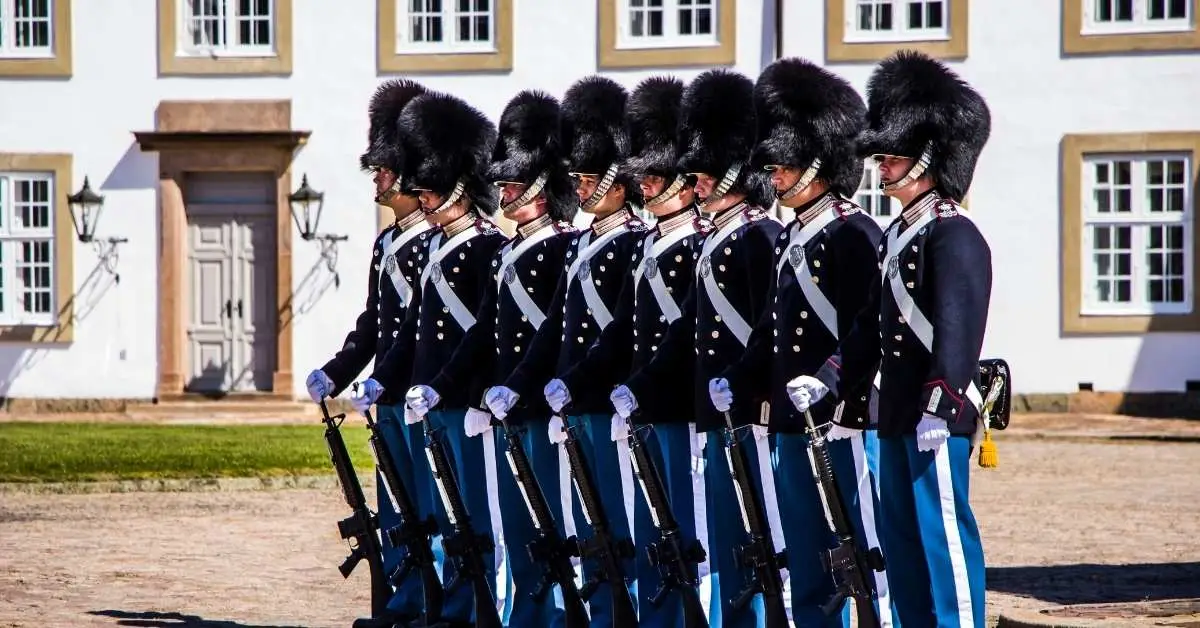
A royal guard who pushed a climate activist to the ground in front of Amalienborg Palace on New Year’s Eve will not face criminal charges for assault. The military prosecutor’s office concluded that the guard’s use of force was necessary and justified after the activist refused repeated orders to leave a restricted area during the televised royal parade.
No Criminal Charges After Investigation
The Danish military prosecutor’s office has closed its investigation into a highly publicized incident where a royal guard pushed a climate activist during the New Year’s Eve parade at Amalienborg Palace. The guard will not be charged with assault.
Prosecutor Finds Use of Force Justified
The Auditor Corps of the Ministry of Defense announced that the guard acted within legal boundaries when he pushed the activist. The prosecutor determined that the force used did not exceed what was necessary and justifiable under the circumstances. The investigation concluded there was no basis to suspect the guard violated regulations on lawful use of force.
The decision came after a thorough review of the incident, which took place shortly after King Frederik’s New Year’s address on December 31. The episode was filmed and widely shared on social media, sparking intense public debate about the appropriate use of force by royal guards.
Activist Refused to Leave Restricted Area
The prosecutor’s decision emphasized several key factors leading up to the physical confrontation. The climate activist from the group Nødbremsen had entered a section of the palace square not designated for public use. He was attempting to disrupt the Life Guards’ parade march, which is broadcast live on television following the King’s annual address.
An inspecting officer initially escorted the activist away from the restricted area and verbally ordered him to leave. Despite these warnings, the activist remained on the scene and positioned himself close to the guard who later pushed him. The guard attempted to make contact with the activist before resorting to physical force.
Context of the New Year’s Eve Incident
The confrontation occurred during one of Denmark’s most watched annual traditions, drawing immediate attention from both those present at the palace and viewers across the country.
Climate Protest During Royal Ceremony
Climate activists from Nødbremsen chose the highly visible moment of the royal New Year’s celebration to stage their demonstration. The group attempted to break into the Life Guards’ parade formation immediately after the King’s televised address. The timing ensured maximum visibility for their cause, as thousands of Danes traditionally gather at Amalienborg to watch the ceremony in person while millions more watch on television.
The activist who was pushed remained defiant after the incident. He told DR that he did not regret the action on New Year’s Eve, despite receiving additional blows from angry members of the public who witnessed the disruption.
Public Reaction and Social Media Debate
Video footage of the guard pushing the activist spread rapidly across social media platforms, generating strong reactions from the Danish public. Witnesses present at the palace square on New Year’s Eve expressed varied opinions about both the guard’s actions and the activist’s protest tactics. Some members of the crowd physically attacked the activist after he was pushed by the guard, demonstrating the heated emotions the incident provoked.
The episode ignited widespread debate about the balance between protest rights and security protocols at royal events. Many Danes took to social media to discuss whether the guard’s response was appropriate or excessive.
Legal Proceedings and Outcomes
Both the guard and the activist faced potential legal consequences following the New Year’s Eve confrontation, though the outcomes differed significantly.
Military Investigation Process
The Auditor Corps of the Ministry of Defense handled the investigation because the guard was on duty during the incident. Military prosecutors have jurisdiction over service members performing official duties, which includes royal guards protecting the monarchy and maintaining order at official ceremonies. This separate legal framework applies different standards than civilian law enforcement, though it still requires adherence to regulations governing lawful use of force.
The investigation examined whether the guard’s actions violated military regulations on when and how force may be applied. Prosecutors reviewed video evidence, witness statements, and the sequence of events leading to the physical confrontation.
Charges Against the Activist
While the guard avoided criminal charges, the activist himself was charged with violating public order regulations. These charges stem from his refusal to leave the restricted area and his disruption of an official royal ceremony. The public order violation represents a less serious offense than the assault charges the guard faced, but still carries potential penalties.
Danish law provides strong protections for public demonstrations and free speech. However, these rights have limits when they conflict with public safety, security protocols at sensitive locations, or the orderly conduct of official state functions.
Broader Implications for Royal Security
The incident raises questions about protocols for handling protesters at royal events and the boundaries of acceptable force by guards protecting the monarchy.
Security Challenges at Public Royal Events
The Danish royal family maintains a relatively accessible public presence compared to many other European monarchies. Royal ceremonies like the New Year’s parade traditionally allow large crowds to gather in close proximity to the royal family and their guards. This openness creates security challenges when protesters attempt to disrupt official events.
Guards must balance their duty to protect the royal family and maintain order with the need to respect civil liberties and avoid excessive force. The New Year’s Eve incident tested these boundaries in a highly visible way, with the guard’s actions subject to intense public scrutiny.
Precedent for Future Protests
The prosecutor’s decision that the guard acted lawfully may influence how future protests at royal events are handled. Climate activists and other protest groups now know that guards have legal authority to use physical force to remove protesters who refuse verbal commands to leave restricted areas. At the same time, the investigation and public debate demonstrate that such use of force will face scrutiny.
The incident occurred at a moment when climate activism has become increasingly confrontational in Denmark and across Europe. Groups like Nødbremsen have staged various disruptive protests to draw attention to climate issues, sometimes targeting high-profile events or locations to maximize media coverage.
Sources and References
DR: Garder undgår sigtelse for at skubbe aktivist nytårsaften