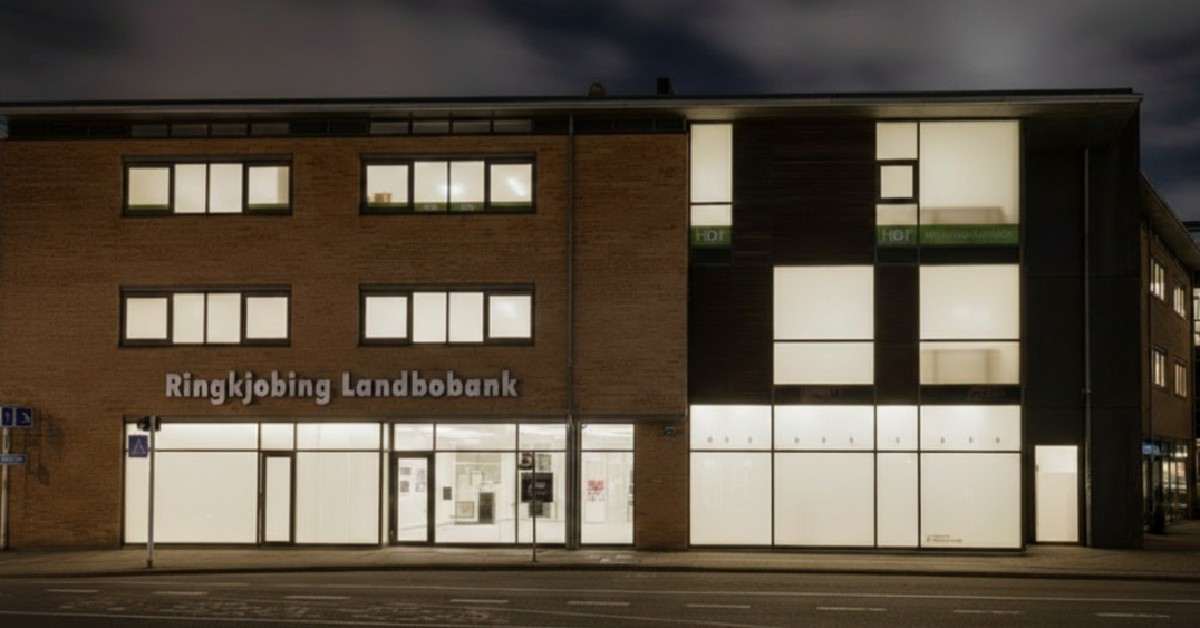
A local Danish bank has cracked the top ten list of Denmark’s largest corporate taxpayers in 2024, joining pharmaceutical giant Novo Nordisk, the Lego family, and major national banks in contributing billions to the country’s tax revenue. The complete list of the 1,000 biggest taxpayers reveals that banks dominate the upper ranks, while corporate taxes totaled 112 billion kroner last year.
Novo Nordisk Dominates Tax Contributions
Novo Nordisk stands alone at the top of Denmark’s corporate taxpayer list. The pharmaceutical giant paid 21.6 billion kroner in corporate tax in 2024, accounting for nearly twenty percent of all corporate taxes collected across the country. This staggering amount is more than five times what the second largest taxpayer contributed, cementing Novo Nordisk’s position as Denmark’s most significant corporate tax contributor.
The company’s tax payment reflects its enormous profitability and global success, particularly with its diabetes and obesity treatments. For context, Denmark’s total GDP benefits substantially from such corporate contributions, which fund essential public services and infrastructure.

Wealthy Families Make Their Mark
Behind Novo Nordisk sits Kirkbi A/S, the Lego family’s investment vehicle, which paid nearly four billion kroner in corporate tax. The company’s holdings extend beyond the iconic plastic brick manufacturer to include significant stakes in Merlin Entertainments, which operates theme parks worldwide, along with a substantial portfolio of stocks, bonds, and securities.
Further down the list, Anders Holch Povlsen’s Heartland A/S claimed ninth place with 775 million kroner in tax payments. The company controls the Bestseller fashion empire and maintains ownership stakes in retailers including Normal, Asos, and Zalando. These family-owned enterprises demonstrate how Denmark’s wealthiest clans contribute significantly to public coffers through their business empires.
Local Bank Sneaks Into Top Ten
Perhaps the most surprising entry in the top ten is Ringkjøbing Landbobank, which describes itself as a local bank serving North Jutland, Central Jutland, and West Jutland, while operating as a niche bank across Denmark. The bank paid 756 million kroner in corporate tax in 2024, securing tenth place on the list.
This achievement is remarkable given the bank’s relatively modest geographic footprint compared to national banking giants. Ringkjøbing Landbobank’s presence in the top ten ahead of larger institutions like Sydbank and Arbejdernes Landsbank highlights its profitability and efficient operations. The bank’s success reflects a broader trend where smaller Danish banks excel in customer satisfaction and financial performance, often outperforming their larger competitors.

Banks Comprise Half of Top Ten
Danish banks collectively represent a massive portion of the country’s corporate tax revenue. Five banks occupy spots in the top ten, demonstrating the financial sector’s profitability and importance to Denmark’s economy. Danske Bank, Forenet Kredit (which owns a large portion of the Nykredit group), and Nordea claimed third, fourth, and fifth places respectively.
Jyske Bank sits at number seven, while Ringkjøbing Landbobank rounds out the banking presence at number ten. Combined, these five top-tier banks paid 11.7 billion kroner in corporate tax during 2024. Outside the top ten, Sydbank landed at number 13 with 588 million kroner in tax payments, while Arbejdernes Landsbank took sixteenth place with 505 million kroner.
The banking sector’s strong showing reflects healthy profit margins and robust business conditions throughout 2024. These institutions benefit from interest income, fees, and diverse financial services that generate substantial taxable profits.
Understanding Corporate Tax Contributions
Corporate tax in Denmark sits at 22 percent of company profits. If a business earns one million kroner in profit, it pays 220,000 kroner in corporate tax. However, companies contribute to society in multiple ways beyond direct tax payments. They create jobs, pay salaries to employees who then pay income taxes, and drive economic activity throughout their supply chains.
The total corporate tax collection reached 112 billion kroner in 2024, a substantial sum that nonetheless pales in comparison to personal income taxes, which totaled 745.4 billion kroner. This disparity illustrates that while corporate taxes are important, the employment and wages that companies generate produce far greater tax revenue for the government.

Every Business Matters
Denmark’s economic structure relies heavily on small and medium-sized businesses, not just the corporate giants that top the taxpayer lists. Tax Minister Ane Halsboe Jørgensen emphasized that all companies, regardless of size, function as essential parts of Denmark’s economic machinery.
Naturally, the largest corporations contribute the most in absolute terms. However, the collective impact of smaller businesses creates the foundation of Denmark’s economy. These enterprises generate employment opportunities and distribute wages that fund public services through income taxation at much higher total volumes than corporate taxes alone.
From pharmaceutical manufacturing to local retail shops, businesses across all sectors maintain the momentum that enables Denmark to invest in schools, healthcare, and elderly care. The complete list of 1,000 largest taxpayers demonstrates both the concentration of tax revenue among major corporations and the breadth of business activity supporting Danish society.
Tax Revenue Supports Public Welfare
The 2024 corporate tax figures reveal how Denmark funds its extensive welfare system. With 112 billion kroner flowing from corporate profits, these contributions supplement the far larger pool of income taxes to provide comprehensive public services. Banks, pharmaceutical companies, family businesses, and countless smaller firms all participate in this system.
While Novo Nordisk’s 21.6 billion kroner payment stands out dramatically, the cumulative effect of thousands of businesses paying their share creates the stable revenue base that Denmark depends upon. In fact, the diversity of taxpayers from different industries and regions provides resilience against economic fluctuations in any single sector.
The presence of Ringkjøbing Landbobank among the elite taxpayers symbolizes how even regionally focused businesses can achieve national significance through sound management and customer focus. As Denmark continues to develop its economy, both global giants and local success stories will remain critical to funding the services citizens expect and deserve.
Sources and References
The Danish Dream: What is the GDP of Denmark
The Danish Dream: Banking in Denmark for Foreigners Updated 2025
DR: Lokalbank sniger sig ind i top ti: Se de 1.000 største skattebetalere