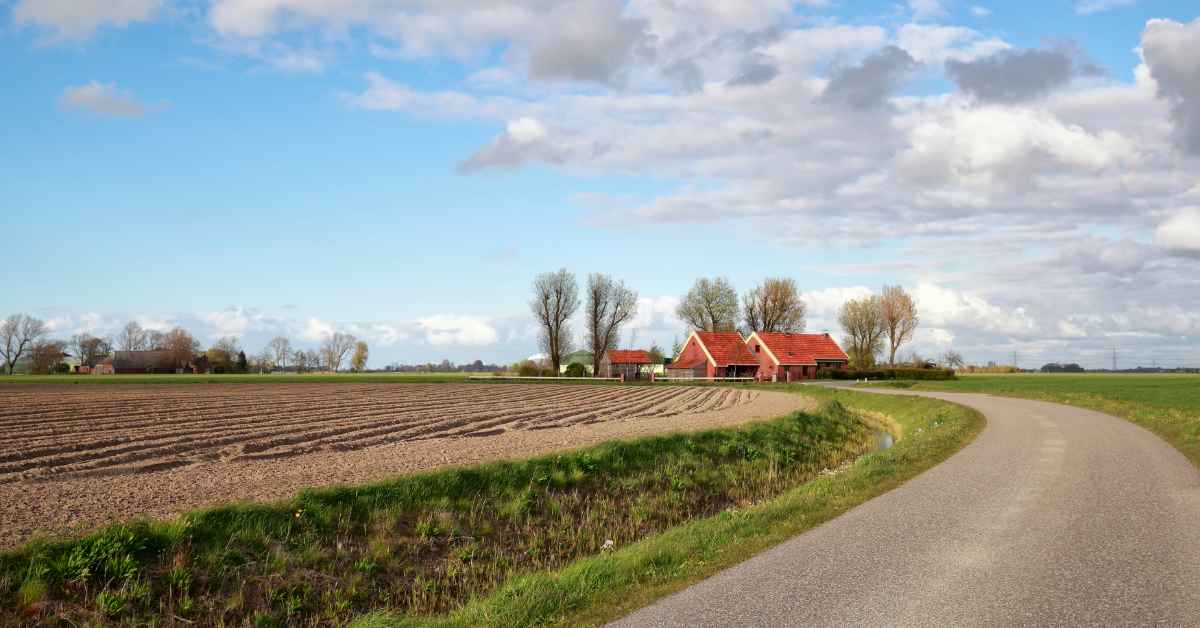
Denmark’s richest man, Anders Holch Povlsen, is buying up large amounts of farmland in Central Jutland. While some see environmental potential, others fear his land deals could hollow out their villages.
Concerns Rise as Farmland Changes Hands
In the quiet countryside near Herning, local residents on roads like Bæktoftvej are watching property after property change ownership. Many of those now belong to Anders Holch Povlsen through his company Constantinsborg. Snow may cover the empty spaces where homes once stood, but villagers still remember who used to live there.
The pace of acquisitions has accelerated in recent years. People living along country roads and in small towns such as Skarrild, Karstoft, Sønder Felding, and Stakroge have noticed a steady pattern. Neighbors move out, houses are sold, and Povlsen’s company moves in. That has left some residents wondering what will happen to their communities in the long run.

A Growing Land Empire
Since 2022, Povlsen’s firm Constantinsborg has purchased 56 farms and parcels of land in the four neighboring towns. Over the past year alone, 47 more properties were added around Ejstrupholm. The fashion tycoon, who owns the Bestseller clothing group, now ranks among Denmark’s largest landowners. His company has also expanded holdings near Aarhus.
Some locals compare the situation to cases such as the Danish farm family facing eviction for broader industrial or private projects. While the circumstances differ, uncertainty about rural land use feels strikingly similar.
For local business owners, it raises real worries. In Skarrild’s small grocery store, staff notice the changes around them. Each new acquisition feels like another piece of the community being absorbed into something larger and more remote. Even though sellers often stay on as tenants, people fear what will happen when leases end and outsiders no longer move in.
Fear of Empty Villages
Former farmer Knud Christensen says younger generations might struggle to buy land if large players keep driving up prices. Without new families, village schools, shops, and local businesses could face closure. Others worry that once tenant farmers move away, properties will remain uninhabited or held exclusively for corporate purposes.
Meanwhile, Constantinsborg states that the goal is long-term landscape development. The company envisions restoring nature and creating diverse agricultural projects that could take decades to achieve.
Interestingly, some scientists see potential benefits. Professor Carsten Rahbek, a researcher in biodiversity, points to Povlsen’s efforts in Scotland, where he owns vast estates. There, large-scale rewilding initiatives have helped improve local ecosystems. Denmark’s natural environment ranks among Europe’s poorest, so private investment in land restoration could, in theory, boost biodiversity.
However, not everyone is convinced. Residents like Christmas tree farmer Ivan Baun question whether new “nature” zones will remain open to the public or closed off behind fences. People also debate whether it’s healthy for a single private owner to control that much of the landscape.

Balancing Nature and Community
Constantinsborg insists there is no plan to displace residents and that its methods mirror those of other rural investors. Yet the scale of the operation around Skarrild makes this story stand out. Many Danes now wonder where the line should be drawn between private property rights and collective rural vitality.
For longtime residents, the issue is personal. On Bæktoftvej, where five of the road’s properties have already been sold, some look at the map of acquisitions and feel a quiet sadness. They hope that whatever future Constantinsborg envisions for their landscape will not erase the human life that once defined it.
Sources and References
The Danish Dream: Danish Farm Family Faces Eviction for Industry
The Danish Dream: Buying Property in Denmark for Foreigners
TV2: Bestseller-Rigmand Opkøber Massivt i Jylland