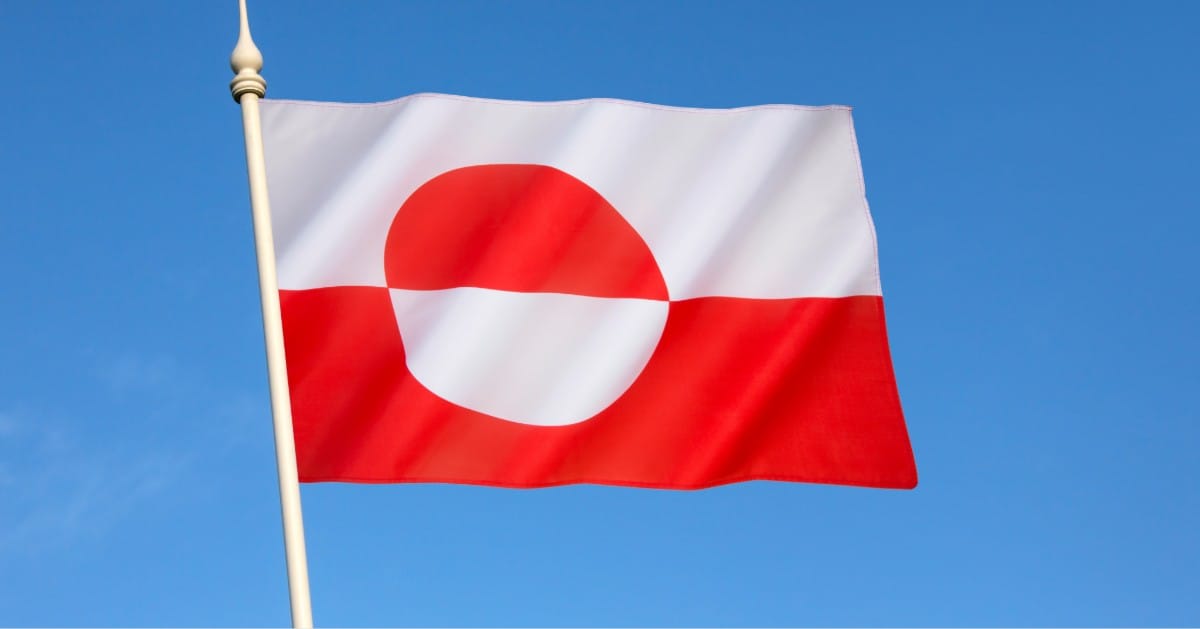
Orders for Greenlandic flags have skyrocketed at a small Danish flag workshop, where growing international attention on Greenland is driving both private and business customers to show their support.
A Rush on Greenlandic Flags
In a quiet town in western Zealand, the family-run company Stilling Flag has found itself in the middle of an unexpected boom. Inside the small workshop, sewing machines hum nonstop as red and white fabric is stitched together—not into the familiar Danish Dannebrog, but into the Greenlandic flag.
Almost two-thirds of Stilling Flag’s production capacity is now devoted to making these Arctic banners. The surge began after geopolitical tensions surrounding Greenland rose sharply, sparking a wave of solidarity among Danes and international customers alike. Many buyers say they want to show support for the people of Greenland at a time of uncertainty.

Small Workshop, Big Demand
The modest company, run by mother and daughter Kirsten and Julia Stilling, is not used to such massive fluctuations. Under normal circumstances, they craft everything from Danish to Nordic and corporate flags. But lately, orders for Greenlandic flags from both private individuals and organizations have poured in.
While the sudden demand brings financial relief, it also comes with mixed emotions. At times, the Stillings have seen these rapid increases before. When Greenland’s national day became an official flag day and during major global events like the early days of Russia’s invasion of Ukraine, certain flags temporarily outnumbered all others. These spikes reflect how world events influence what symbols people choose to wave.
A Sign of Solidarity
Despite the brisk business, Julia Stilling has expressed that there is a somber side to the current situation. The family is proud of their craftsmanship, but the fact that people are buying so many Greenlandic flags because of political tension leaves them thoughtful.
As Julia explained previously, flags are emotional symbols used in both celebration and sorrow. Whether raised on joyful occasions or in support during geopolitical struggles, they represent connection and empathy. She hopes that once the current crisis eases, Danes will keep flying Greenlandic flags out of cultural appreciation rather than concern.
Reflecting on the Moment
The Greenlandic flag, with its red disk and white background, was adopted officially in 1985 after Greenland gained increased home rule within the Danish realm. Its history is deeply tied to Danish-Greenlandic relations and to broader discussions about autonomy. For many Danes today, flying the flag is a simple but visible show of respect for Greenland’s identity.
Demand for the flag at Stilling Flag shows how quickly symbolic gestures can travel through society. From small towns to city balconies, more Greenlandic flags now flutter across Denmark in quiet acts of solidarity.
Because of that, the Stillings’ small sewing room has become a reflection of something larger—a connection between two lands that share deep historical, cultural, and political ties. Every flag that leaves their table carries that shared story of heritage and recognition.

Looking Ahead
As production continues at full capacity, the Stilling family hopes that enthusiasm for the Greenlandic flag will eventually take on a more positive meaning. Ideally, it will become a celebration of Greenland’s culture, its stunning landscape, and the spirit of cooperation between the two parts of the Kingdom of Denmark.
In the meantime, each carefully sewn flag bears witness to how symbols can unite people across distance, time, and emotion—one stitch at a time.
Sources and References
The Danish Dream: Why Was Greenland Granted Autonomy From Denmark?
The Danish Dream: Best Gartners in Denmark for Foreigners
DR: Bestillinger af grønlandske flag flyver i vejret hos sjællandsk flagproducent