The director of Denmark’s gender equality institute, KVINFO, has faced criticism for questioning the lack of diversity among Supreme Court judges in a high-profile sexual harassment case. She rejects claims that she tried to undermine the verdict and insists her remarks were about representation, not the ruling itself.
Background on the Jes Dorph-Petersen Case
Danish TV host Jes Dorph-Petersen recently won a Supreme Court case against lawyer Yvonne Frederiksen, who led an investigation into sexual harassment at TV 2 in 2020. That investigation led to his dismissal from Nordisk Film TV, which produced “Go’ aften Live” for the channel.
The court concluded there was not enough evidence to show that Dorph-Petersen had engaged in harassment. He was awarded two million kroner in compensation.
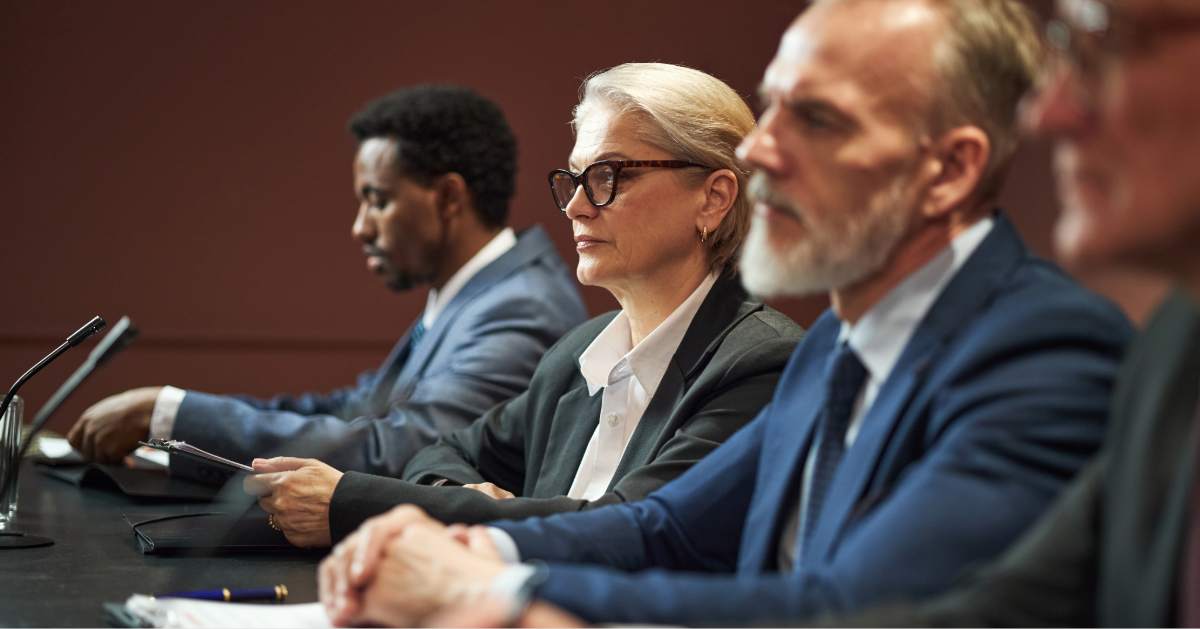
After the ruling, KVINFO’s director Henriette Laursen posted on Facebook, noting that all five judges in the case were men aged between 55 and 69. She questioned why the panel was not more diverse, given that the case centered on gender-related issues.
Backlash Against KVINFO’s Director
Her post sparked an immediate wave of criticism, especially from conservative politicians who accused her of challenging the legitimacy of the Supreme Court. Several political figures argued that it was inappropriate for the head of a publicly funded organization to comment in this way.
Laursen, however, later stated that she was not questioning the verdict. Instead, she said her point was about how diversity in decision-making—whether in business, research, or the legal system—can lead to better outcomes.
She explained that the purpose of her comment was to highlight how uniform perspectives can unintentionally shape decisions. Laursen also emphasized that bias exists in every environment, including her own organization.
The Role of Diversity in Danish Institutions
Interestingly, while she called for more gender diversity in the judiciary, Laursen acknowledged that KVINFO employs mostly women. Out of roughly 30 employees, only three are men. She noted this imbalance is due to a limited number of men studying gender-related fields, not by design.
To address internal bias, KVINFO has introduced blind recruitment processes and encourages broader representation across its projects.
Her comments have reignited a national conversation about gender representation, equality in leadership, and institutional bias in Denmark. That conversation is connected to larger debates on inclusion and diversity in workplaces, politics, and even in areas involving LGBTQ+ rights and representation in Denmark.
Danish Judiciary and Representation
Laursen pointed out that the judiciary has access to a wide pool of women candidates because law schools in Denmark have a high proportion of female graduates. At the University of Copenhagen, twice as many women as men were admitted to the law program in 2025, reflecting broader educational patterns.
She argued that the issue is not about matching a judge’s identity to a specific case. Instead, it is about ensuring a general balance that allows multiple perspectives to be part of any court’s decision-making process.
Despite the controversy, Laursen said she understood why some might misinterpret her comments. She also reiterated that creating doubt about the judiciary was never her intention.
At the same time, the Supreme Court’s decision does not change TV 2’s stance on Dorph-Petersen’s employment. The broadcaster said it does not regret removing him from its on-screen lineup, citing a lack of trust as the reason for his termination.
Ongoing Discussion on Equality
In the end, the debate around Laursen’s post touches on more than just one case. It raises questions about how judges, leaders, and public institutions reflect the diversity of Danish society. While Denmark is often recognized for its progressive gender policies, the conversation shows that achieving balance in practice remains a challenge.
Her remarks underline a broader truth: representation matters, not only in debates about gender but across all areas where decisions affect people of different backgrounds, including gender identity and sexual orientations.
Sources and References
The Danish Dream: Is Denmark LGBTQ+ Friendly?
The Danish Dream: Best Immigration Lawyers in Denmark for Foreigners
DR: Kvinfo-direktør afviser ville så tvivl om Dorph-dom, da hun undrede sig over dommeres køn