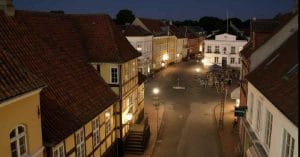
All 22 proposed wind turbine projects in the Tønder Municipality were rejected by local residents, signaling strong rural resistance to new land-based wind energy development in southern Denmark.
Locals Say No to Wind Turbines
Residents of Tønder Municipality in southern Jutland have overwhelmingly voted against all proposed land-based wind turbine projects. The local government submitted 22 different wind energy projects to public consultation, allowing citizens living within 2.5 kilometers of each proposed site to vote yes or no. The result was unanimous. Every project received a majority of “no” votes.
For many residents, the opposition reflects a desire to preserve the open landscapes and quiet surroundings that define this part of Denmark. Several locals say they moved to the area specifically for its peaceful environment and natural scenery.
At the same time, citizens who oppose the turbines argue that wind energy should be placed elsewhere, particularly offshore or along major highways, where it would disturb fewer people. Some point to national projects, such as Denmark’s new strategy for offshore wind energy, as examples of where future expansion could take place instead of in residential rural areas.

Advisory Votes with Political Impact
The votes in Tønder were officially advisory, meaning local politicians are not required to follow them. Yet the message from residents is difficult to ignore. Tønder’s mayor, Jørgen Popp Petersen, acknowledged that the results show strong and widespread community opposition. Though not legally binding, the consultations are meant to help local leaders understand public priorities before making final decisions.
The mayor noted that participation varied across the 22 projects, with some locations showing relatively low turnout, but enough results were submitted to clearly indicate resistance to wind turbine construction across the municipality.
Still, local politicians face a difficult balance. Denmark has national and international climate commitments to expand renewable energy production. Tønder’s leaders must weigh those obligations against the wishes of their voters.
Denmark’s Expanding Green Ambitions
The debate reflects a national dilemma in Danish energy policy. While the country continues to lead global efforts toward green transition, local resistance to new installations has increased. In both Thisted and Tønder, where advisory votes have been tested, residents have often rejected projects despite government targets for renewable energy growth.
Experts point out that citizens often oppose projects because of concerns over noise, views, or property values. However, those opinions can shift if project designs or community involvement improve. Sometimes, when better dialogue appears, public acceptance follows.
This highlights a key challenge as Denmark pushes for more sustainable power generation. Offshore wind development remains central to national goals, but onshore wind farms can still play a major role. Balancing national needs with local acceptance is now a critical policy question.
The outcome in Tønder could therefore influence future municipal decisions across the country. It may also push planners and investors to prioritize offshore projects or other renewable sources, as seen on Denmark’s new offshore wind strategy.

Rethinking Community Dialogue
Anthropologists studying public reactions to renewable energy say the rejections in Tønder are not surprising, but the unanimous outcome still stands out. Researchers see it as proof that traditional methods of involving citizens may not be working. Meaningful consultation, open discussions, and fair compensation models are seen as critical to build trust between developers, municipalities, and residents.
From what can be seen, resistance is not necessarily about opposing green energy itself. It often relates to where the projects are placed and how the process unfolds. In many rural communities, people simply want assurance that their voices matter.
While voter turnout and project details varied, the message is clear. Residents in this corner of southern Denmark are not ready to accept landscape-altering turbines near their homes. Whether the municipality ultimately respects that view or proceeds despite it will show how far local democracy can shape the pace of Denmark’s green transition.
Sources and References
The Danish Dream: Denmark’s New Strategy for Offshore Wind Energy
The Danish Dream: Energy & Electricity in Denmark for Foreigners
DR: Nej, nej og atter nej – borgere vendte tommelfingeren nedad til samtlige vindmølleprojekter