A Danish construction worker survived a violent crane accident that left him in a coma for two weeks and fighting his way back to a normal life. Despite lasting pain and trauma, he says he feels lucky to be alive.
A shocking accident caught on camera
When Jonas Krüger Larsen first opened his eyes after 15 days in a coma, he had no memory of what had happened. His body was still, his mind foggy, and his only window to the truth came from watching the surveillance footage that showed how he nearly died.
On the video, he can see himself standing in a lift about a meter above the ground, looking up just as a crane began to tip. He crouched instinctively and grabbed the basket. Moments later, the crane struck the lift with massive force, sending him eight meters into the air before crashing down.
Strangely, being thrown actually saved him. If he had been wearing a safety harness, which isn’t required at that height, he believes he would have been crushed against the basket.
This accident highlights how fragile workplace safety can be in Denmark. Much like the lack of emergency preparedness in other sectors, construction safety often relies more on luck than regulation.

A long road back
After regaining consciousness on his sister’s birthday, Jonas began a slow, painful recovery. He spent two months at Hammel Neurocenter and relied on a wheelchair for the first three months. Simple everyday tasks became massive challenges.
For half a year, he went through countless surgeries, used rehabilitation aids, and fought through constant pain. He recalls being lifted by a crane just to use the toilet. It became a symbol of how completely his body had failed him.
Today, about a year and a half later, few would notice anything wrong at first glance. But every morning still begins with pain. His head remains sensitive, and his spine is broken in several places that never fully healed.
A changed father
Even though he accepts the physical scars, what hurts most is how the injury changed his relationship with his children. He can no longer play freely or roughhouse as before. Quick movements or an accidental bump can leave him gasping for air.
His children notice when he struggles. They try to comfort him, showing a deep awareness of his fragility. For him, that’s the toughest part. He says his own suffering doesn’t upset him much, but how it affects his family does.

Legal outcome and forgiveness
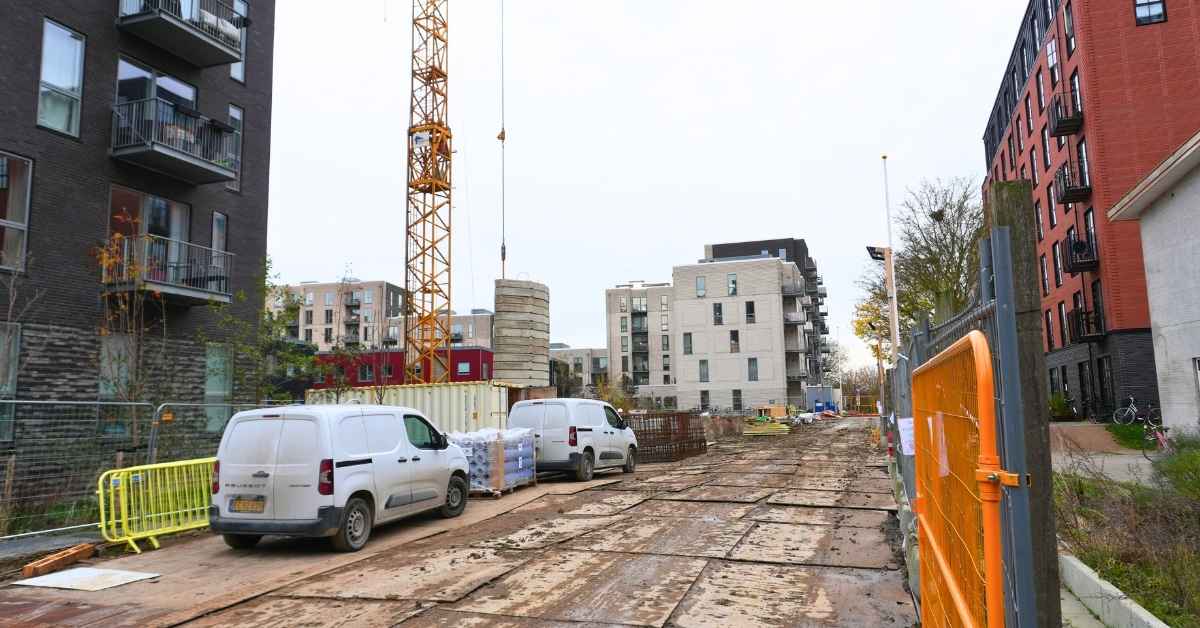
On Tuesday, a Danish court ruled in the case over who was responsible for the accident. The crane company, NH Løft, received a fine of 140,700 kroner for the safety failures that led to the disaster. Jonas was not an employee of NH Løft but worked for Thisted-Fjerritslev Cementvarefabrik, which was installing concrete elements at a factory construction site near Ikast when the incident happened on April 30, 2024.
Although the court determined the company bore responsibility, Jonas feels conflicted about the ruling. He believes the owner, Niels Helledie, did not personally deserve the punishment. After the accident, the company had repeatedly checked in on his family, showing genuine concern for his wellbeing.
Forgiving and moving forward, he says, matter more than anger or blame.
Living with pain and gratitude
Jonas still experiences severe back pain and attends regular hospital appointments, including an upcoming MRI scan in Aalborg to assess his spinal damage. Yet he insists he is not bitter. He chooses gratitude over resentment.
Without a doubt, he feels fortunate to still be alive, to walk, talk, and be a father again. In his words, that’s all he needs.
His survival story, shaped by tragedy and endurance, stands as a stark reminder of how easily life can change in an instant. It also underlines how Denmark’s safety culture, from construction sites to schools unprepared for emergencies, depends on constant awareness rather than assumptions of security.

Sources and References
The Danish Dream: Averted school shooting in Denmark reveals teachers are not prepared
The Danish Dream: Best health insurance for foreigners in Denmark
TV2: Han måtte se overvågningen for at forstå, hvorfor han næsten døde