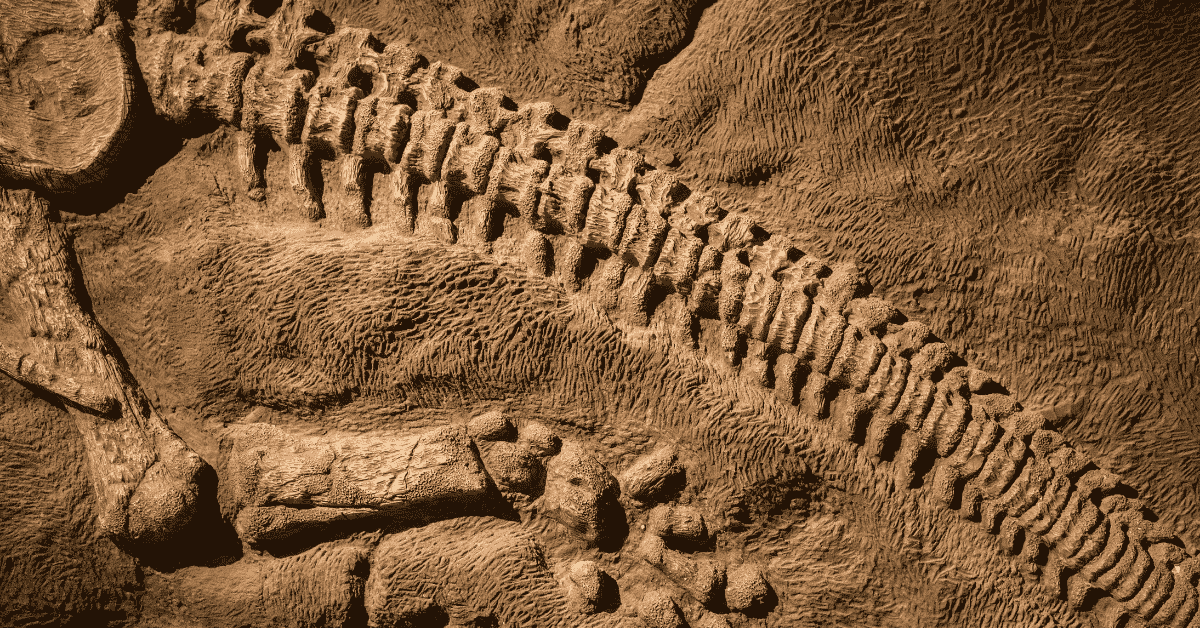
Fossils of five ancient marine reptiles, including a rare baby plesiosaur, have been discovered on the Danish island of Bornholm, shedding new light on Jurassic-era ecosystems. These rare fossils in Denmark have now formally been examined and declared “Danekræ”, the Danish term for fossils of great scientific value.
Discovery of Rare Fossils in Denmark
A remarkable set of discoveries of fossils in Denmark along the coast of Hasle Klint on the Danish island of Bornholm is offering scientists a rare look into the life of marine reptiles during the early Jurassic period. Between 2009 and 2019, fossil hunters uncovered the remains of at least five different plesiosaurs, a group of large, prehistoric sea-dwelling reptiles. Among the specimens is a particularly rare juvenile, one of only a few such finds across Europe.
Now formally examined and declared “danekræ”, a Danish term used for fossils of significant scientific value, the fossils are now the property of the state and will be preserved for future study.
What Are Plesiosaurs?
Plesiosaurs were marine reptiles that lived from approximately 200 to 66 million years ago. Although they coexisted with dinosaurs, they do not belong to the dinosaur family. Known for their unique appearance, they had small heads, long necks, broad bodies, and four strong flippers for swimming. Due to their distinctive shape, they are sometimes compared to mythical sea creatures, including the Loch Ness Monster.
These creatures could grow as long as 49 feet, although the specimens found on Bornholm, including the baby, were significantly smaller. According to researchers, these new finds include well-preserved vertebrae, rib bones, a tooth, and a limb bone, some of which are three-dimensionally fossilized rather than flattened over time, making them uniquely valuable for research.
The Significance of the Baby Plesiosaur
The discovery of a juvenile plesiosaur is considered especially important in paleontological circles. Juvenile specimens provide distinctive information about growth patterns, reproduction, and the ecology of the species. In Europe, baby plesiosaur fossils are extremely rare, with only a handful of confirmed discoveries, making the Hasle Klint specimen a significant scientific asset.
Researchers were able to confirm its juvenile status through the size, structure, and developmental features of a small limb bone. Such finds allow paleontologists to better understand the life cycle of these extinct creatures and how they may have interacted within their marine environments.
Bornholm: A Hotspot for Fossils in Denmark
Hasle Klint, located on the western shore of Bornholm in the Baltic Sea, has long been known as a treasure trove for fossil hunters and scientists. Until recently, however, most discoveries were isolated bones or traces with limited possibilities for deeper scientific interpretation. With this new multi-specimen find, researchers can now conduct more detailed analyses of the local Jurassic marine ecosystem.
Declared as part of the “danekræ” registry, the fossils are now legally protected under Danish law. This means they will be maintained by national institutions, such as the Natural History Museum of Denmark, where they will be further studied and possibly displayed to the public.
Unlocking Earth’s Ancient Past
The scientific community sees the Bornholm discoveries as valuable puzzle pieces for reconstructing the geological and biological history of the region. The fossils date back to roughly 190 million years ago, when most of modern-day Denmark was submerged under a shallow sea. By studying the physical traits and fossil layers of the specimens, scientists can infer the environmental conditions of that era, such as sea temperature, prey availability, and evolutionary patterns.
Bornholm is the only place in Denmark where rocks from the Jurassic period are exposed at the surface, making it the country’s primary site for discovering fossils from this era. Including this recent discovery, over 30 dinosaur-era specimens have been uncovered on the island in the past two decades.
These new insights underscore the global scientific importance of the location, not only for Danish paleontology but also for broader understanding of marine life evolution during the Jurassic period. The finds also hold public appeal by drawing connections to legendary creatures and the mysteries of ancient life on Earth.