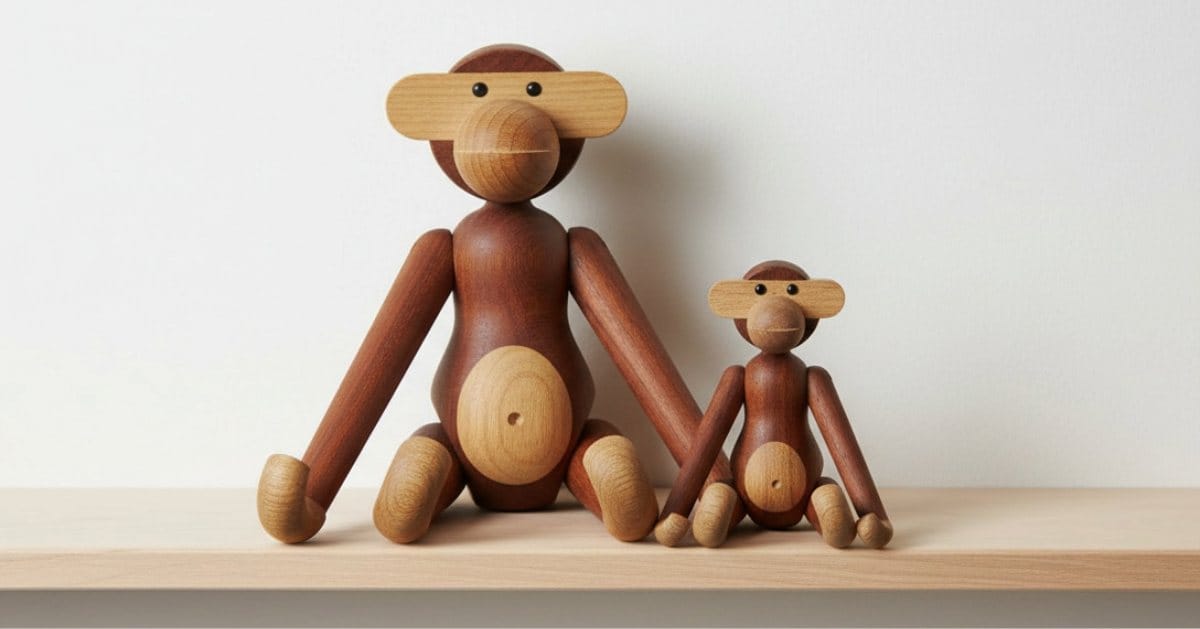
First created in 1951, The Monkey by Kay Bojesen is one of Denmark’s most beloved design icons. Handcrafted from teak and limba wood, its playful expression, flexible limbs and timeless craftsmanship have made it a cherished décor object, heirloom gift and symbol of Scandinavian design across generations worldwide.
Key Points:
- A Playful Icon of Danish Design: The Monkey by Kay Bojesen, first created in 1951, is a beloved symbol of Danish design that combines simplicity, craftsmanship, and functionality, inspiring collectors and enthusiasts worldwide.
- Kay Bojesen: The Man Behind the Vision: Kay Bojesen was a renowned Danish silversmith turned wood designer whose creations, especially The Monkey, embody playful, expressive design and are celebrated globally.
- Material Excellence: From Limb to Tail: Made from sustainably sourced teak and limba wood, each Monkey is handcrafted for uniqueness, with flexible limbs and joints that develop a beautiful patina over time.
- Symbolism and Timeless Appeal: The Monkey reflects Danish values of form following function, adding charm and wonder to everyday life, and is versatile as both toy and décor.
- A National and International Design Treasure: The Monkey is a cultural icon included in Denmark’s official design stamp series and exhibited worldwide, representing Danish design heritage.
A Playful Icon of Danish Design
Among the many treasures of 20th-century Danish design, one charming creature has stolen the hearts of collectors, children, and design enthusiasts alike: The Monkey by Kay Bojesen. First crafted in 1951, this whimsical wooden figure has become not only an enduring symbol of playful sophistication but also a testament to the values that define Denmark’s design heritage—simplicity, craftsmanship, and functional beauty.
At slightly over 20 cm (7.9 inches) tall in its most popular medium size and also available in smaller and larger versions, the monkey blends the line between sculptural art and functional décor. Originally designed as a clothes hook for children, the monkey quickly took on a life of its own as an artistic statement and beloved design object in homes across Denmark and beyond. Over the past 70 years, more than 300,000 monkeys have been sold globally, cementing its place among the most famous Scandinavian design pieces.
Kay Bojesen: The Man Behind the Vision
To truly appreciate the significance of The Monkey, one must understand the creative spirit of its designer, Kay Bojesen (1886–1958), one of Denmark’s most celebrated craftsmen. Trained as a silversmith under the legendary Georg Jensen, Bojesen later turned his creative focus to wood, driven by the belief that good design should spark joy and awaken the imagination—especially in the hands of children.
Bojesen had a profound understanding of form and scale, and his wooden figures communicate movement and life with simple, expressive gestures. While many of his designs—ranging from soldiers to elephants—are admired, it is The Monkey that best embodies his signature style: unfussy, friendly, and built with a clarity that speaks across generations.
“What Kay Bojesen created was not just toys, but timeless characters,” says a representative from Rosendahl Design Group, the current official producer of Bojesen’s designs. His work has been exhibited in world-renowned institutions, including the Victoria and Albert Museum in London and the Danish Museum of Art & Design in Copenhagen.

Material Excellence: From Limb to Tail
The Monkey by Kay Bojesen showcases the very soul of Scandinavian craftsmanship. Made from sustainably sourced teak and limba wood, each piece is carefully assembled by hand, ensuring no two monkeys are completely alike. The contrast between the warm, rich tones of teak for the limbs and the lighter, subtle grain of limba for the stomach and facial features creates a striking yet balanced visual dialogue.
This attention to quality continues with the monkey’s construction. Its flexible limbs and slightly articulated joints are connected with tight wooden pegs and elastic cords, allowing it to dangle playfully from shelves, windows, and furniture. Over time, the wood develops a beautiful patina, enhancing its character and reaffirming its lasting value as more than just a design object—it becomes a family heirloom.
Symbolism and Timeless Appeal
Though small in stature, The Monkey carries a profound message—one rooted in the Danish approach to life and design. It reflects Danish design principles, where form follows function, and yet, perfectly embodies the Nordic ethos of adding charm and play to everyday life. Its simplicity is deceptive—it engages the heart, triggers a childlike wonder, and invites interaction.
This duality makes the monkey especially versatile. It’s not just a toy for children (though Bojesen certainly had them in mind); it’s also an elegant piece of décor, gracing living rooms, office desks, boutiques, and art galleries alike. For many Danes, gifting The Monkey has become a beloved tradition for baptisms, birthdays, graduations, weddings, and retirements. It’s a way of passing on affection, humor, and timeless craftsmanship—values deeply embedded in Danish culture.
A National and International Design Treasure
The Monkey by Kay Bojesen is more than a decorative figure; it is a cultural icon and a testament to the global reach of Danish design. Its status is affirmed not only by its popularity among collectors but also by its regular appearances in international design exhibitions and style publications. In 2008, the monkey was selected as part of Denmark’s official stamp series celebrating the country’s design history—an honor that underscores its national significance.
Whether you’re a seasoned design historian or someone just beginning to explore the world of Scandinavian aesthetics, The Monkey by Kay Bojesen is an inviting introduction to the enduring charm, skill, and imagination at the heart of Denmark’s design legacy. Its combination of exceptional craftsmanship, emotional resonance, and narrative power ensures its place as one of the most treasured objects in the canon of Danish design.

A Masterpiece of Danish Craft and Character
Owning The Monkey by Kay Bojesen is about more than acquiring a beautiful piece of wooden design—it’s about investing in a symbol of Danish identity and craftsmanship. Whether nestled in a bookshelf, perched on a child’s dresser, or hanging from a living room lamp, the monkey brings warmth and personality wherever it resides.
One of the strongest reasons to add it to your interior is that it represents the very core of Danish design values: playfulness, minimalism, and timeless workmanship. In a culture where home interiors play a central role in daily well-being, the Bojesen Monkey blends effortlessly with both traditional and modern Scandinavian interiors. Denmark’s home design philosophy often emphasizes “hygge”—a quality of coziness and contentment—and the monkey fulfills this idea with exceptional charm and wit.
Decor With Emotion and Versatility
The genius of the monkey lies in its dual identity. It functions equally well as a child’s toy and as an adult’s design piece. In Danish homes, it is not uncommon to see the monkey passed down through generations, each wood-worn finger and soft patina carrying memories of family life. This heirloom quality makes the monkey not only a piece of decor but a storied object that ages with dignity.
Its clean, organic lines and natural wood tones make it a harmonious fit in almost any environment—from minimalist urban lofts to rustic country homes. At just under 400 grams in weight for the small version, its light structure allows it to be moved easily or suspended with other decorative items. The compact size makes it ideal for studios, children’s rooms, or as a playful addition to a cozy reading nook.
A Thoughtful Gift With Lasting Value
The Monkey is frequently given as a meaningful gift in Denmark during important life transitions. From baptisms to weddings, to retirement celebrations, the monkey serves as a symbol of good wishes and future joy. Its universal charm crosses generational boundaries, making it an ideal and memorable gift that will continue to spark delight for years.
With over ten versions available across sizes and colors—including limited edition pieces and holiday-themed monkeys—the design has continued to evolve without compromising its original spirit. Each monkey is still crafted using traditional methods and certified woods, making it a lasting investment into high-quality Scandinavian artistry.
Collector Editions and Size Variations
The Bojesen figure now comes in various sizes: Mini (9.5 cm), Small (20 cm), Medium (28 cm), Large (46 cm), and even a Giant version for special architectural placement. Each size maintains the playful integrity of the original 1951 design.
Moreover, special editions in smoked oak, maple, and even contemporary color accents allow collectors to build a set with personal expression. These variations maintain the same hand-crafted process and materials as the original and help the monkey resonate with evolving interior design styles while staying rooted in Danish tradition.

True Danish Design for the Everyday Home
From its sustainable materials to its modular motion, the Kay Bojesen Monkey fits seamlessly into the fabric of Danish living. It encapsulates an essence shared by few design icons—a form that is both accessible and elite, lovingly handcrafted yet universally adored.
Adding the Bojesen Monkey to your home isn’t merely about design. It’s about inviting in a joyful piece of history, a whimsical figure to watch over family life, and a lasting reminder of the elegance and warmth that define Danish culture.
Conclusion: The Timeless Charm of The Beloved Monkey by Kay Bojesen
In summary, The Monkey by Kay Bojesen transcends its humble beginnings as a whimsical children’s hanger to become a beloved icon of Danish design. Its playful demeanor, impeccable craftsmanship, and versatile application make it a perennial favorite in homes around the world. Crafted with love and attention to detail, the monkey embodies the enduring values of simplicity, quality, and emotional connection that are hallmarks of both Kay Bojesen’s work and the broader spectrum of Danish artistry.
Summary
– The Monkey was first created by Kay Bojesen in 1951 and has since become an emblematic piece of Danish design, celebrated for its charming, playful character and exquisite craftsmanship.
– With over 300,000 units sold globally, the figure is a testament to the universal appeal and timeless value of Kay Bojesen’s work.
– Its design, which combines sustainably-sourced teak and limba wood, is not only aesthetically pleasing but also reflects the commitment to quality and sustainability inherent in Denmark’s design traditions.
– Whether as a gift, collector’s item, or everyday décor, the monkey fits seamlessly into various spaces, representing the spirit of “hygge” and playful functionality.
– Available in multiple sizes and special editions, the monkey can be purchased through authorized online retailers like Rosendahl Design Group, Skandium, Finnish Design Shop, Design Within Reach, and Amazon.
FAQ:
1. Who is Kay Bojesen?
Kay Bojesen was a renowned Danish designer and silversmith, best known for his wooden toys and figures, including The Monkey. Bojesen’s work is recognized for its playful design, high-quality craftsmanship, and ability to capture the imagination across generations.
2. What materials are used to make the figure?
The Monkey is crafted from sustainably sourced teak and limba wood, chosen for their contrasting colors and durable qualities. These materials are hand-assembled to ensure each monkey is unique and designed to last.
3. Why is The Monkey considered an iconic piece of Danish design?
The Monkey exemplifies the core principles of Danish design: simplicity, functionality, and beauty. Its charming form has universal appeal, and it represents Denmark’s longstanding tradition of craftsmanship and innovative design.
4. How can I verify the authenticity of a Kay Bojesen Monkey?
An authentic Kay Bojesen Monkey is produced under the license of Rosendahl Design Group, which ensures adherence to the original design and use of certified materials. Buying from reputable retailers and checking for official branding and documentation can help verify authenticity.
5. What sizes does The figure come in?
The Kay Bojesen Monkey is available in several sizes: Mini (9.5 cm), Small (20 cm), Medium (28 cm), Large (46 cm), and Giant. Each size maintains the integrity of the original design and is crafted with the same attention to detail.
6. How should I care for the wood to maintain its quality?
To care for your Bojesen Monkey, avoid exposure to direct sunlight, moisture, and extreme temperatures. Regularly dust it with a soft, dry cloth to preserve its natural patina and keep the wood looking vibrant.
7. Can The Object be personalized?
While the standard design may not include customization options, certain limited editions or collaborations might offer unique color variations. However, personal inscriptions or modifications should be avoided to maintain its integrity and potential collector’s value.
8. Where can I showcase The Monkey in my home?
The monkey is versatile and can be displayed in numerous settings—on bookshelves, hanging from curtain rods, nestled among decorative pieces, or as a playful addition to children’s rooms—wherever an element of delight and style is desired.
9. Is the figure suitable for children?
While designed with children in mind, The Monkey is primarily a decorative object. It can be a delightful part of children’s play under supervision, serving as an engaging toy that also teaches aesthetics and creativity.
10. Are there other Kay Bojesen designs worth exploring?
Yes, Kay Bojesen designed a series of wooden animals and figures beyond The Monkey, including elephants, bears, and soldiers. Each piece reflects Bojesen’s commitment to simple, functional, and joyful design and is celebrated in its own right.