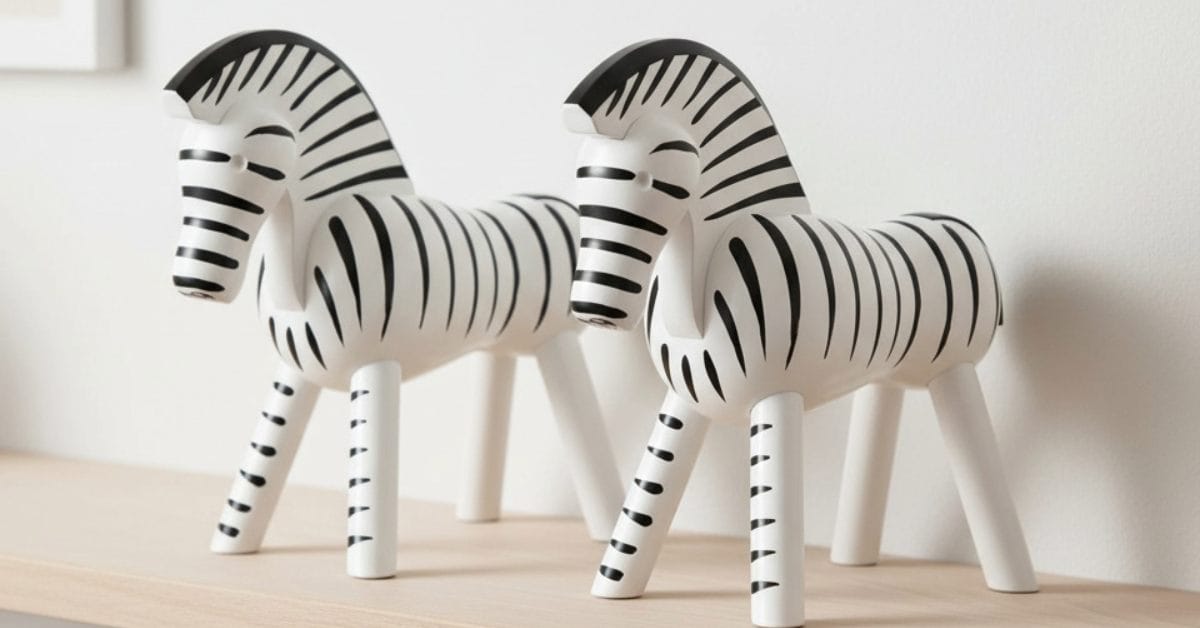
First introduced in 1935, The Exotic Zebra by Kay Bojesen is a playful icon of Danish modernism. Handcrafted from FSC-certified beechwood and hand-painted with eco-friendly colors, its minimalistic form, spirited expression, and timeless craftsmanship make it a cherished collectible and meaningful heirloom across generations.
Key Points:
- A Playful Icon of Danish Design: The Exotic Zebra by Kay Bojesen, introduced in 1935, reflects Danish modernism’s blend of functionality, imagination, and artistry, making it a celebrated sculptural object.
- Who Was Kay Bojesen?: Kay Bojesen, a Danish designer and silversmith, created over 2000 wooden objects emphasizing joyful, imaginative design with natural materials, becoming a key figure in Danish design heritage.
- Design Qualities and Artistic Vision: The zebra embodies minimalism, craftsmanship, and artistic novelty, created to inspire imagination and express Bojesen’s love for lively, character-filled objects.
- Materials and Craftsmanship: Made from FSC-certified beechwood and hand-painted with eco-friendly, non-toxic paint, each zebra is unique, showcasing quality craftsmanship and sustainable principles.
- The Importance and Popularity of the Exotic Zebra: This beloved figure, cherished by collectors and homes worldwide, symbolizes Danish design’s artistic spirit and timeless charm, often gifted as a meaningful keepsake.
A Playful Icon of Danish Design
Among the many treasured creations to emerge from the golden age of Danish Design, few capture the whimsical spirit and craftsmanship of Danish modernism as beautifully as The Exotic Zebra by Kay Bojesen. First introduced in 1935, this captivating wooden figure is more than just a piece of decor; it is a reflection of a design philosophy that blends functionality, imagination, and artistry.
While not a piece of functional furniture like a chair or table, the zebra holds high esteem in design circles as a sculptural object, representative of the broader principles that define Danish design culture. Designed in Denmark during a time when modernism was gaining ground internationally, The Exotic Zebra stood out for its playful yet refined character — characteristics still celebrated in design today.
Who Was Kay Bojesen?
No discussion of The Exotic Zebra is complete without a deeper appreciation of its visionary creator: Kay Bojesen (1886–1958). A prominent Danish designer and silversmith, Bojesen is one of Denmark’s most iconic design figures. He trained as a silversmith under the renowned Georg Jensen, before turning his creative impulses toward wood in the 1920s. Motivated by a desire to bring joy to everyday life through design, Bojesen began crafting wooden toys that were both simple and imaginative — with the zebra being one of his earliest forays into this whimsical world.
He believed that objects should have “life, blood and intelligence,” and he applied this philosophy across his work. His legacy includes over 2000 pieces ranging from flatware and household objects to his beloved wooden animals, many of which — including The Exotic Zebra — have become classics of 20th-century Danish design.
Design Qualities and Artistic Vision
The Exotic Zebra holds a unique place in Kay Bojesen’s collection, characterized by its distinctive striped pattern, spirited demeanor, and commitment to craftsmanship. It embodies qualities that are hallmarks of Danish design: minimalistic aesthetics, functional simplicity, and a deep respect for the natural integrity of materials. This zebra is no mass-produced figure; it is an expression of intent — where every refined contour and painted stripe tells the story of its artisan roots.
What makes the zebra stand out in the Danish tradition is its artistic novelty. While many Scandinavian designers of the time leaned toward utilitarian furniture design, Bojesen created objects that stimulated the imagination. He once said he wanted to create things that could be “seen with the heart.” The exotic zebra, like his famed wooden monkey, dog, and elephant, is emblematic of this loving, living approach to design.

Materials and Craftsmanship
Crafted from FSC-certified beechwood and hand-painted with organic, non-toxic paint, The Exotic Zebra’s construction reflects commitment to both sustainability and enduring craftsmanship. The original figure stands approximately 14 cm (5.5 inches) tall, and its body is defined by curved, flowing lines and meticulously hand-painted black stripes. This hand-finished process ensures that each piece is subtly unique — no two zebras are exactly the same.
The wood’s warm tone complements the striking contrast of black and white pigment, giving it a dynamic presence while highlighting the natural textures of the beechwood grain. Each angle reveals a different expression, embodying a sense of movement and life — which was essential to Bojesen’s vision of instilling his animal designs with character and soul.
The Importance and Popularity of the Exotic Zebra
Today, the zebra stands as a beloved collectible and a staple accessory in design-conscious homes. While relatively lesser-known than Kay Bojesen’s wooden monkey from 1951 — which has sold millions globally — The Exotic Zebra has found its own cult status among collectors and aficionados of Danish design. Its appeal lies not only in its aesthetic charm but in its emblematic value: it represents an era where artistic vision and craftsmanship reigned supreme.
In Denmark and internationally, the zebra is often gifted at births, anniversaries, or as a special family heirloom. Its timeless charm and delightful character transcend generations, earning it a spot not just as a decorative piece, but as a symbol of design heritage. More than 85 years since its creation, The Exotic Zebra continues to be produced with the same care and dedication, remaining just as relevant and charismatic in contemporary interiors.
A Collectible Masterpiece of Danish Design
For design lovers and collectors alike, The Exotic Zebra by Kay Bojesen is not just an appealing wooden animal — it is a celebration of cultural heritage, storytelling, and master craftsmanship. Owning this timeless piece is like holding a small yet significant part of Denmark’s 20th-century design history. Whether displayed as part of a carefully curated interior or introduced in a child’s room to stimulate imagination, the zebra fits seamlessly into the thoughtful and aesthetic approach that characterizes Danish design.
Decorating with purpose is a key aspect of the Danish home interior design culture — an ethos that blends utility, beauty, and emotional connection. Objects like The Exotic Zebra highlight the way Danes approach their living space: with appreciation for design that tells a story. It’s this intention — of bringing warmth and soul into the home — that makes Bojesen’s zebra so irreplaceable among icons of Danish design. It isn’t just a wooden figure; it’s a part of a lifestyle.

Main Reasons to Buy The Exotic Zebra
1. A Piece of Danish Cultural Heritage
The Exotic Zebra represents the essence of Danish design: clean lines, natural materials, craftsmanship, and timeless appeal. Created in 1935 and still made with the same philosophy today, it carries over 85 years of design wisdom and cultural memory. It’s a link to a world where art and everyday functionality intersect beautifully.
2. Thoughtful Craftsmanship and Material Integrity
Made from FSC-certified beechwood and hand-painted with eco-friendly colors, the zebra showcases attention to environmental and aesthetic values. Each figure is hand detailed, ensuring subtle uniqueness and a personal touch — qualities that align beautifully with modern values of sustainability and individuality.
3. A Perfect Gift or Family Heirloom
Whether as a christening gift, a birthday present, or a future inheritance, The Exotic Zebra offers enduring charm across generations. It is often added to collections alongside Bojesen’s famous monkey or wooden elephant. Parents and grandparents particularly value the zebra as part of a design-conscious family tradition — blending playfulness with artistic refinement.
4. A Focal Point in Interior Styling
Though small at roughly 14 cm tall, the zebra becomes a striking focal point on a bookshelf, sideboard, or nursery shelf due to its bold design and fine finish. It effortlessly elevates minimalist Nordic interiors, fitting seamlessly with both neutral and natural color palettes, as is typical in the Danish home.
Pricing and Availability
The Exotic Zebra remains a moderately priced collector’s item, typically ranging between €80 to €110 depending on the retailer and shipping destination. While more affordable than high-end furniture, its value lies in its identity as a small-scale work of Danish design art — a keepsake that transcends trends.
In a global landscape increasingly leaning toward mass production, investing in a characterful, eco-conscious, and hand-crafted item like The Exotic Zebra is a return to considered living and enduring craftsmanship. It’s not simply about what the piece is, but what it stands for: the playful soul and intelligent integrity of Danish design.

Conclusion
The Exotic Zebra by Kay Bojesen remains an enduring symbol of the playful and human-centered approach that defines Danish design. Its unique character, crafted with precision and creativity, transcends time and trends, offering a piece of Denmark’s vibrant design heritage that’s as relevant today as when it was first introduced in 1935. By owning The Exotic Zebra, you’re not just decorating a home; you’re embracing a lifestyle that values warmth, elegance, and an intrinsic connection to art and nature. Whether as a charming collectible, a meaningful gift, or a cherished family heirloom, this iconic piece brings joy and a touch of classic Danish spirit into any space.
Summary
– **Iconic Design:** The Exotic Zebra, crafted by renowned designer Kay Bojesen in 1935, is a treasured example of Danish modernism that continues to captivate generations.
– **Artisan Craftsmanship:** Made from FSC-certified beechwood and hand-painted, it emphasizes sustainability and uniqueness.
– **Cultural Significance:** A hallmark of Danish culture and aesthetic, it symbolizes the joyful spirit of Danish design.
– **A Meaningful Piece for Any Home:** Ideal for adding character to modern interiors, its timeless appeal makes it a favored choice for design lovers.
– **Accessible for International Purchases:** Available on trusted platforms including the Kay Bojesen official website, Illums Bolighus, and Nordic Nest.
Frequently Asked Questions (FAQs)
1. What is the significance of The Exotic Zebra?
The Exotic Zebra is one of Kay Bojesen’s early wooden animal figures, showcasing the whimsical character and craftsmanship that characterize his work. It is a celebrated piece in Danish design, reflecting Bojesen’s intent to infuse life and warmth into inanimate objects.
2. Who was Kay Bojesen, and why is he important?
Kay Bojesen (1886–1958) was a Danish designer renowned for his wooden animal figures. Trained initially as a silversmith, he transferred his artistic vision to wood, creating over 2000 beloved objects that are now integral to Denmark’s design heritage.
3. Can the zebra be used as a toy?
While made with safe, non-toxic materials, The Exotic Zebra is primarily a decorative piece designed for collectors and those who appreciate design, rather than for active play by children. Display among other cherished items or as part of a collection.
4. How do I distinguish an original Kay Bojesen zebra?
Ensure it is labeled with the “Kay Bojesen Denmark” logo, accompanied by credible packaging. Purchase from official sources or trustworthy retailers known to provide authentic Danish design products.
5. Is The Exotic Zebra suitable for outdoor use?
To preserve its quality and design, it is recommended that The Exotic Zebra be kept indoors. Exposure to elements like moisture or direct sunlight can damage the wood and paint over time.
6. What ages is the zebra appropriate for?
The zebra is suitable for decor and is intended primarily for adult collectors or children as a special item in a carefully supervised setting. Its purpose is aesthetic and celebratory rather than functional as a typical toy.
7. What other animals did Kay Bojesen design?
In addition to the zebra, Bojesen designed other iconic animals such as the monkey, elephant, bear, and horse, each loved for its unique personality and fine craftsmanship.
8. How should I care for my zebra?
To maintain its condition, avoid exposure to water, clean it with a soft, dry cloth, and store it away from direct sunlight. This maintenance helps preserve its vibrancy and structural integrity over time.
9. Can the zebra’s paint fade over time?
While Bojesen designs are crafted to last, extended exposure to sunlight can cause colors to fade. Display it in shaded areas for optimal preservation.
10. Are there modern interpretations or variations of the zebra?
The Kay Bojesen brand occasionally releases special editions or new designs based on his classic figures. Check official or reputable retailer sites for announcements on limited releases or updated versions.