Arla Foods is not just one of Denmark’s most iconic companies; it is one of the largest dairy cooperatives in the world. Headquartered in Viby, near Aarhus in Denmark, Arla was formed in 2000 from the merger of the Swedish cooperative Arla and the Danish cooperative MD Foods. While the brand might be recognized globally on supermarket shelves, its roots run deep into the fertile agricultural lands of Northern Europe, especially Denmark.
What makes Arla remarkable among corporates is its cooperative structure. Unlike traditional corporations driven primarily by shareholder profits, Arla is owned by more than 8,400 dairy farmers across Denmark, Sweden, Germany, the UK, and several other countries. Also, these farmers are both owners and suppliers, ensuring a model that prioritizes long-term sustainability, fair pricing, and product quality. This is over rapid corporate expansion or aggressive short-term profit goals.
Additionally, this tight-knit relationship between producer and processor ensures transparency and quality. They are values that have earned Arla an enviable position of trust with consumers around the world.
Here are the key points on Arla Foods:
- Arla Foods’ Cooperative Structure: Owned by over 8,400 dairy farmers across Europe, Arla prioritizes sustainability, fair pricing, and product quality over short-term profits. Thus, ensuring transparency and trust.
- Significance to Denmark: Arla is Denmark’s largest food company and a vital part of the country’s economy and culture. It supports exports, jobs, and rural development while maintaining Danish roots.
- Global Dairy Industry Leader: As the fourth-largest dairy company globally, Arla excels in milk intake and product categories, with a strong presence in Europe, Middle East, Africa, Asia, and the Americas.
- Commitment to Sustainability and Transparency: Arla aims to become carbon net zero by 2050. This is with farmer-driven eco initiatives and programs like Climate Check, leading in environmental responsibility.
Why Arla Foods Matters to Denmark
In Denmark, Arla Foods is more than just a successful business story. It is an important part of the country’s economy, culture, and rural life. Moreover, agriculture has always played a central role in Danish society, and dairy farming is one of its most vital components. Arla represents the apex of this tradition, evolving from local dairy collectives into a multi-national leader. This is while staying true to its Danish roots.

Besides, Arla is Denmark’s largest food company, and among its biggest exporters. The company exports to over 120 countries worldwide, and in 2022, Arla Foods reported revenues of EUR 13.8 billion. Thus, supporting thousands of Danish jobs both directly and indirectly. It is also a significant contributor to local development in farming communities, often reinvesting profits to modernize agriculture and improve environmental practices in Denmark.
With its global reach and continued commitment to operating out of Denmark, Arla serves as a prime example of how Danish businesses can succeed internationally. What’s more, this is while strengthening local sustainability and authenticity.
A Global Dairy Powerhouse
Today, Arla Foods occupies a top tier in the worldwide dairy industry. Also, it is currently the fourth-largest dairy company in the world based on milk intake, and a consistent top player in numerous global dairy market categories. For example; butter, cheese, cream, and milk powder. Its multinational presence spans markets in Europe, the Middle East, Africa, Asia, and the Americas.
Arla’s strategic emphasis on innovation, sustainability, and cooperative principles has enabled it to thrive in what is a fiercely competitive and highly regulated market. Few food businesses have managed to achieve the balancing act that Arla performs: growing into a massive international enterprise while keeping its farming community at the heart of its operations.
Championing Sustainability and Transparency
Another reason Arla Foods holds a revered position globally and in Denmark is its pioneering approach to sustainability. The company has set ambitious environmental targets, including a stated goal of becoming carbon net zero by 2050. This is across its entire value chain. Its farmer owners are already implementing eco-friendly initiatives. For example; using renewable energy, optimizing animal feed, reducing methane emissions, and employing precision agricultural technologies. In 2019, Arla launched the Climate Check program, one of the first of its kind in the dairy sector. It is where all its farmer owners voluntarily measure and document the carbon footprint of their dairy farms.

Arla’s commitment to both environmental and economic sustainability ensures that it remains a leading figure in the broader conversation about the future of food production. This is in a world grappling with climate change, food insecurity, and population growth.
Arla Foods Is a Trusted Brand on Every Continent
For millions of consumers around the globe, Arla is a household name. From its flagship Lurpak butter to a wide range of cheese, milk, yogurt, and infant nutrition products, the company has consistently delivered high-quality dairy. In many regions, especially in the Middle East, China, and parts of Africa, Arla is a market leader. It is often representing the premium segment of the dairy market.
Arla Foods: Products and Services
A Rich Portfolio of Dairy Products
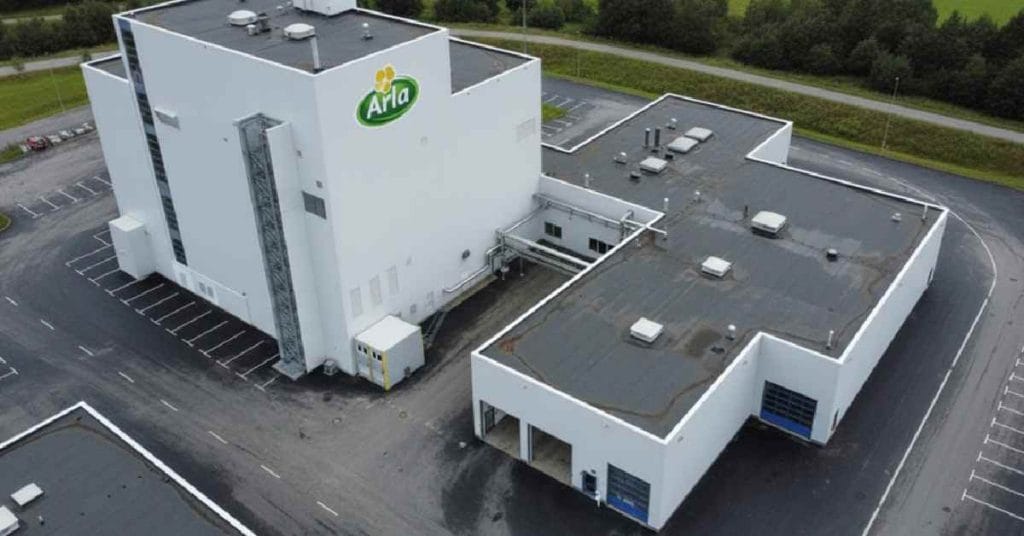
Arla Foods offers a broad range of dairy products that cater to the diverse needs of consumers across the globe. In 2022 alone, Arla sold more than 3.2 billion kilograms of dairy products worldwide, underscoring the scale and efficiency of its operations. All Arla products reflect a focus on quality, natural ingredients, and sustainability, consistent with its Scandinavian roots and cooperative structure.
Flagship Brands of Arla Foods
Arla markets its products under multiple recognizable and successful brand names, many of which lead their markets both in Denmark and abroad.
Arla®
The core brand “Arla®” represents a wide spectrum of fresh dairy products including milk, yogurt, cheese, and cream. Arla® products are renowned for their purity, high nutritional value, and absence of artificial additives. The brand is especially strong in Denmark and increasingly visible across Europe and Asia, often associated with wholesome, sustainable dairy.
Lurpak®
Arguably one of Arla’s most famous global products, Lurpak® is a premium Danish butter known for its rich texture and distinct flavor. Crafted using traditional methods and entirely natural ingredients, Lurpak® has become a global symbol of high-quality European butter. It is available in over 95 countries and holds leading market share positions in the UK, the Middle East, and Australia.
Castello®
Specializing in artisan cheeses, Castello® is Arla’s gourmet cheese brand, offering products like blue cheese, brie, camembert, and havarti. With its roots dating back to 1893, the Castello range is positioned in the premium segment and has found a loyal following in Europe and North America.
Powdered Milk and Formula
In many emerging markets, particularly in Africa, the Middle East, and Southeast Asia, Arla focuses on providing long-shelf-life products such as powdered milk and infant formulas. These are often sold under brands like Dano®, Milex®, and Arla Baby & Me®. These products cater to regions where refrigeration is limited or where there is high demand for nutrition-rich dairy alternatives.
Commitment to Organic and Lactose-Free Options
In response to the growing shift in consumer preferences toward health and wellness, Arla has significantly expanded its range of organic and lactose-free products. Denmark was one of the earliest and most ardent adopters of organic farming, and Arla leverages this heritage in its organic milk and yogurt lines. The Arla® Øko (organic) range is widely distributed in Denmark and other European markets.

The lactose-free segment is also growing, with Arla offering both milk and dairy derivatives that provide alternative options for lactose-intolerant consumers. These products are developed without compromising the taste or nutritional benefits of traditional dairy.
Innovative Product Lines
Arla continually invests in research and development to launch innovative dairy products that align with evolving dietary trends. Examples include high-protein yogurts and cottage cheese for fitness-oriented consumers, as well as dairy-based drinks and snacks that combine taste with convenience.
One standout example is the Arla® Protein line, which includes high-protein milk drinks, puddings, and yogurts marketed toward active lifestyles. These products have performed particularly well in fitness-conscious markets like the UK, Germany, and Nordic countries.
Foodservice and B2B Solutions
Beyond consumer-packaged goods, Arla serves the foodservice sector through its Arla Pro division. Arla Pro supplies hotels, restaurants, bakeries, and catering companies with bulk dairy ingredients such as cheese blocks, butter portions, cooking cream, and specialty dairy solutions.
Moreover, Arla supplies dairy ingredients to the global food industry through Arla Foods Ingredients (AFI), a subsidiary that produces highly specialized whey proteins, lactose powders, and functional dairy ingredients. These are used in products ranging from infant nutrition and clinical foods to baked goods and sports formulas.
AFI operates independently but leverages Arla’s high-quality milk streams to produce innovative, science-based solutions for third-party manufacturers. In 2022, Arla Foods Ingredients contributed approximately 10% to Arla’s total revenue, highlighting its strategic importance.
Building Health and Nutrition into Its Offerings
Arla company has implemented a global policy to reduce added sugar and salt levels across its product lines. Nutritional labeling is also a central pillar of Arla’s consumer transparency efforts, helping consumers make informed choices. As part of its health initiative, Arla’s “Healthy Eating in Schools” program delivers educational resources and free milk to children in schools in several countries, including Denmark and the UK. These programs are part of Arla’s wider social responsibility commitments, showing how its product portfolio also contributes to public nutrition education.
Digital Offerings and Consumer Engagement
Arla is increasingly blending its product offerings with digital tools and modern retail trends. The company actively uses digital platforms to collect consumer feedback, conduct R&D studies, and launch personalized health and wellness campaigns. In some markets, Arla has introduced QR-code-enabled packaging that allows consumers to trace the origin of their dairy products down to the farm level.
Additionally, the company has ventured into e-commerce and mobile applications for recipe sharing, product information, and direct-to-consumer sales in selected European markets. This digital edge improves customer engagement and supports a modern, convenience-oriented shopping experience.
Responsiveness to Cultural and Regional Preferences
One of Arla’s greatest strengths is its adaptability to local consumer preferences. For example, in the Middle East and North Africa region, Arla tailors its Lurpak and Dano brands to align with regional culinary customs, offering portion-sized formats and fortified milk powders. In China, Arla’s infant formula under Arla Baby & Me® is positioned to emulate Scandinavian purity and safety—highly valued attributes among Chinese parents.
Whether producing gouda cheese for a European market, laban (fermented milk drink) for the Middle East, or fortified powdered milk for Sub-Saharan Africa, Arla’s global product strategy demonstrates its sensitivity to cultural diversity while maintaining consistent quality and brand integrity.
Conclusion: Arla Foods
Arla Foods stands as a leading international example of how a company can remain closely tied to its roots while achieving enormous global success. As a farmer-owned cooperative headquartered in Denmark, Arla has consistently balanced the demands of economic growth, environmental sustainability, and product innovation.
From fresh milk and organic yogurts to globally recognized brands like Lurpak and Castello, Arla’s diverse product portfolio reaches over a hundred countries. The company’s emphasis on transparency, sustainability, and nutrition has made it a trusted name in households and professional kitchens alike.
Beyond its product lines, Arla’s strategic investments in climate-friendly farming, digital innovations, and international expansion signal its readiness for the future – one where responsible food production and quality go hand in hand.
Frequently Asked Questions about Arla Foods
1. What are the most popular Arla Foods brands?
Some of the most well-known Arla brands include:
– Arla®: core dairy products like milk, yogurt, and cream
– Lurpak®: premium butter
– Castello®: specialty and gourmet cheeses
– Dano®: powdered milk, especially popular in Africa and the Middle East
– Arla® Protein: high-protein dairy snacks and drinks
2. How many countries does Arla operate in?
Arla exports to over 120 countries and operates production facilities and offices in more than 40 of them. In addition, it is largest markets include the UK, Germany, Denmark, Saudi Arabia, and China.
3. How does Arla support the communities it operates in?
Arla conducts nutrition education programs in schools, invests in community development projects with its farmers. And it supports gender equality and clean water initiatives in various countries, especially in Sub-Saharan Africa and the Middle East.
4. How is Arla responding to changing global food trends?
Arla is actively innovating in response to food trends like high-protein diets, functional nutrition, sustainability, and convenience. Furthermore, its R&D teams focus on product development in these areas, while digital tools help track and respond to consumer needs.