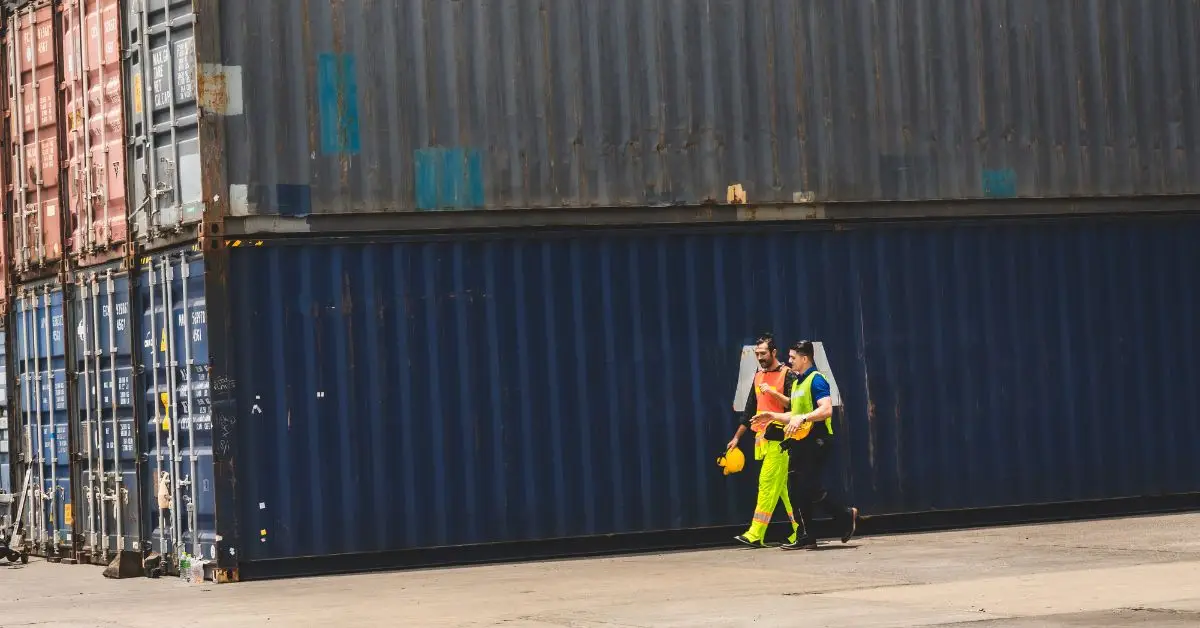
A concerning analysis of Danish Industry illustrates a grim outlook for Denmark’s economy as a result of Germany’s stagnating industrial market, indicating potential job losses and significant export revenue declines.
The Impact of Germany’s Economic Struggles on Denmark
Denmark’s economic health is intricately tied to that of Germany, and a new analysis from Danish Industry emphasizes the troubling consequences of the latter’s stagnating economy. As Germany grapples with ongoing economic difficulties, this has led to a ripple effect, causing job losses and loss of revenue for many Danish firms reliant on the German market.
The Current Landscape
The analysis reveals a distressing sentiment among Danish businesses that export to Germany. Over 400 companies participated in the survey, which found that 40% reported a decline in revenue from their German transactions. Alarmingly, 25% of these companies have already had to lay off employees as a direct result of falling sales and economic uncertainty.
One notable case is ALUnited, a company situated near the Danish-German border in Tønder. Specializing in manufacturing brake pedals for high-profile automotive brands like BMW, Audi, Volkswagen, and Porsche, ALUnited has begun a painful process of reducing its workforce. As Germans continue to feel the squeeze of an economy that has not seen growth for five consecutive years, ALUnited was forced to lay off 45 employees, leaving it with 105 workers.
A Cautious Outlook
The technical director of ALUnited, Udo Petschat, expressed hope for improvement in German economic conditions, indicating that the future of his company heavily relies on this uncertain market. “We could say we keep 150 people, and after two years we would be bankrupt. Or we could do the right thing, reduce the workforce, and secure the company’s future,” he stated.
The broader implications of this trend are dire; according to Allan Sørensen, chief economist at Danish Industry, the downward trajectory of Germany’s economy could lead Denmark to lose up to 7.5 billion DKK (around 1.1 billion USD) in exports. Moreover, the slump in Germany could potentially account for nearly 3,000 jobs disappearing in Denmark due to interlinked supply chains and dependent markets.
The German Economic Crisis
Allan Sørensen described the state of the German economy as being in a “truly poor” condition, saying that there is no indication of imminent recovery. The predictions don’t offer much hope for growth in the upcoming years; estimates indicate that growth might struggle to surpass 1% annually through 2027.
The stagnation stems from high energy costs, rising wages, and increased interest rates that have diminished demand for German exports, particularly in the automotive and machinery sectors—two industries critical to Danish suppliers. After adjusting for the financial crisis and early shutdowns due to COVID-19, current industrial output is at its lowest since 2006.
The Proximity of Economic Ties
Denmark’s relationship with Germany is pivotal; for many Danish businesses, particularly small to medium-sized enterprises (SMEs), Germany is the unequivocal primary market. In 2023, exports to Germany were valued at around 232 billion DKK (approximately 33 billion USD), with clothing and automobile parts constituting significant portions of these exports.
The incoming parliament’s decisions will hold significant weight on the future stability of the German economy. With the German parliamentary elections set for February 23, many Danish firms are closely monitoring developments and possible reforms that may stem from the election results. As industry expert Poul Fritz Kjær noted, the attempted reforms to reignite growth in Germany will be “crucial for prospects”—a sentiment echoed by many worried Danish businesses monitoring the situation.
Concerns on the Factory Floor
Back in Tønder at ALUnited, feelings of uncertainty permeate the factory floor. Production coordinator Hans Christian Oldenburg admitted that the dwindling number of orders has caused unease among the workforce. “Of course, it has created concern. Employees can see that they have less and less to do,” he explained, noting that the company is transitioning to automation to remain viable.
To maintain competitiveness, ALUnited is introducing more robotic work to their assembly lines, a shift that could threaten job security for existing workers. “Next time you visit, it might not be me here, but rather robot-Jens taking my place,” he quipped lightly, though the undertone is serious—automation threatens many traditional jobs.
Broader Economic Implications
While optimism lingers in pockets of the economy, the data paints a troubling picture for many in Denmark. Trade with Germany has been consistently high, with exports outpacing imports to some extent. For instance, in 2022, Denmark imported goods worth 163 billion DKK from Germany, mainly vehicles and industrial equipment.
With such robust economic ties, the effects of a stagnant German economy extend beyond job losses in Denmark; they create challenges for Denmark’s overall economic growth trajectory. The importance of the German market stems not just from exports; for example, 100,000 Danish roles are estimated to be directly reliant on trade with Germany due to the extensive interactions across various industrial sectors.
As both Danish and German economies face uncertainty ahead of the upcoming German election, the interdependence of these nations’ markets is glaring. The expected negative impact on Danish exports and potential job losses serve as a stark reminder of the challenges posed by economic stagnation in a key trading partner. With Denmark’s economic future closely tied to Germany’s revitalization efforts, all eyes will be on the election outcomes and their ripple effects on both nations.