A 73-year-old Danish businessman was dismissed while recovering from a serious injury. His case sparks renewed debate about Denmark’s long-standing 120-day rule for sick leave and job security.
A Sudden Dismissal After Months of Illness
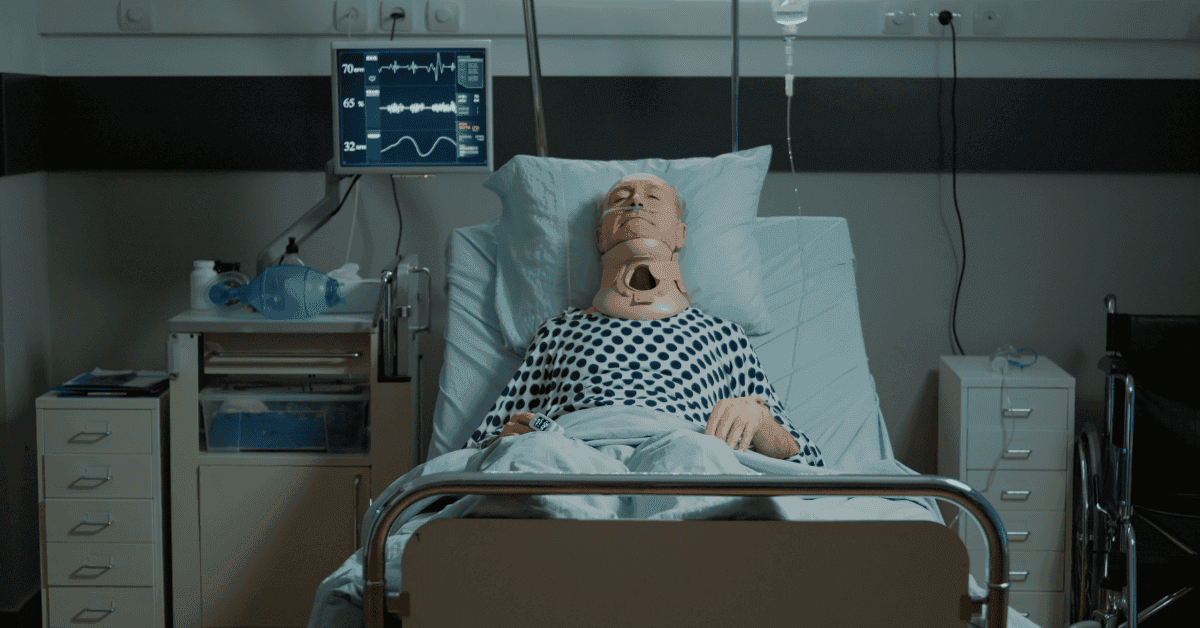
Carsten Gram had spent nearly four decades as a company director before selling his business in 2024. He stayed on in a leadership role, eager to ease into semi-retirement while still contributing to the workplace. However, only 26 days after the sale, a terrible accident changed everything. He fell down a staircase, suffered a head injury, and was taken to Rigshospitalet in Copenhagen for emergency brain surgery. For weeks, he remained in a coma.
After a long and difficult rehabilitation, Carsten was slowly preparing to return to work. Then, just as he began regaining hope, he was handed a letter that would change his life again. His employer had chosen to end his contract using the 120-day rule, which allows companies to dismiss employees who have been on paid sick leave for 120 days within a year.

Understanding Denmark’s 120-Day Rule
According to the Danish Functionaries Act, section 5(2), an employer can terminate an employee after 120 days of receiving salary during illness, provided this condition is written into the employment contract. The notice must be given immediately following those 120 days, and only while the employee is still officially on sick leave.
The rule was established in 1938, later revised in 1948, and has remained largely unchanged. It was originally designed for a labor market very different from the one Denmark has today. Many modern jobs are more flexible and no longer rely on physical labor in the same way.
Bent Greve, professor and labor market expert at Roskilde University, points out that the rule may no longer reflect contemporary work practices. He also notes that many Danish companies prefer not to apply it, recognizing how rigid it can seem under current workplace norms.
From Recovery to Frustration
Carsten Gram’s family had been in regular contact with his former company during his recovery, updating them on his progress. The employer even requested a medical certificate confirming that he could soon return part-time, starting with five hours a week. That made the eventual dismissal particularly surprising for Carsten and his family.
He describes the moment as devastating. After investing a lifetime in the company, he suddenly felt excluded from the very workplace he had helped build. Now retired against his will, he says his main hope is to reform the system rather than remove it entirely.
Calls for Change
Carsten believes the 120-day rule should be updated to fit a more flexible and humane labor market. Denmark promotes workplace fairness and inclusivity, and he argues that being dismissed after a serious medical condition undermines that principle. He wants to introduce a system requiring employers to provide written warning before termination when an employee approaches 120 days of absence. This, he believes, would allow for open dialogue and better understanding between both sides.
His case also highlights how job loss later in life can affect many older Danes who still want to remain active in the workforce. Denmark has a strong commitment to participation in the labor market, and Carsten hopes to continue contributing in new ways, even after the incident. Discussions around working in Denmark are increasingly considering how to protect employees facing health-related challenges.

A Divided Debate
The 120-day rule continues to split opinion among Danish institutions. The Confederation of Danish Employers believes the rule still plays a vital role in balancing company operations with employee rights. They argue it prevents financial strain on businesses while maintaining fairness. On the other hand, unions such as HK Denmark believe it leaves sick employees vulnerable to abrupt job loss and unnecessary stress during recovery.
Experts agree that the law was created for a different era. Denmark’s shift toward knowledge-based jobs, remote work, and senior employment means flexibility and well-being are now essential considerations. Updating laws to reflect those realities could make the labor market more sustainable and inclusive.
Meanwhile, Carsten Gram has found new ways to stay engaged. He now helps his son-in-law’s small business selling Lebanese wine. Though he can no longer drive, he continues to work at a slower pace and contribute his experience where he can. His story is not only about a lost job but also about dignity, resilience, and the complex intersection of health and employment.

Sources and References
The Danish Dream: Work in Denmark – Opportunities and Insights for an International
The Danish Dream: Unemployment Insurance in Denmark for Foreigners
TV2: 26 dage efter salg af virksomhed faldt han ned ad trappe – 124 dage senere blev han fyret