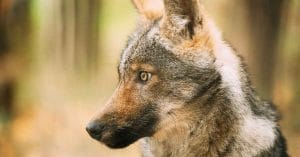
A family dog was killed during a barbecue in rural Tuscany this week, part of a documented European trend that official Italian data confirm: confirmed wolf attacks on dogs jumped from 16 cases in 2015 to 119 in 2023, a more than seven-fold increase in eight years.
According to Italian media reports, the incident occurred near Camaiore in Tuscany. The family had been eating outdoors when a wolf entered their garden. Italian media reported the dog intervened as the wolf approached a child, though the full details of the incident have not been independently verified by primary sources.
For internationals living in Denmark or travelling through rural Italy, the episode highlights a practical shift. Wolves are no longer frontier animals. They now routinely appear in managed landscapes where expats hike, own holiday homes and walk dogs.
Wolf Attacks on Dogs Rise Across Europe
According to ISPRA, Italy’s national wildlife institute, around 3,300 wolves currently live in the country. That is roughly double the 1,600 to 1,800 counted in 2009 to 2012. Denmark went from zero wolves before 2012 to 15 to 20 individuals and three to four packs by 2023, according to Denmark’s official wolf monitoring programme. According to Germany’s Federal Agency for Nature Conservation, Germany logged roughly 1,800 wolves in 2023, up from 400 to 500 in 2015.
Camera traps and citizen reports document wolves crossing golf courses and entering fenced properties with horses and ponies. According to Denmark’s Environmental Agency, wolves have been documented on multiple occasions entering fenced pastures and properties in Jutland in recent years.

Dogs Become the Frontline of Conflict
ISPRA technical reports record confirmed wolf depredations on dogs with unusual detail. According to ISPRA’s livestock damage database, wolf attacks on dogs rose from 16 confirmed cases nationwide in 2015 to 119 in 2023. That 643 percent increase significantly outpaces the roughly twofold growth in Italy’s wolf population over the same period.
Yet compensation schemes across Europe remain focused on livestock. According to Tuscany’s regional ordinance on wolf damage compensation, dogs attacked by wolves are eligible for payment only if they are working animals such as livestock guardian dogs and properly contained. Pet dogs are generally excluded from compensation schemes.
Denmark’s compensation framework presents a similar gap. According to Denmark’s Nature Protection Act and associated Environmental Agency guidance, lethal control of wolves is permitted only in special cases, such as repeated attacks despite preventive measures. Simply observing a wolf near people is not sufficient grounds for shooting.

Attacks on Humans Remain Vanishingly Rare
Despite rising sightings and pet conflicts, official risk assessments still classify attacks on humans as extremely unlikely. According to the EU Large Carnivore Initiative, risks for people are extremely low and remain low when wolves are not fed or encouraged to approach human settlements. According to Germany’s Federal Agency for Nature Conservation, Germany documented one confirmed biting incident involving a human, in Hamburg in March 2024, despite hosting roughly 1,800 wolves.
That leaves internationals navigating a practical gap. EU policy debates focus on livestock and ecology. Lived experience focuses on family dogs and backyards. The wolf policy framework has not fully caught up.
What Internationals Can Do
According to Denmark’s Environmental Agency, dogs should be kept on a leash in known wolf territories and should not roam unsupervised near forest edges at dawn and dusk. The agency also recommends wolf-safe electric fencing around small livestock on rural properties.

In Italy, regional guidance in Tuscany emphasises not leaving pet food or organic waste outdoors and immediately reporting any wolf showing unusual boldness to the Carabinieri Forestali. For expats in Denmark, International Citizen Service centres in Copenhagen, Aarhus, Odense and Aalborg can help direct queries to relevant municipal or police contacts. The LifeInDenmark portal also provides English-language guidance for newcomers.
According to European Commission statements, the current strict protection status of the wolf under the Habitats Directive has been key to its recovery, and any change must be based on robust scientific evidence. In late 2023, the Commission opened a discussion on potentially adjusting that protection status under the Habitats Directive. Italy, with decades of wolf presence, generally emphasises coexistence, as reflected in ISPRA’s management approach. Denmark, with a smaller and more recently established population, has maintained a cautious approach closely aligned with EU rules.