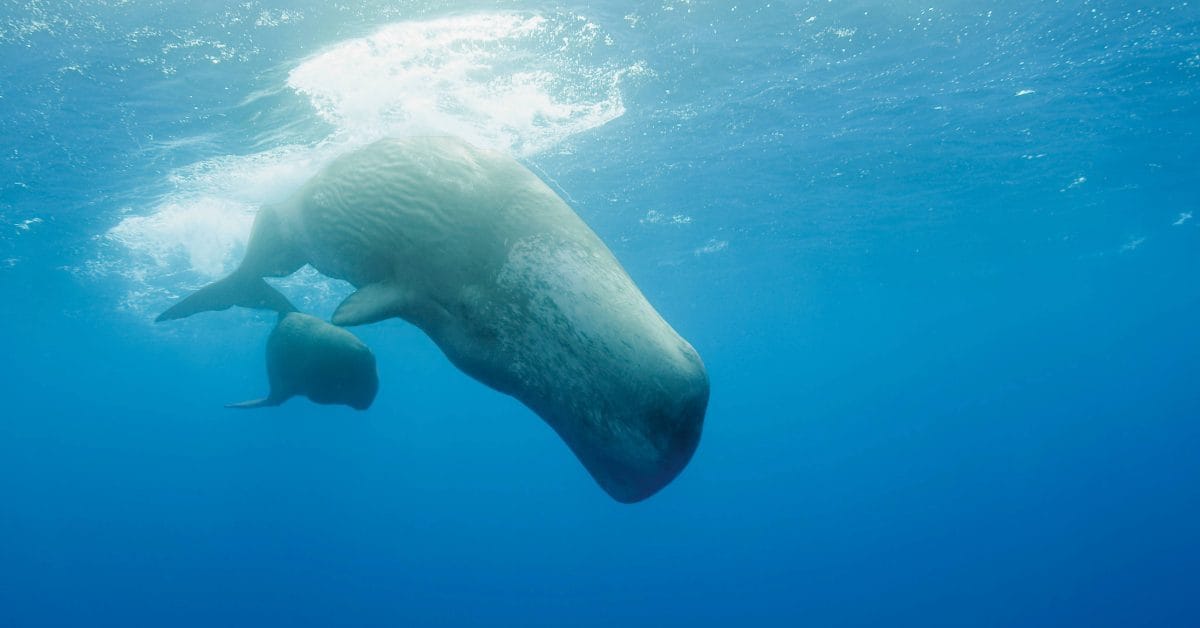
A humpback whale spotted this week in Lillebælt has swum into one of the world’s densest porpoise populations and a shipping corridor that logs dozens of commercial passages daily, yet Denmark has no specific emergency protocol for large whales in narrow straits.
The animal moving through the Little Belt is almost certainly the same individual filmed earlier this month at Aarhus harbour, in Vejle Fjord and in Flensburg two weeks ago. That cross-border track, from a German port through multiple Danish urban waterways into a narrow strait, puts the whale on a collision course with ferries, cargo ships and a surge of amateur smartphone videographers in boats and kayaks.
A rare visitor in a crowded corridor
Lillebælt is deep, more than 80 metres in its central channel, with strong tidal currents that concentrate fish. That makes it attractive to marine mammals. But it is also a funnel: in places only a few kilometres wide, used by commercial traffic bound for the Baltic and dotted with recreational craft from Middelfart, Fredericia and Kolding.
A 2023 technical report for Naturpark Lillebælt estimates up to 3,000 harbour porpoises use the area daily in peak season, one of the densest small-cetacean concentrations anywhere. Yet the same monitoring documents only four confirmed large whale occurrences in more than a decade: a humpback mother and calf in 2014, another large whale in 2020, a dead humpback in March 2023 and now this live animal.

That scarcity matters. Each sighting draws crowds. A local café owner captured the current humpback on video. Bridgewalking guides in Middelfart recall the day a whale surfaced beneath the Old Little Belt Bridge as a career highlight. But those rare moments also increase risk, both for the animal and for people who do not understand the hazards of close approaches in fast-moving water.
Guidance exists, but mostly in Danish
Naturpark Lillebælt publishes a voluntary code of conduct for boats near marine mammals. It says reduce speed when within a few hundred metres, avoid approaching head-on or from behind, and never chase or cut off the animal’s path. The code was written for the resident porpoise population but applies equally to a humpback.
Few mainstream outlets cite it directly. Most English-language information about what to do around whales in Denmark is scattered or absent. Naturstyrelsen, the state nature agency, warned during the 2023 dead humpback incident that people must not touch or approach the carcass, alive or dead. That advice was published in Danish and repeated in local news, but no central English hub exists for internationals who might not catch time-sensitive safety instructions.

For expats living around Aarhus, Odense or Fredericia, that information gap poses a practical problem. The Hvaler.dk Facebook group coordinates citizen sightings and is widely used by whale enthusiasts, but it is an unofficial, Danish-language network. Emergency contacts, 112 for urgent and 114 for non-urgent police, are the same nationwide and English operators are normally available, but knowing when and how to report a stranding or entanglement still requires piecing together guidance from Danish municipal pages and nature-park material.
One whale, multiple jurisdictions
The humpback’s route illustrates how migratory animals ignore borders while management remains stubbornly national. Germany and Denmark both participate in ASCOBANS, an agreement on small cetaceans in the Baltic and North Sea, but large whales are not the primary focus. Strandings and live visits still trigger patchwork responses that depend heavily on local police, harbour authorities and voluntary codes.

Lillebælt is already a Natura 2000 protected area because of its porpoise population, obliging Denmark to maintain favourable conservation status. A charismatic humpback brings welcome attention to marine conservation but also risks overshadowing chronic issues like underwater noise, bycatch and pollution that affect the much more numerous resident porpoises year-round.
What residents should do
Observe from shore or join a licensed tour operator rather than attempting a private close approach. Guided trips through Naturpark Lillebælt and local operators follow the voluntary code and provide context most amateurs lack. If the whale appears distressed, stranded or entangled, contact local police immediately rather than trying to intervene. Do not use drones at low altitude or chase the animal with a boat.

Several marine biologists quoted locally emphasise that deep water and strong currents make Lillebælt suitable for large whales, at least temporarily. But suitability is not the same as safety in a narrow, heavily trafficked corridor where one wrong turn by a cargo ship or a sudden swarm of small craft could turn a rare natural spectacle into an incident authorities are not fully prepared to manage.