A homeless man was found severely frozen on a Copenhagen street during a night when temperatures plummeted to minus 4 degrees Celsius, with wind chill making it feel like minus 17 degrees. The incident highlights a critical shortage of shelter beds in Denmark’s capital, forcing homeless people to sleep outside in life-threatening conditions despite warnings from volunteers and advocacy groups.
Man Found Frozen on Copenhagen Street
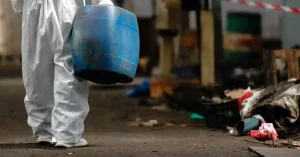
Volunteers from the charity organization Hjælp Din Næste discovered a homeless man lying on Nørrebrogade in Copenhagen, separated from the frozen cobblestones only by a thin layer of cardboard. Snorre Pedersen, founder of the organization, described the man as severely weakened by the cold and unable to put on a hat by himself due to lack of strength.
The man was so affected by the extreme temperatures that he could barely speak. Pedersen noted this was unusual even in his extensive experience helping homeless people during winter months. The volunteers provided him with a sleeping bag, gloves, and a hat, checking on him again twenty minutes later to ensure he had warmed up.
Temperatures during the night between Monday and Tuesday reached minus 4 degrees Celsius. However, strong winds made it feel like minus 17 degrees. Weather forecasts show no sign of nighttime temperatures rising above freezing in the Copenhagen area over the coming week.

Shelters Turning Away Homeless People
The extreme cold has put enormous pressure on Denmark’s homeless shelters. Multiple facilities in Copenhagen are now turning people away daily because they have reached full capacity. Those who cannot get a bed have no choice but to sleep outside in dangerous conditions.
Peter Haugelund, daily manager at the charity Det Runde Bord, recently found 12 people sleeping on Copenhagen streets. His organization just donated winter equipment worth approximately 600,000 kroner to help homeless people survive the cold. He expressed frustration that better help is not available for vulnerable people facing these conditions.
According to the most recent national survey, 503 people were sleeping rough in Denmark during week 6 of 2024. Approximately half of all people sleeping on streets in Denmark are found in Copenhagen and the surrounding area. The situation is particularly dire because shelters use a lottery system to determine who gets beds when demand exceeds capacity.
Who Are Denmark’s Homeless?
Statistics reveal that 50 percent of people sleeping rough have been homeless for more than two years. Mental illness affects 74 percent of this population, and most are between 30 and 59 years old. Additionally, 195 unregistered homeless migrants sleep on Danish streets, though this figure is counted separately from overall homelessness numbers.
Unregistered migrants only have access to emergency healthcare in Denmark, making their situation even more precarious during extreme weather. The lack of comprehensive support for all vulnerable people sleeping rough creates dangerous gaps in safety during winter months.

Urgent Call for More Indoor Sleeping Spaces
Kjartan Emhjellen, chairman of the Copenhagen branch of De Hjemløses Landsorganisation, emphasized the urgent need for more indoor sleeping spaces. He described the current lottery system at shelters as undignified, forcing people into potentially fatal situations when temperatures drop this low.
Emhjellen fears that without immediate action, people could die from sleeping outside. He argued that it would be better for shelters to have empty beds than for anyone to lose their life to the cold. The gravity of the situation becomes clear when considering what medical experts say about extreme cold exposure.
Surprisingly, the organizations helping on the ground report seeing homeless people with frostbite on their feet and hands. Volunteers from both Hjælp Din Næste and Det Runde Bord describe conditions on Copenhagen streets as drastically worse than usual winter difficulties. The current cold snap has created what they call a completely different level of seriousness.
Medical Perspective on Cold Exposure
Michael Wanscher, a senior physician at Rigshospitalet’s Department of Anesthesia, Surgery, and Intensive Care, explained the medical progression of hypothermia. At 32 degrees Celsius body temperature, a person remains conscious and experiences shivering. As body temperature drops further, heart rate and breathing slow down, and shivering stops.
Below 28 degrees Celsius, a person becomes unconscious. At temperatures below 24 degrees Celsius, the heart and breathing stop completely, resulting in clinical death. However, Wanscher emphasized that life can still be saved at this point because cells require minimal oxygen to be reactivated.
Rigshospitalet receives approximately three to five patients each year with critically low body temperatures. Immediate cardiopulmonary resuscitation is essential if someone finds an unresponsive person who may be hypothermic. The most important factor is getting the person to a hospital as quickly as possible.

Prevention Better Than Emergency Response
According to the senior physician, the best prevention against such scenarios is ensuring society provides places where homeless people can sleep indoors. This preventive approach would eliminate the need for emergency medical interventions and save lives during extreme weather conditions.
In fact, Denmark has experienced tragic outcomes from cold exposure before. In 2016, a homeless man lost his life in the cold near Rundetaarn in Copenhagen. Witnesses told TV 2 Lorry at the time that he had been lying in the same position for hours before anyone reacted.
Volunteers emphasize that the minimum anyone can do when seeing someone who appears to be freezing on the street is to ask if they need help. At worst, someone might receive a negative response, but checking could save a life. Simple human intervention can make the difference between survival and tragedy.
Years of Warnings Go Unheeded
Peter Haugelund from Det Runde Bord stated he has been raising alarms about this issue for 20 years. Despite decades of advocacy, homeless people continue to be forced onto Copenhagen streets during the coldest months. Meanwhile, Kjartan Emhjellen from De Hjemløses Landsorganisation described the situation as terrible and expressed uncertainty about what it will take to bring change.
Snorre Pedersen from Hjælp Din Næste noted that volunteers are encountering a completely different level of severity on the streets right now because of the cold. His organization has been actively patrolling Copenhagen neighborhoods in recent days to help homeless people struggling in the extreme temperatures.
Success Story Amid Crisis
The man found on Nørrebrogade was fortunate that volunteers discovered him when they did. After receiving a sleeping bag, gloves, and a hat from Hjælp Din Næste volunteers, he was able to regain warmth. When volunteers returned twenty minutes later to check on him, he told them he had warmed up and did not need them to call for additional help.
Nevertheless, this individual case represents a broader systemic failure. Organizations continue distributing free food and clothing to homeless people trying to stay warm by lighting fires in parks throughout Nørrebro and other Copenhagen neighborhoods. These makeshift warming efforts highlight the inadequacy of official shelter capacity.
Without doubt, the combination of insufficient shelter beds and dangerous cold creates conditions where vulnerable people face genuine threats to their lives. Advocacy organizations stress that such circumstances should not exist in Denmark, a wealthy nation known for its social welfare systems and commitment to protecting vulnerable populations.
Sources and References
The Danish Dream: Is Denmark a Safe Place to Live? Safety, Crime Rates, Quality of Life
The Danish Dream: Health Insurance in Denmark for Foreigners
TV2: Mand fundet bundfrossen på gaden – ‘det er alvor lige nu’