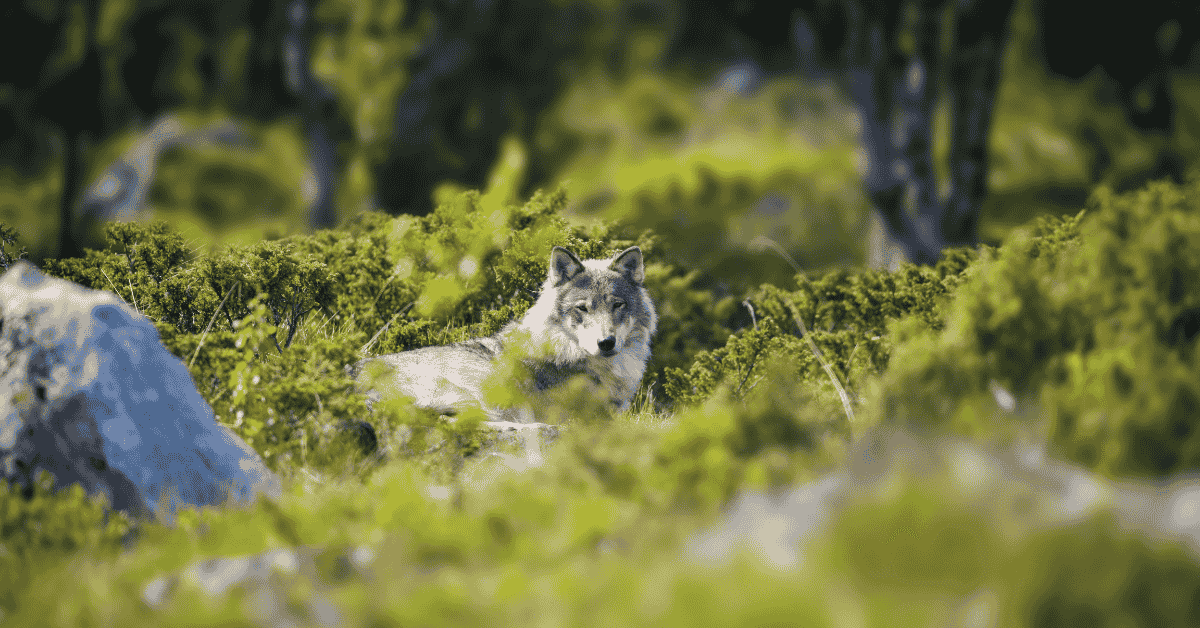
Denmark’s wolf-proof fences may no longer be effective at keeping wolves out after regulations were loosened, allowing the top wire to be five centimeters lower than before. Experts warn that the recent spike in wolf attacks on livestock behind supposedly secure fences could result in many wolves being shot unnecessarily when new hunting rules take effect.
Changes to Fence Standards May Have Weakened Protection
The debate over wolf management in Denmark has taken a new turn as questions arise about whether wolf-proof fences are truly keeping wolves away from livestock. While these fences were once highly effective, recent regulatory changes may have compromised their ability to protect sheep and other farm animals.
Previously, wolf-proof fences required the top wire to be at least 110 centimeters high. However, updated rules now permit a height of just 105 centimeters between posts. This seemingly minor adjustment of five centimeters has coincided with a dramatic increase in wolves breaching fences that were supposed to keep them out.
Morten D.D. Hansen, a naturalist and biologist, points out that the old criteria were enforced strictly and resulted in only one or two attacks behind wolf-proof fences over a decade. Now, that number has grown significantly. He believes the reduced height requirement is enough to make the fences ineffective.

Multiple Attacks Reported Across Jutland
In recent months, at least 10 incidents have been documented where wolves managed to get past fences in areas including Lille Vildmose, Klosterheden, and near Nymindegab. These breaches have raised concerns among livestock owners and wildlife advocates alike.
Anette Reinholdt, founder of the citizen group Ulvene i Vendsyssel (Wolves in Vendsyssel), compares the situation to leaving a refrigerator door open. She explains that wolves naturally go after the easiest prey available, and when fences fail to provide adequate protection, livestock becomes an easy target.
According to Reinholdt, the fences should be taller and include ground protection to prevent wolves from digging underneath. She argues that something must be wrong when attacks suddenly increase so dramatically, and authorities should reassess what can be done to improve fence standards.
Government Funding Expanded for Fence Subsidies
The Danish government has allocated 20.2 million kroner for wolf management from 2024 to 2027. This funding includes subsidies for livestock owners throughout Jutland who want to install wolf-proof fences. Previously, these subsidies were only available in limited areas of Mid and West Jutland.
As of December 15, 2025, a new subsidy pool opened and will remain available until February 28, 2026. The program offers increased rates that cover both installation and five-year maintenance for existing or new fences. Three approved fence models exist, all of which can be upgraded from existing structures.

New Hunting Rules Could Threaten Wolf Population
Starting July 1, it became legal to shoot wolves that manage to breach wolf-proof fences. However, experts warn that this policy could result in many wolves being killed even though the fences themselves may be inadequate.
Morten D.D. Hansen notes that it does not take much expertise to realize that the new rules will make survival harder for wolves in Denmark. He emphasizes that many so-called problem wolves may simply be responding naturally to poorly designed barriers.
Surprisingly, Hansen points out that anyone who has tried to climb over a fence knows that an extra centimeter or two can make the difference between success and failure. The same principle applies to wolves attempting to reach livestock.
Are Wolves Learning to Overcome Barriers?
Styrelsen for Grøn Arealomlægning og Vandmiljø, the Danish agency responsible for green land conversion and water environments, offers a different perspective. In a written response, the agency states that Danish requirements for wolf-proof fences align closely with those of neighboring countries, reflecting extensive experience in preventing wolf attacks.
The agency notes that most attacks behind wolf-proof fences have occurred in the Klosterheden territory. Interestingly, many of these attacks happened behind fences that met the old, stricter definition of wolf-proof. This suggests that increased attacks may not be due solely to relaxed standards but could indicate that wolves in this specific area have learned how to overcome the barriers.

Concerns About Long-Term Impact on Wolf Population
Denmark’s wolf population has grown since the first wolf arrived in Jutland in 2012. By 2024, five known breeding pairs were established, with most wolves now living outside the former subsidy zones. This expansion has contributed to rising attacks on livestock.
Without a doubt, the combination of inadequate fencing and new hunting permissions creates a troubling scenario for wolf conservation. Anette Reinholdt stresses that wolves breaching fences are not necessarily problem animals. Instead, they may simply be exploiting weaknesses in human-made barriers.
Morten D.D. Hansen shares this concern and hopes authorities will tighten fence requirements again. He acknowledges his fondness for animals but admits that sheep are not particularly difficult prey for wolves due to their limited defensive capabilities.
Compensation Costs Continue to Rise
Wolf attacks on livestock have led to increasing financial compensation. In 2022, payouts totaled 381,155 kroner, but this figure jumped to 662,913 kroner in 2023. This upward trend reflects both the growing wolf population and the rising number of breaches through supposedly secure fences.
Compensation depends on whether livestock owners have installed proper wolf-proofing. Subsidies for fence installation have also grown, with 161,566 kroner allocated to private stationary fences in 2022 alone.
Calls for Better Standards and Review
Both wildlife advocates and farmers are calling for a reassessment of fence standards. Given that wolves can now breach barriers more easily than before, many believe the regulations should be adjusted to restore effectiveness.
Meanwhile, trial programs for alternative fence models are underway and will be evaluated by the end of 2026. These include different configurations of electrified wires and net fences designed to better deter wolves.
In the end, the debate centers on finding a balance between protecting livestock and preserving Denmark’s wolf population. As it turned out, lowering fence height requirements by just five centimeters may have tipped that balance in an unintended direction.
Sources and References
The Danish Dream: Denmark Makes It Easier to Shoot Wolves
The Danish Dream: Best Home Insurance in Denmark for Foreigners
DR: Ulvesikrede hegn er måske slet ikke så ulvesikre igen