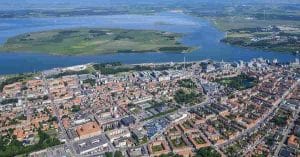
Vesterbro is Copenhagen’s grittiest success story: a former working-class and red-light district reinvented as the city’s most magnetic neighborhood for food, music, and nightlife.
Vesterbro: Copenhagen’s Most Surprising Neighborhood
I have lived in Denmark long enough to remember when expats were warned to avoid Vesterbro after dark. That warning is now ancient history. Today, Vesterbro is one of the most desirable postcodes in Copenhagen, even if some of its rougher corners still wink at the past.
The district sits directly west of the Inner City, squeezed between Frederiksberg and the harbor. It covers roughly 5.22 square kilometers and is home to about 42,000 residents, according to Copenhagen Municipality data. For newcomers, this is where the city stops being a postcard and starts being a place where people actually live.
A Quick History of Vesterbro
Vesterbro grew up outside Copenhagen’s old western gate, Vesterport, in the late 1800s. Workers from the new Carlsberg breweries and the central railway filled its tenements. The result was a dense, smoky, and often poor district that the bourgeoisie politely ignored.
By the 1980s, Istedgade had become Scandinavia’s most infamous red-light street. Then the city launched a massive urban renewal program in the 1990s that ran for nearly two decades. As reported by the Danish Architecture Center, more than 350 buildings were renovated, courtyards were opened up, and Vesterbro slowly turned into the gentrified hotspot we know now.
Why Expats Are Moving to Vesterbro
When I ask new arrivals where they want to live, Vesterbro often makes the shortlist. The neighborhood feels international, walkable, and unpretentious. It is also one of the few central districts where you can still hear English, Spanish, and Arabic on the same street.
That mix is rare in Denmark. Vesterbro has the highest density of cafés, bars, and independent shops in the city. It also has fast access to public transport, with Copenhagen Central Station sitting at its eastern edge.
The Housing Reality Check
Here is the part the glossy guides skip. Vesterbro is expensive. According to Boligsiden, average apartment prices in 2024 hovered around 65,000 DKK per square meter, well above the city median.
If you are serious about renting, start early and prepare for queues. My apartment hunt advice for expats is simple: register on every Danish rental platform and use a local network. You can read more on the cost of living in Denmark before signing anything.
What to Do in Vesterbro
The district punches far above its size when it comes to things to do. You can spend a day eating, drinking, and gallery-hopping without ever leaving its borders. Below are the spots I actually recommend to visiting friends.
Kødbyen: The Meatpacking District
Kødbyen is the white-tiled industrial complex that used to slaughter half of Copenhagen’s meat. Today, the same buildings house Michelin-starred restaurants, dive bars, and art galleries side by side. It is messy, loud, and the best night out in the city.
According to Wikipedia, the area is split into Brown, Grey, and White Meat City. The White Meat City, built in 1934, holds the bulk of the nightlife. Friday nights here feel like a Berlin warehouse party with better lighting.
Istedgade and the Old Red Light Strip
Istedgade is the spine of Vesterbro. Walk it from Central Station to Enghave Plads and you will see the entire transformation in one stroll. The first blocks still have sex shops and a few hostess bars, then the street softens into bookstores and natural wine bars.
I find this honesty refreshing. Vesterbro never pretended its past away, and that is precisely why it works. The contrast gives the street a texture you simply do not get on Strøget.
Carlsberg Byen and the Brewery District
Just south of Vesterbro proper sits the old Carlsberg brewery, now a new neighborhood called Carlsberg Byen. The original Elephant Gate from 1901 still stands. You can also visit the Ny Carlsberg Glyptotek nearby, founded by the brewery’s owner J.C. Jacobsen.
The Visit Carlsberg experience reopened in 2024 after years of renovation. It is touristy but genuinely fun. Per the official site, the tour ends with two beers in the old stables, which is a hard offer to refuse.
Værnedamsvej: Little Paris
Værnedamsvej is the small street straddling the Vesterbro and Frederiksberg border. Locals call it Little Paris because of the cheese shops, wine bars, and butchers packed into two blocks. Saturday brunch here is a sport.
I bring every visiting parent to Granola for a long lunch. The street also has Falernum, Falko, and a butcher that still makes its own pâté.
Halmtorvet, Enghave Plads, and the Public Spaces
Halmtorvet used to be a hay market and is now a wide café-lined square. Enghave Plads has been there since 1894 and serves as the unofficial living room of the neighborhood. Between them runs Sønder Boulevard, a 1.6 km linear park.
The green spaces matter. Enghaveparken was redesigned in 2019 as a climate park that can hold 22,600 cubic meters of rainwater during cloudbursts.
Eating and Drinking in Vesterbro
Vesterbro has more restaurants per capita than any other Copenhagen district. You can eat your way from natural wine to Sichuan noodles within three blocks. Here is what I send visitors to.
- Kødbyens Fiskebar: Seafood in a former butcher shop. Book ahead.
- Mother: Sourdough pizza with raw milk mozzarella. Loud and worth it.
- Hija de Sanchez: Tacos from a former Noma pastry chef. Cash and chili.
- Granola: The Værnedamsvej brunch classic since 2011.
- WarPigs: Texas barbecue brewed by Mikkeller. Yes, really.
- Mikkeller Bar Viktoriagade: The original location of the cult Danish brewer.
For traditional Danish smørrebrød, Schønnemann is technically over the border in the Inner City, but most people walk to it from Vesterbro. You can also explore the best bakeries in the area for a proper kanelsnegl.
Festivals and Nightlife in Vesterbro
The district is the engine of Copenhagen nightlife. Bars stay open past 5am on weekends, and the police rarely intervene unless things turn truly silly. The vibe is permissive but not chaotic.
The biggest annual event is the Distortion Festival, usually in early June. As stated by organizers, the Wednesday street party in Vesterbro draws over 100,000 people. The whole neighborhood becomes a moving block party for one day.
The Quieter Hours
If clubbing is not your scene, the daytime nightlife is just as good. Specialty coffee at Prolog or Lille is excellent. The natural wine scene at Pompette and Ved Stranden 10 has matured into something quite serious.
I also recommend the smaller art galleries tucked into side streets. V1 Gallery in Kødbyen consistently shows interesting contemporary work.
How to Get to Vesterbro
Vesterbro is one of the easiest neighborhoods to reach in the city. Copenhagen Central Station sits at its eastern border, served by every S-train line and the regional trains. The metro M3 Cityringen serves Enghave Plads with direct access.
From Copenhagen Airport, take the M2 metro to Nørreport and switch to the M3, or the train to Central Station. The whole trip takes about 20 minutes. For more detail, see this guide on getting from Copenhagen Airport to the city center.
Cycling Through Vesterbro
The most Danish way to arrive is by bike. Vesterbro has dedicated cycle lanes on every major street. Sønder Boulevard and Vesterbrogade are particular favorites for a slow ride.
If you are new to cycling in Copenhagen, rent a bike from Donkey Republic or Swapfiets. The flat terrain means you do not need to be an athlete.
Vesterbro vs. Other Copenhagen Neighborhoods
Expats often ask me how Vesterbro compares to its neighbors. The short answer is that each district has a distinct personality. Here is how I describe them.
- Vesterbro: Edgy, international, food-obsessed. Best for nightlife and culture.
- Nørrebro: Multicultural, younger, more political. Great cheap eats.
- Østerbro: Family-oriented, leafy, calmer. Closer to the parks and lakes.
- Frederiksberg: Posh, residential, technically a separate municipality.
- Christianshavn: Canals, houseboats, and Christiania. Bohemian and pricey.
If you want a deeper comparison, this guide to where to stay in Copenhagen breaks down each district for visitors. For longer-term moves, the Copenhagen suburbs guide is also useful.
The Gentrification Question
I cannot write about Vesterbro without acknowledging the obvious. The neighborhood has become a textbook case of gentrification, and not everyone is happy about it. Long-time residents have been priced out, and the social mix is narrowing.
According to a 2023 report from the Copenhagen Municipality, the share of social housing in Vesterbro has dropped steadily over the past two decades. Several activist groups, including Bo Bedre på Vesterbro, continue to push back. As an expat, it is worth knowing that part of the charm you are paying for comes at someone else’s expense.
What This Means for Newcomers
The honest answer is that you will benefit from the regeneration whether you like it or not. The least you can do is shop at the independent stores, eat at family-run places, and support local culture. That is how the neighborhood retains some of what made it interesting.
I have seen too many cool districts in Europe lose their soul to chain stores and short-term rentals. Vesterbro is fighting it, but the fight is ongoing.
Best Time to Visit Vesterbro
The neighborhood is open year-round, but it sings between May and September. Summer evenings on Sønder Boulevard, with locals drinking cheap wine on the benches, are pure Copenhagen. Temperatures sit between 15°C and 22°C, perfect for walking.
Winter is quieter but not dead. The bars are warm, the candles come out, and the prices drop. November and December bring Christmas markets at Halmtorvet that are far less touristy than the ones at Tivoli.
FAQ About Vesterbro
What is Vesterbro famous for?
Vesterbro is famous for its transformation from Copenhagen’s red-light district into the city’s most vibrant neighborhood. It is now known for the Meatpacking District nightlife, Istedgade, the Distortion Festival, and a dense food and bar scene.
Is Vesterbro safe at night?
Yes, Vesterbro is generally safe at night, including the streets near Central Station. Petty crime exists around Istedgade’s eastern end, but violent incidents are rare. The neighborhood is well-lit and busy until late, which makes it one of Copenhagen’s most active districts after dark.
How do I get to Vesterbro from Copenhagen Airport?
Take the train from Copenhagen Airport directly to Copenhagen Central Station. The journey takes 15 minutes and costs around 36 DKK. From the station, Vesterbro begins right outside the western exit. You can also take the M2 metro and switch to the M3 at Frederiksberg.
Is Vesterbro a good place to live as an expat?
Vesterbro is one of the top expat neighborhoods in Copenhagen. It is central, walkable, and international in feel. The downside is the cost. Apartments are among the most expensive in the city, and rental competition is fierce. Smaller studios start around 9,000 DKK per month.
What is the Meatpacking District in Vesterbro?
The Meatpacking District, or Kødbyen, is a former industrial slaughterhouse area in southern Vesterbro. Since the early 2010s, it has hosted restaurants, art galleries, and clubs in its old white-tiled halls. It is busiest on Friday and Saturday nights from 10pm onwards.
What are the best streets to explore in Vesterbro?
The essential streets are Istedgade, Vesterbrogade, Sønder Boulevard, Værnedamsvej, and Halmtorvet. Each offers something different, from gritty shops to high-end cafés. A walk between Central Station and Enghave Plads covers most of them in under an hour.
When is the Distortion Festival in Vesterbro?
Distortion takes place every year in early June. The Wednesday street party is held in Vesterbro and draws over 100,000 attendees. The festival has run since 1998 and is one of Europe’s largest urban street festivals.
Is Vesterbro family-friendly?
Yes, despite its nightlife reputation, Vesterbro is genuinely family-friendly. Skydebanehaven, Enghaveparken, and Sønder Boulevard offer playgrounds and green space. Many cafés on Værnedamsvej and Halmtorvet are stroller-heavy on weekends.
What is the population of Vesterbro?
Vesterbro has approximately 42,000 residents as of 2024, according to Copenhagen Municipality. Combined with the adjacent Kongens Enghave district, the total rises to around 81,000. Population density is among the highest in Denmark.
How does Vesterbro compare to Nørrebro?
Vesterbro is slightly more polished and food-focused, while Nørrebro is more multicultural and politically charged. Both have excellent nightlife and dense café scenes. Vesterbro is closer to the train station and tourist sights, which makes it easier for first-time visitors to navigate.