The Museum of Fire-fighting in Oure puts a thousand years of Danish flames, hoses, and heroism inside one warehouse on Funen. For expats craving an offbeat Danish day out, this overlooked museum delivers vintage fire engines, hands-on demos, and stories that change how you see Denmark.
The Museum of Fire-fighting: A Hidden Funen Gem Worth the Detour
For history nerds, engineering buffs, and anyone fascinated by human bravery, The Museum of Fire-fighting in Denmark is a small revelation. It sits in Oure, a quiet village on southern Funen, roughly halfway between Svendborg and Nyborg. The building looks unremarkable from the road. The collection inside does not.
I first ended up there on a rainy Saturday in October, mostly by accident. Three hours later, I was reading 19th century insurance plaques and trying on a replica leather helmet. As reported by visitors on TripAdvisor and Google Reviews, this is the typical arc. You arrive curious. You leave converted.
What Makes This Museum Different
The Museum of Fire-fighting is not just an artifact warehouse. It is a working archive of how Denmark learned to stop burning down. Founded in 1992 by a group of local volunteer firefighters, it now houses over 1,500 artifacts, dozens of restored fire engines, and an archive of uniforms, helmets, hand pumps, and insurance documents.
The exhibits stretch from medieval bucket brigades to modern foam tankers. Many engines still run. Several have been driven in parades through Svendborg and Odense. According to the museum’s volunteer curators, restoration is ongoing, and new acquisitions arrive regularly from decommissioned Danish brigades.
Why Expats Should Care About Danish Firefighting History
If you have moved to Denmark recently, you have probably noticed something odd. Danish towns feel almost suspiciously fireproof. Brick is everywhere. Wooden buildings are tucked into protected pockets. The reason is not aesthetic. It is trauma.
The Great Fire of Copenhagen in 1728 destroyed around 28% of the capital, including most of its medieval core. The 1795 fire finished the job, leveling another huge slice. These disasters rewrote Danish building codes, insurance law, and urban planning for centuries. The Museum of Fire-fighting tells that story through the equipment that responded to it.
The Museum of Fire-fighting: What You Will Actually See Inside
The exhibits are organised loosely by era, but the layout encourages wandering. You can move from a hand-pumped 1850s Sprøjte to a 1960s Falck rescue truck within twenty steps. That density is what gives the place its charm.
The Vintage Fire Engines
The collection’s centerpiece is its lineup of restored Danish fire engines. Highlights include early horse-drawn steam pumps, a working 1920s Triangel truck, and several mid-century Falck and Zonen vehicles in original livery. Many are polished to parade condition. A few are deliberately left in their working state.
As stated by the volunteer mechanics on site, the goal is preservation, not perfection. They want visitors to smell the oil and rubber. That detail matters. Modern museum culture sterilises everything, and this place pushes back against that.
Helmets, Hoses, and the Evolution of Protective Gear
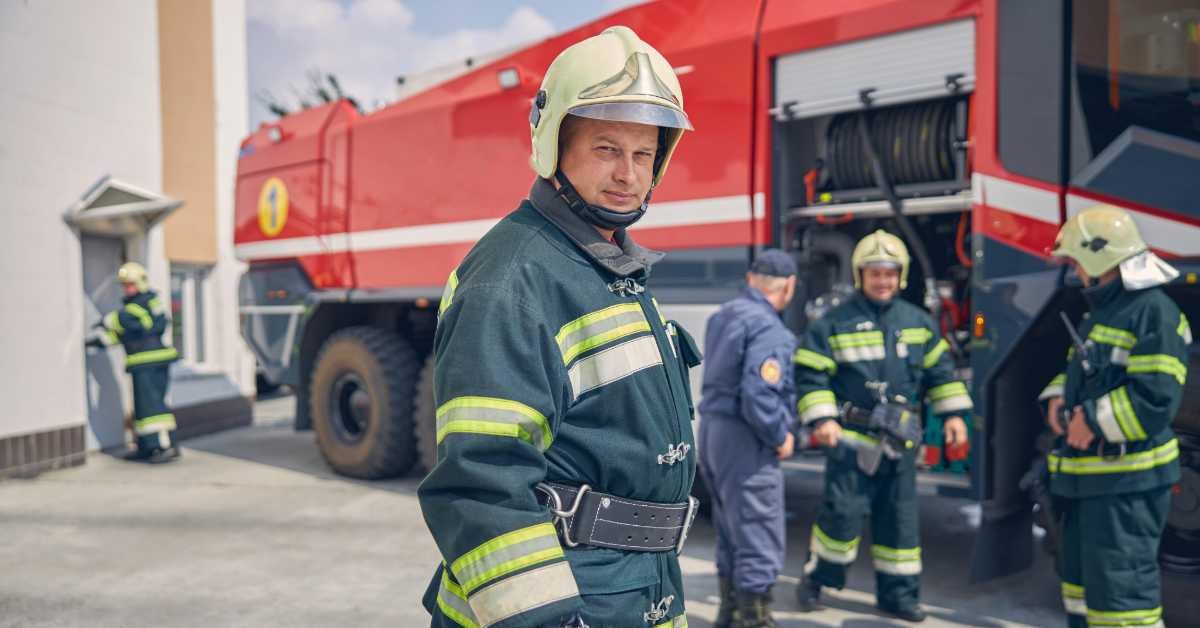
A full wall is devoted to the evolution of firefighter protective equipment. You can trace the journey from leather and wool to Nomex and self-contained breathing apparatus. The contrast is brutal. Nineteenth century firefighters wore essentially nothing protective.
There is also a section on breathing apparatus that surprised me. Denmark adopted early oxygen masks faster than most European countries. According to the exhibit notes, the Copenhagen Fire Brigade was among the first in Scandinavia to deploy SCBA units in standard rotation.
The Falck and Zonen Archives
Anyone who has ever called for roadside help in Denmark knows the name Falck. The museum has a dedicated section to Falck and its now-merged rival Zonen, who together defined private rescue services in Denmark for most of the 20th century. The story is fascinating, and slightly unsettling, for anyone used to public-only emergency systems.
In Denmark, much of the fire response is still contracted out to Falck under municipal agreements. That hybrid model is unusual in Europe. The museum walks you through how it evolved, why it stuck, and how it still works today.
Why the Museum of Fire-fighting Matters Beyond Nostalgia
This is where my expat lens kicks in hardest. Visiting the museum is not just about old trucks. It is about understanding how Denmark builds public trust, layer by layer, over generations.
The Volunteer Tradition
Roughly 75% of Danish firefighters are part-time or volunteers, according to data from Beredskabsstyrelsen, the Danish Emergency Management Agency. The Museum of Fire-fighting was itself founded by volunteers. Almost everyone running it still volunteers their time.
This is classic Danish foreningsliv, the dense web of voluntary associations that holds the country together. As an expat, you bump into it constantly. School boards, sports clubs, harbor committees, fire brigades. The museum is a working monument to that culture.
Fire Safety as Public Policy
Denmark’s approach to fire safety is quietly world-class. The country reports one of Europe’s lowest fire fatality rates per capita, according to CTIF, the International Association of Fire and Rescue Services. The reasons are mundane but instructive. Strict building codes. Mandatory smoke alarms since 2004. Universal emergency response through the 112 system.
The museum traces this entire arc. You leave understanding that Danish safety is not luck. It is policy, paid for through taxes, and reinforced over decades.
Visiting The Museum of Fire-fighting: Practical Information for Expats
Now to the logistics. The Museum of Fire-fighting is small, volunteer-run, and not always staffed during posted hours. Plan accordingly. A quick call ahead saves wasted trips.
How to Get to Oure
Oure sits on the southeast coast of Funen, about 13 kilometres east of Svendborg. From Copenhagen, the drive is roughly 160 kilometres and takes about two hours via the E20 and the Great Belt Bridge. Tolls apply on the bridge.
By train, take the InterCity from Copenhagen Central Station to Odense, then change to the regional line to Svendborg. From Svendborg, local bus route 910 stops near Oure. Total travel time is about three and a half hours.
Opening Hours and Best Times to Visit
The museum is typically open Tuesday through Sunday, 10:00 to 17:00, with reduced hours outside the peak May to September window. Weekends draw families and local school groups. Weekday mornings are quietest.
If you can time your visit around one of the museum’s open-house days, do it. Volunteer crews often fire up the vintage engines and demonstrate hand-pump techniques. These are not advertised heavily, so check the museum’s Facebook page or call ahead before driving across the country.
Admission, Accessibility, and Languages
Admission is modest by Danish standards, usually under 80 DKK for adults, with discounts for students, seniors, and children. Family tickets keep group visits affordable. Cash and MobilePay are both accepted.
Most signage is in Danish, with English translations on the major exhibits. Guided tours can be arranged in English on request, particularly for groups. The main floor is wheelchair accessible. Some upper storage and workshop areas are not.
What to Combine It With on Funen
Oure is too remote to be a one-stop trip from Copenhagen. Combine it with other South Funen highlights. Svendborg‘s old harbor is fifteen minutes away. Hvidkilde Castle sits just outside town.
If you have a full weekend, consider a ferry to Langeland or a hike in the Svanninge Bakker. South Funen rewards slow travel. Rushing it defeats the point.
Tips for Getting the Most Out of The Museum of Fire-fighting
After a few visits and conversations with regulars, I have collected a short list of things worth knowing before you go.
- Call ahead in low season. Volunteer staffing means hours can shift. A quick phone call confirms someone will be at the door.
- Bring cash for the café and shop. Card readers work, but cash speeds things up during busy weekends.
- Ask about the workshop. If a restorer is on site, they often welcome curious visitors into the workshop area behind the main hall.
- Wear closed shoes. Parts of the floor are concrete with oil traces. Sandals are a bad idea.
- Allow at least two hours. Three is better if you want to read everything and watch a demonstration.
- Photography is allowed. Tripods and flash should be cleared with staff first.
- Pair it with lunch in Svendborg. The museum café is functional, not memorable. Svendborg’s harbor offers better food.
What a Good Visit Looks Like
Per the regulars I have spoken to, the best visits combine quiet time with the exhibits and a chat with whichever volunteer is on duty. The volunteers are the soul of the place. Many are retired firefighters with decades of stories.
If you let them, they will tell you about real fires they fought in the 1970s and 1980s. That is where the museum stops being a museum and starts being oral history. Bring patience and curiosity, and you will leave with stories no plaque can deliver.
The Museum of Fire-fighting in Context: Denmark’s Wider Museum Landscape
Denmark punches far above its weight in museums per capita. The country has more than 250 state-recognised museums for a population of 5.9 million. That density makes specialty museums like the one in Oure possible.
If you are building a Funen and Jutland museum itinerary, the Museum of Fire-fighting fits neatly alongside other niche institutions. The Lemvig Regional Museum covers western Jutland’s deep past. The Struer Museum celebrates Danish design and innovation. For broader museum hopping, our guide to Copenhagen museums covers the capital in depth.
These small, specialist museums are where Denmark’s real character lives. The big-name institutions in Copenhagen are excellent. But places like Oure show you the country expats actually move to.
Frequently Asked Questions About The Museum of Fire-fighting
What are the opening hours of The Museum of Fire-fighting?
The museum is typically open Tuesday through Sunday, from 10:00 to 17:00. Hours can be reduced outside peak tourist season, which runs May to September. Call ahead in winter to confirm.
How much does admission cost?
Adult admission is usually under 80 DKK, with discounts for students, seniors, and children. Family tickets are available for affordable group visits. Both card and MobilePay are accepted at the entrance.
Is the Museum of Fire-fighting suitable for children?
Yes, it is one of the more child-friendly small museums in Denmark. Kids can examine real fire engines up close, try on helmets, and watch hand-pump demonstrations. Fire safety education is woven into the displays in a way that engages rather than lectures.
Are guided tours available in English?
English guided tours are available on request, particularly for groups. Booking in advance is required. Most exhibit signage is in Danish, but English translations cover the major displays.
How long should I plan to spend at the museum?
Allow two to three hours for a thorough visit. If a restoration demonstration is running, add another hour. Visitors who chat with volunteer guides often stay longer than planned.
Is The Museum of Fire-fighting wheelchair accessible?
The main exhibition hall is wheelchair accessible, with level floors and wide pathways. Some workshop and upper-storage areas are not accessible. Staff can assist with arranging an alternative route through the collection.
Can I reach the museum by public transport?
Yes, but it takes effort. Take a train from Copenhagen or Aarhus to Svendborg via Odense. From Svendborg, local bus route 910 stops near Oure. Total journey from Copenhagen is roughly three and a half hours.
What facilities are available on-site?
The museum has a small shop selling memorabilia, books, and educational materials about firefighting history. A modest café serves coffee, soft drinks, and light snacks. Free parking is available next to the main building.
Do I need to book in advance?
General admission does not require booking. Guided tours, group visits, and English-language tours should be arranged in advance. Booking ahead also confirms that volunteer staff will be on site during your visit.
Are dogs allowed in the museum?
Service dogs are welcome throughout the museum. Regular pets are generally not permitted inside the exhibition halls. Check the museum directly if you need to bring a dog.
Final Thoughts: Why The Museum of Fire-fighting Belongs on Your Denmark List
The Museum of Fire-fighting is the kind of place that does not survive in many countries. A volunteer-run, hyper-specialist museum, tucked into a Funen village, kept alive by retired firefighters who refuse to let the history disappear. That existence is itself the lesson.
For expats, the museum offers something rarer than vintage trucks. It offers a way to read Denmark from the inside out. The bricks. The codes. The volunteer ethic. The strange Falck contracts. All of it converges in a single building in Oure, and it costs less than a Copenhagen cocktail to walk through.
Go on a slow weekend. Talk to the volunteers. Stay longer than you planned. The Museum of Fire-fighting will not make headlines, and it does not need to. It just needs visitors who care, and those visitors leave knowing Denmark a little better than when they arrived.