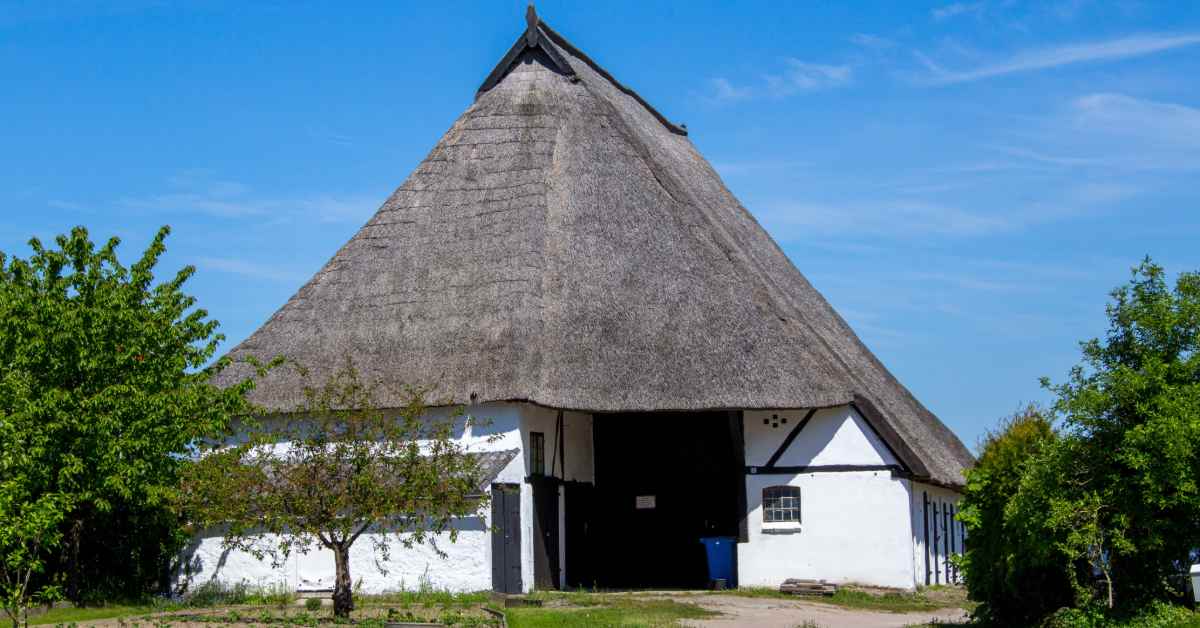
The Maribo Open-Air Museum on Lolland is Denmark’s quiet rural time capsule, where authentic farmhouses, a working smithy, and lakeside meadows tell the story of how Danes actually lived before the welfare state arrived.
The Maribo Open-Air Museum: Denmark’s Forgotten Rural Heart
The Maribo Open-Air Museum sits on the southern Danish island of Lolland, two hours south of Copenhagen. It is run by Museum Lolland-Falster and stretches along the shore of Søndersø lake. The grounds hold farm buildings, cottages, and workshops moved here from across the region.
I have visited a lot of Danish museums over the years. Most overpromise. This one does the opposite. It looks modest from the road, then it pulls you into a slower, harder version of Denmark that modern Copenhagen rarely shows expats.
Why This Museum Matters to Expats
If you have just moved to Denmark, you probably know hygge, bicycles, and Borgen. You may not know that Lolland and Falster were once Denmark’s grain belt. The agrarian reforms of the late 1700s started here, with the Reventlow brothers ending serfdom on their estates.
The Maribo Open-Air Museum is where that history becomes physical. You walk through it. You smell the smoke from the smithy. You begin to understand why Danes still talk about “andelsbevægelsen”, the cooperative movement, with quiet pride.
What You Will See at the Maribo Open-Air Museum
The museum is structured as a small village laid out across roughly six hectares of meadow and woodland. Buildings range from the 18th to the early 20th century. Each one was dismantled at its original site and rebuilt here piece by piece.
Authentic Farms and Cottages
The collection includes farmhouses from Lolland, Falster, and the smaller surrounding islands. Most are timber-framed with thatched roofs and lime-washed walls. The interiors are furnished to a specific year, not a vague “old times” aesthetic.
You will find a smallholder’s cottage with a single room for an entire family. You will also see a wealthier farmer’s parlour with painted chests and a tile stove. The contrast between the two, often only a few metres apart, says more about Danish class history than any textbook.
The Working Smithy and Windmill
The smithy is the soul of the place. On event days, a blacksmith works the forge while children stand wide-eyed at the doorway. The post mill on the hill still turns when the wind picks up from the west.
There is also a half-timbered school house, a weaver’s cottage, and a small wheelwright’s workshop. As noted by Museum Lolland-Falster, the buildings collectively document daily life on the islands from around 1800 to 1930.
The Søndersø Lakeside Setting
What separates Maribo from larger sites like the Frilandsmuseet in Lyngby is the setting. The museum sits on the shore of Søndersø, the lake that wraps around Maribo town. Reed beds, swans, and the twin spires of Maribo Cathedral form the backdrop.
You can finish a visit with a walk along the lake path into town. The town is tiny by Danish standards, about 5,500 people, and feels more like the 1950s than 2026.
A Brief History of the Maribo Open-Air Museum
The museum was founded in 1936 by local ethnographer and teacher Anders Jensen, who feared that the old farm buildings of Lolland-Falster were vanishing. He was right to worry. Mechanisation, sugar beet monoculture, and rural depopulation gutted the old farming landscape within a generation.
Jensen and a small group of volunteers began moving threatened buildings to the Søndersø site. According to Museum Lolland-Falster, the collection has grown steadily and now includes more than a dozen historic structures along with thousands of artefacts.
Part of Museum Lolland-Falster
Today the open-air museum is one of several sites under the umbrella of Museum Lolland-Falster, a state-recognised cultural institution. Other sites include the Frilandsmuseet’s sister venues in Nykøbing Falster and the medieval archaeology projects around Rødby.
This matters because it means professional curators and archaeologists stand behind the displays. You are not getting folklore dressed up as history. You are getting actual research, presented in walkable form.
Best Time to Visit the Maribo Open-Air Museum
The museum runs as a seasonal site. It is generally open from late May through September, with extended hours during the Danish summer holiday in July. Outside the season, the grounds are sometimes accessible for walking, but the buildings stay closed.
Summer Events and Living History Days
The best days to come are the museum’s themed weekends. These include the spring market in May, midsummer celebrations around Sankt Hans on 23 June, and the harvest festival in early September. Volunteers in period clothing demonstrate crafts, churn butter, bake rye bread, and run the smithy at full tilt.
I went on a harvest day a few years ago and watched a 12-year-old Danish boy try to operate a hand-cranked grain thresher. He gave up after 90 seconds. His grandfather laughed and said, “Sådan var det dengang.” That was how it used to be.
Quieter Visits in Off-Peak Days
If crowds are not your thing, come on a weekday in June. You will often have a farmhouse to yourself, which is when the museum works its strongest magic. The silence inside a thatched cottage, broken only by a fly at the window, is the closest you can get to the actual texture of pre-industrial Danish life.
Practical Information for Visiting the Maribo Open-Air Museum
The museum is run by Museum Lolland-Falster, and ticket prices and hours can shift each season. Always check the official Museum Lolland-Falster website before you travel. Below is the practical baseline.
Location and Address
The museum is at Meinckesvej 5, 4930 Maribo, on the eastern edge of the town beside Søndersø lake. From the centre of Maribo it is a 15 minute walk through quiet residential streets. Parking is free on site.
The town itself is worth half a day. Maribo Cathedral, founded in 1416 as a Bridgettine monastery, stands across the lake and is one of Denmark’s most underrated medieval buildings.
How to Get to Maribo from Copenhagen
Maribo sits on the main rail line between Copenhagen and Rødby. The journey by train takes about two hours from Copenhagen Central Station, with a change at Nykøbing Falster. From the Maribo station, it is a 20 minute walk to the museum, or a short ride on local bus 840.
If you drive, take the E47 motorway south across the Storstrøm bridge to Lolland. The trip is about 150 km from Copenhagen and takes 90 minutes in light traffic. The road passes through flat sugar-beet country that looks like nowhere else in Denmark.
Tickets and Opening Hours
Entry is currently around 75 DKK for adults, with children under 18 free. A combined ticket gives access to several Museum Lolland-Falster sites for a few days. Opening hours run roughly 11:00 to 16:00 in season, with longer hours during themed events.
Pair Your Visit With Other Lolland-Falster Attractions
Lolland and Falster are flat, quiet, and packed with overlooked attractions. Treat the Maribo Open-Air Museum as your anchor and build a weekend around it.
The Fuglsang Art Museum
About 15 minutes east of Maribo by car sits The Fuglsang Art Museum, a striking modern building on the grounds of Fuglsang Manor. It holds one of Denmark’s strongest regional collections of late 19th and early 20th century Danish painting.
The pairing works because both museums cover the same period from different angles. Fuglsang gives you the cultured manor view. Maribo gives you the cottage view. Together they make sense of rural Denmark.
Knuthenborg Safari Park and Nakskov
If you have children, Knuthenborg Safari Park is 10 km north of Maribo and is the largest safari park in northern Europe. Further west, the Nakskov Ship and Maritime Museum tells the story of Lolland’s sugar refineries and shipbuilding past.
What the Maribo Open-Air Museum Teaches Expats About Denmark
This is the part of the article most rural museum write-ups skip. Denmark’s social model did not appear by accident. It was built on the back of cooperative dairies, folk high schools, and the cottage economy you see preserved in Maribo.
When Danes vote, they still carry the memory of the small farmer’s republic. The Maribo Open-Air Museum makes that memory visible. As an expat, walking through it gave me a sharper read on why Danish politics looks the way it does.
An Honest Note on the Museum’s Scale
Let me be direct. This is not Skansen in Stockholm or the open-air museum at Den Gamle By in Aarhus. It is smaller, less polished, and the English signage is patchy.
That is also its charm. You are getting the local history of a specific corner of Denmark, told by people who clearly care. If you want a Disneyfied heritage park, go elsewhere. If you want the real thing, come here.
Useful Sources for Further Research
For deeper reading on the museum and the region, I recommend:
- The official site of Museum Lolland-Falster for current opening hours and events.
- The Wikipedia entry on Maribo for general historical context.
- VisitLolland-Falster for travel planning across the two islands.
- The National Museum of Denmark for broader context on Danish rural history.
Frequently Asked Questions About the Maribo Open-Air Museum
What is the Maribo Open-Air Museum?
The Maribo Open-Air Museum is a regional heritage site on Lolland, Denmark. It preserves historical farmhouses, cottages, and workshops from across Lolland-Falster. The buildings have been moved to a single lakeside location and restored to specific historical periods.
When was the Maribo Open-Air Museum founded?
The museum was founded in 1936 by local ethnographer Anders Jensen. He aimed to save vanishing rural buildings from demolition. Today it is part of Museum Lolland-Falster, a state-recognised institution covering several sites across the two islands.
How long should I plan for a visit?
Allow two to three hours for a relaxed visit to the Maribo Open-Air Museum. Add another hour if you join a guided tour or attend a themed event. Combined with lunch in Maribo town, it makes a comfortable half-day trip.
Is the Maribo Open-Air Museum suitable for children?
Yes, it works well for families with kids aged four and up. There is space to run, animals to see on event days, and hands-on demonstrations of old crafts. Children under 18 generally enter free.
Can I visit the museum in winter?
The buildings are closed during winter, usually from October through April. The grounds remain accessible for walking around the lake. Special events sometimes open the museum in December for a traditional Danish Christmas market.
Is English spoken at the Maribo Open-Air Museum?
Staff and volunteers generally speak good English. Some printed signage is bilingual, though much of it is in Danish only. Guided tours in English can be arranged if you contact the museum in advance.
How does it compare with Frilandsmuseet in Copenhagen?
The Copenhagen Frilandsmuseet is far larger, with buildings from across Denmark, Norway, and southern Sweden. Maribo is smaller and focused tightly on Lolland-Falster. If you want depth on a specific region, choose Maribo. If you want breadth, choose Lyngby.
Are there places to eat at the museum?
The museum has a small café that operates during the main season. Picnic tables are available across the grounds. Maribo town centre, a 15 minute walk away, offers several restaurants and a bakery with excellent Danish rye bread.
Is the site wheelchair accessible?
Main paths are gravel and grass, which can be challenging for wheelchairs. Some historical buildings have high doorsteps and uneven floors. Contact the museum in advance to discuss specific accessibility needs.
What other museums on Lolland-Falster should I visit?
Pair your trip with The Fuglsang Art Museum, the Reventlow Museum at Pederstrup, and the Nakskov Ship and Maritime Museum. Together they cover art, aristocracy, agriculture, and seafaring history on the two islands.
Final Thoughts on the Maribo Open-Air Museum
The Maribo Open-Air Museum is not the biggest open-air museum in Denmark. It is, however, one of the most honest. The buildings are real. The setting is beautiful. The story it tells is fundamental to understanding modern Denmark.
For expats, it is a chance to see the country without the Copenhagen filter. Bring a picnic, allow half a day, and let the place do its slow work. You will leave with a different feel for what “Danish” actually means.