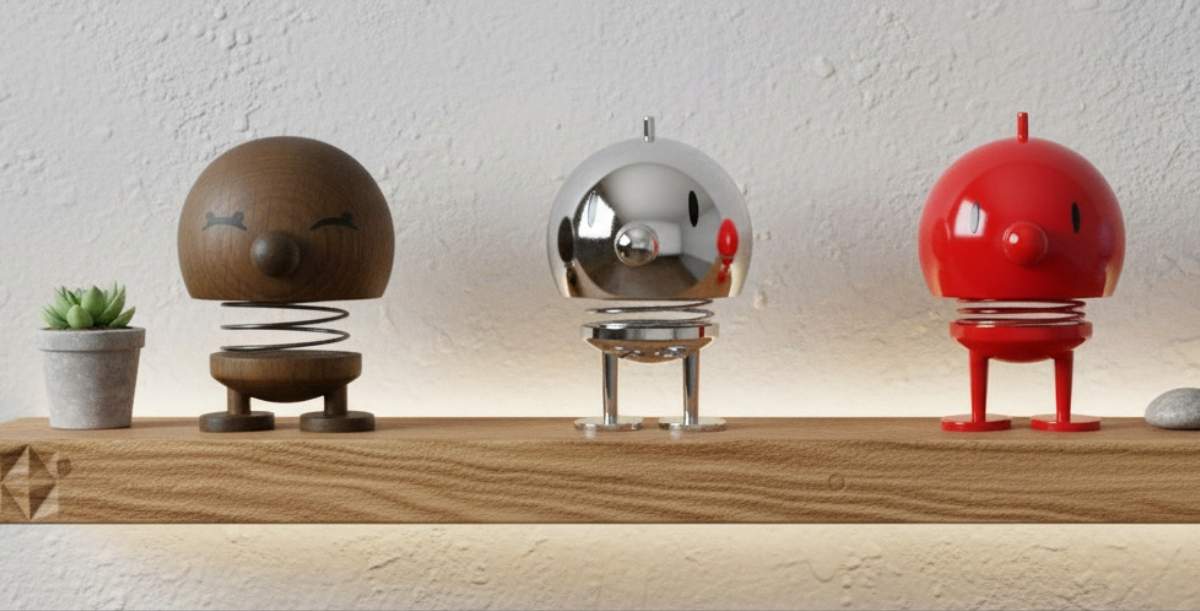
Gustav Ehrenreich’s Hoptimist turns Danish design into pure cheer, a playful, spring-based figure created in the 1960s to symbolise optimism and positivity. Its simple, rounded form and quality craftsmanship make it both a decorative object and a small emotional lift in any room. From original wood editions to colourful modern versions, the Hoptimist has become a beloved collectible in Danish homes.
Key Points
- A Symbol of Joyful Danish Design: The Cheerful Hoptimist, created by Gustav Ehrenreich in the 1960s, is a beloved emblem of Danish design that celebrates optimism and playfulness, adding personality and joy to homes.
- Gustav Ehrenreich: The Mastermind Behind the Smile: Ehrenreich, a Danish designer and cabinetmaker, created the Hoptimist to reflect happiness and lightness, embodying the emotional aspect of Danish design during Denmark’s golden age.
- Design Qualities That Bounce With Joy: The Hoptimist features a spherical body on a spring, providing bouncing movement symbolizing resilience; it is made from various materials and available in multiple sizes and colors.
- The Enduring Fame and Importance of the Hoptimist: With over 300,000 sold globally and more than 50 years since its launch, the Hoptimist remains an iconic piece of Danish design, appreciated for its emotional and decorative appeal.
- A Perfect Fit for Danish Home Interiors: Its clean, minimal design and cheerful character make the Hoptimist a versatile decorative object that complements the calm, uncluttered style of Danish interiors, ideal for various spaces.
A Symbol of Joyful Danish Design
In the rich tapestry of Danish design, one object stands out not for its practicality or grandeur, but for its pure, unadulterated charm: The Cheerful Hoptimist. Originally created by Danish designer Gustav Ehrenreich in the late 1960s, the Hoptimist is not just a piece of whimsical furniture decor—it is a celebration of optimism, playfulness, and simple yet impactful design.
While it may not fit the traditional mold of “furniture” in terms of seating or tablescapes, the Hoptimist occupies an important place in design history as a decorative object that brought personality and joy into Danish homes and beyond. It is often categorized under the umbrella of decorative Danish furniture for its role in defining ambiance—blurring the lines between sculpture and function.
Gustav Ehrenreich: The Mastermind Behind the Smile
Gustav Ehrenreich was a trained cabinetmaker and industrial designer from Denmark, a nation known globally for its impeccable taste in minimalist and modern furniture. Fueled by the optimism of the post-war era, especially during the late 1960s, Ehrenreich sought to create an object that reflected joy, lightness, and movement—qualities that were becoming central to the Scandinavian mindset.
The late 1960s marked a golden age for Danish design, as architects and furniture makers like Arne Jacobsen and Hans Wegner propelled Danish aesthetics onto the global stage. Ehrenreich, while perhaps less commercially dominant, contributed a more emotional, humanistic angle with The Cheerful Hoptimist. His pieces were less about form following function and more about form following feeling.
The Hoptimist was designed with the belief that a simple object could trigger a smile—a value deeply embedded in Danish culture and lifestyle, including the globally celebrated concept of “hygge.”
Design Qualities That Bounce With Joy
What makes The Cheerful Hoptimist so beloved around the world is not just its design origins, but the sensory and emotional resonance it offers. The piece features a spherical body mounted on a spring, giving it a bouncing motion when touched. This bouncing is not merely a reaction; it is the very essence of the Hoptimist, a symbol of resilience and buoyancy—literally and metaphorically.
Originally, the Hoptimist was made from wood, visually embodying the Danish love of nature and handcrafted quality. Over time, the range was expanded to include various materials and finishes such as brushed aluminum, high-gloss plastic, and even sustainably sourced wood options to suit modern tastes and eco-consciousness. It now comes in a variety of sizes ranging from a petite 7 cm up to a larger 15 cm model, ideal for both desktop accessories and statement living room decor.
Moreover, each piece is designed with friendly features—rounded surfaces, warm colors, and minimalist facial expressions engineered to evoke simplicity and happiness. This aligns beautifully with the tenets of Danish design: functionalism, simplicity, and craftsmanship wrapped in a layer of deep emotional connection.
The Enduring Fame and Importance of the Hoptimist
Today, more than 50 years since its first release, The Cheerful Hoptimist continues to have a strong presence in both Danish homes and international collections. Over 300,000 units have been sold globally, a testament to its lasting appeal. Its popularity took off dramatically during the designer toy revival of the early 2000s, making it a sought-after collectible in addition to being a beloved item of decor.
Beyond being an eye-catching piece, it represents a moment in design history where emotional intelligence began to shape objects. This cheerful piece stands tall (or rather, bounces) among the pantheon of Danish design not because it dominates a room or serves a utilitarian purpose, but because it softens a space, lifts the spirits, and reminds us of the light-hearted approach embedded in Denmark’s design tradition.
From the home office to the nursery, from the reception area to the modern kitchen counter, it adds a touch of vibrancy and friendliness. It captures what Danish design does best: transforming minimalist lines and thoughtful materials into something profoundly human.
In the world of furniture-inspired designs, The Cheerful Hoptimist is not just an accessory—it’s an ambassador of joy and a timeless symbol of Danish creativity.
A Perfect Fit for Danish Home Interiors
There is something uniquely satisfying about decorating a home with pieces that resonate with joy, simplicity, and culture. The Cheerful Hoptimist is not just a playful object—it is a design expression rooted in Denmark’s values of harmony, balance, and emotional intelligence. Its clean lines, minimal details, and inviting character make it a perfect complement to the Scandinavian principles of interior decor.
Danish homes are known for their calm, uncluttered atmospheres where every object is either functional, beautiful, or ideally both. The Hoptimist fits seamlessly into this worldview, adding a whimsical touch without breaking the serenity. It is commonly found in living rooms, children’s bedrooms, and even on kitchen shelves where its bouncing action can bring a smile during the most mundane activities of daily life.
Furthermore, it is available in a wide palette of colors, from the classic red and yellow to sleek monochromes like white, black, and grey, which blend flawlessly into modern minimalist interiors. It’s this versatility that has made the Hoptimist a fixture in both traditional Danish homes and chic, contemporary apartments throughout Denmark and beyond.
Emotional Design That Lasts
One of the main reasons to choose The Cheerful Hoptimist by Gustav Ehrenreich is its rare combination of emotional resonance and design purity. It provides more than decor—it offers a moment. According to a 2021 consumer survey by the Designmuseum Danmark, 78% of respondents say they use decorative items primarily to improve their emotional sense of well-being at home. The Hoptimist personifies this emotional uplift, thanks to its movement, friendly face, and soft form.
Unlike trend-based decorations, it displays a timeless aesthetic that pays tribute to the height of mid-century Danish design. Its subtle blend of humor, warmth, and simplicity makes it an enduring favorite that can age gracefully with your evolving home decor.
Many customers buy more than one to create a small “community” of Hoptimists at home, mirroring the Danish emphasis on social connectedness and warmth in domestic life. They can also be wonderful conversation starters or serve as sentimental gifts that carry meaning beyond the material.
Collector’s Appeal and Gift Value
For design enthusiasts or collectors, The Cheerful Hoptimist has become more than just a home accessory—it’s a piece of design history. Earlier wooden models are now rare finds sought after in vintage design auctions, while the modern plastic or aluminum interpretations remain affordable and accessible.
These charming figures also make perfect gifts. Adding a Hoptimist to someone’s home is a way to celebrate a new beginning, an achievement, or simply offer a cheerful gesture. The Hoptimist is often given as a birthday or graduation gift, reflecting its symbolic meaning of encouragement, resilience, and shaking off worries—literally.
Supporting Danish Design Through Conscious Buying
Purchasing the Hoptimist means more than acquiring a charming figure. It supports the lineage of Danish artisanship and design innovation that values heart as much as function. It’s a nod to the 1960s legacy of democratically designed objects aimed at improving everyday life—a principle that continues to define Denmark on the global design stage.
Functioning as art, object, and symbol, The Hoptimist invites us back to a core idea: that joy should be part of our environment. These cheerful figures don’t just sit on shelves—they bounce into our lives with positivity and timeless Danish taste.
Conclusion
The Cheerful Hoptimist by Gustav Ehrenreich is more than a whimsical addition to your home—it’s an embodiment of the core values of Danish design. With its friendly presence and bouncy character, it offers a delightful touch of joy and warmth, seamlessly fitting into both minimalist and eclectic interiors. It is an enduring symbol of optimism and creativity that resonates with people of all ages and cultures.
As highlighted throughout this article, the Hoptimist combines simplicity, emotional satisfaction, and timeless design, making it a worthwhile addition to any space. Whether you display it on a shelf, desk, or in a collection, it is sure to evoke smiles and become a cherished part of your home.
Summary
– Gustav Ehrenreich’s Hoptimist was created in the late 1960s and remains a beloved symbol of Danish design.
– It exemplifies Danish values of simplicity, emotional resonance, and balance.
– Available in various materials and colors, it fits seamlessly into homes of any style.
– It is a perfect gift that symbolizes joy and encouragement and is highly valued by collectors and design enthusiasts alike.
– Authentic Hoptimists can be purchased online from reputable retailers like Hoptimist.com, Illums Bolighus, and Nordic Nest.
Frequently Asked Questions
1. Who is Gustav Ehrenreich?
Answer: Gustav Ehrenreich was a Danish designer known for creating The Cheerful Hoptimist. He played a pivotal role in adding emotional depth to the design language of the 1960s in Denmark.
2. What makes The Cheerful Hoptimist special?
Answer: It is unique due to its playful design, which includes a spherical body on a spring that bounces, symbolizing optimism and resilience. It embodies Danish design values such as simplicity and emotional warmth.
3. Are vintage Hoptimists valuable?
Answer: Yes, vintage wooden Hoptimists from the initial production years have become valuable collectibles, sought after at design auctions and by enthusiasts of mid-century modern design.
4. In what sizes are Hoptimists available?
Answer: They come in various sizes, typically ranging from about 7 cm to 15 cm in height, allowing them to suit different spaces and preferences.
5. Can Hoptimists be used as gifts?
Answer: Absolutely. It’s a perfect gift for various occasions, symbolizing support, encouragement, and happiness, making them ideal for birthdays, housewarmings, and other celebrations.
6. How do I incorporate it into my home decor?
Answer: The Hoptimist can be placed almost anywhere—in living rooms, home offices, nurseries, or kitchens. Its cheerful presence complements most spaces, adding a pop of color and a hint of whimsy.
7. Are there themed versions of the Hoptimist?
Answer: Yes, themed Hoptimists are available, including holiday editions and special occasion models, designed to celebrate festive moments and personal milestones.
8. What materials are Hoptimists made from?
Answer: Originally crafted from wood, modern Hoptimists are available in various materials such as brushed aluminum and high-gloss plastic, each offering a distinct aesthetic that suits contemporary tastes.
By welcoming the Hoptimist into your home, you’re not just inviting a decor piece; you’re embracing a little piece of Danish design philosophy that increases joy and connection in everyday life.