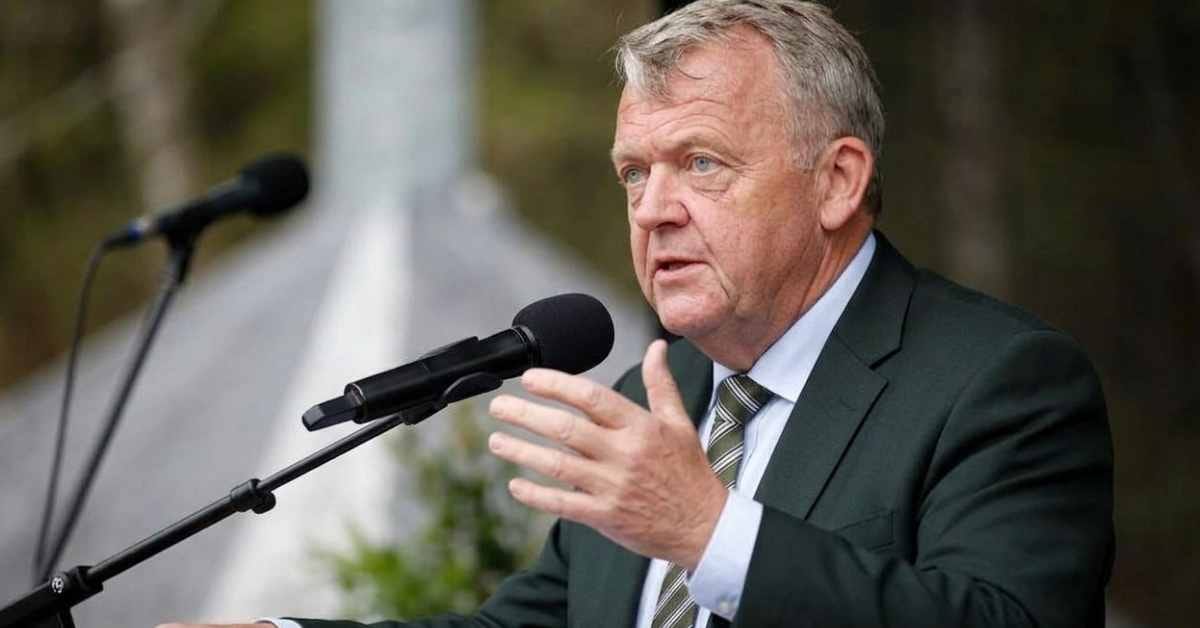
Foreign Minister Lars Løkke Rasmussen issued a government “tax guarantee” on Wednesday, promising that a planned two-year freeze of tax thresholds will not take effect unless the extra revenue is returned to Danes at the same time.
Speaking at a press conference in the Prime Minister’s Office in Copenhagen, the Moderaterne leader said the government will not freeze any thresholds in a way that amounts to a de facto tax increase without immediately delivering the money back. DR reports that the guarantee covers the threshold freeze set out in the government’s coalition agreement.
The freeze would keep a range of beløbsgrænser in the tax system fixed for two years. That means deductions would not rise with prices and wages as they normally do, which effectively raises income taxes. According to DR, the government wants to use that revenue to help pay for halving VAT on food and removing it entirely on fruit and vegetables.
Pressure from Enhedslisten
The guarantee followed a demand earlier the same day from Enhedslisten’s political spokesperson, Pelle Dragsted. Per DR, he said the party would not lend its votes to the planned tax increase unless other taxes were lowered correspondingly, and that Enhedslisten will not raise taxes on low and ordinary incomes, even temporarily. Dragsted later welcomed the guarantee, calling it wise because the reform’s purpose is to lower taxes for those with the least.
Løkke said any extra revenue collected in the first year, while the state saves up for the VAT reduction, must be returned to Danes in other ways. He stated there will be no situation in which taxes rise in Denmark as a result of the plan.
A 2028 timing gap
The Ministry of Taxation has said that differentiated VAT on food can only take effect in 2028 at the earliest, for technical reasons. DR notes it is unclear whether the government still intends to carry out the threshold freeze before then, which is what created the politically sensitive gap.
The government’s messaging has shifted. Shortly after the four-party government was formed in June 2026, tax and growth minister Jakob Engel-Schmidt told DR’s TV Avisen on June 4 that a short temporary shift was possible, and that he would not promise the two elements would match one to one.
Other outlets have covered the underlying reform. Teknisk Landsforbund reported on June 3 that Løkke confirmed to TV 2 that all Danes would be affected by the freeze. Børsen wrote on June 2 that the coalition agreement combines large tax cuts with lower food VAT.
In a leader column on Wednesday, Ekstra Bladet described the financing model as an unfair stealth tax. Separately, the think tank Cepos has calculated that all income groups gain once every proposal in the government program is implemented, with a worker family set to receive 8,700 kroner a year in tax cuts.