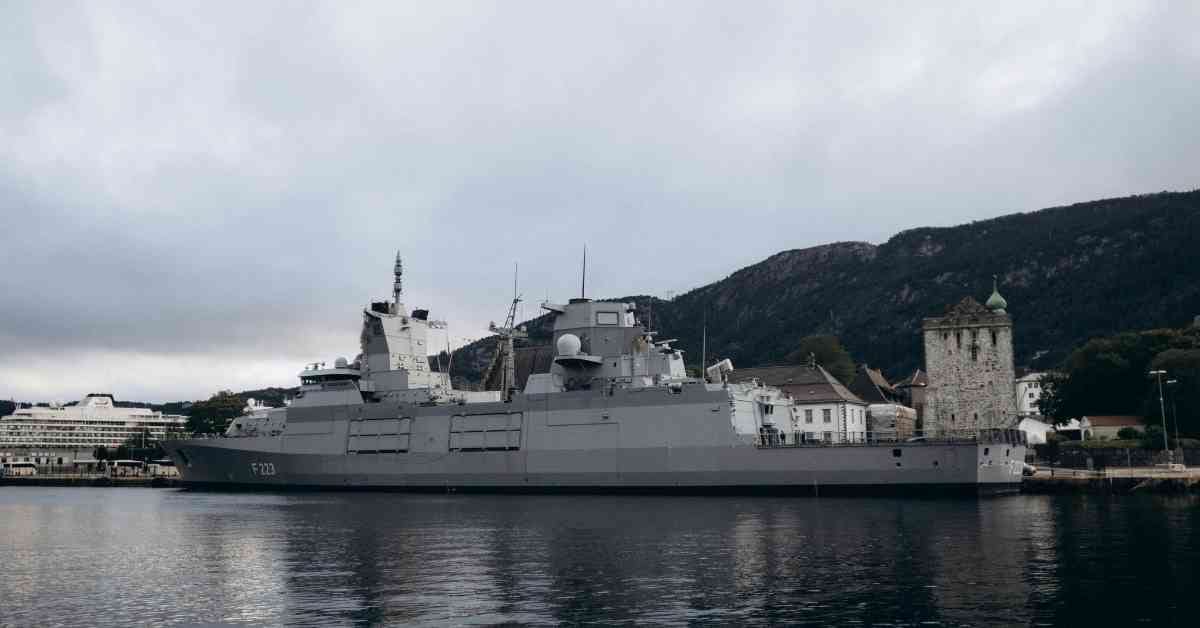
DR’s verification unit has mapped a possible route for the Russian warship linked to Monday’s helicopter incident in the Baltic Sea, using satellite images and ship signal data.
The analysis was published on September 15 by DR Verificerer. It examines ship traffic in the waters where a Russian frigate fired two flares toward a Danish military helicopter on Monday. The Russian embassy has confirmed that a Russian military vessel was involved in the episode.
DR reviewed AIS signals from vessels in the Baltic Sea on Monday through the tracking site Marinetraffic.com. No Russian warship had its AIS transponder switched on. DR concludes the vessel had most likely turned off its signal before the incident.

To reconstruct a possible route, DR followed the tracks of one Danish and one German vessel. The Danish patrol ship P523 Najaden sailed from the coast of Bornholm and at one point traveled side by side with the German coast guard ship Neustadt. The Danish ship then turned around, while the German ship continued westward.
Kenneth Øhlenschlæger Buhl, a military analyst and former officer in the Royal Danish Navy, assessed the movements for DR. Per his account, the pattern could resemble one vessel shadowing the Russian ship before the other took over. Denmark and Germany often cooperate in this way when a foreign warship passes close to their waters.
Satellite image shows unidentified vessel
A satellite image taken at about 7:32 a.m. on Monday showed a larger unidentified ship ahead of the two patrol vessels. DR estimates the ship at 90 to 110 meters long, with its signal switched off. It was sailing in the westbound lane toward the waters south of Falster, where the incident took place.
DR states it cannot confirm that this vessel was the Russian frigate that fired the flares. The images come from the Sentinel-1 satellite, operated under the European Space Agency’s Copernicus program.

According to Reuters, the Danish military said the helicopter was on a routine mission to photograph the Russian frigate. Two flares were fired and one passed close to the aircraft. No injuries or damage were reported.
The Copenhagen Post reports that the monitoring flight took place off Gedser and that the flares were fired from international waters. As noted in that reporting, the Danish ministry described the incident as serious. Denmark has summoned the Russian ambassador over the episode.

Buhl told DR that Russian ships and frigates regularly sail in international waters past Denmark, including after Russia’s invasion of Ukraine in February 2022. He said he monitored Russian vessels himself during his service in the navy. Given the current security situation, he added, such vessels are being watched with particular attention.