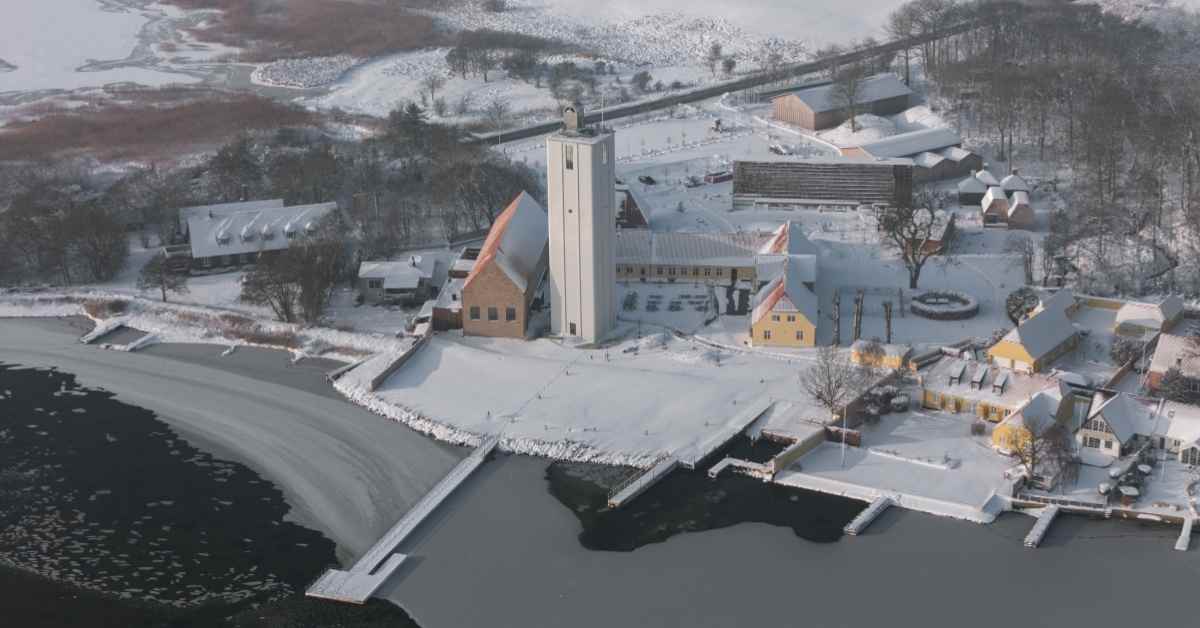
SMK Thy, a new Danish art museum in a remote corner of northwestern Denmark, has been named to Time Magazine’s list of the World’s Greatest Places to visit in 2026. The museum, which opened last summer in a converted grain silo overlooking Limfjord, is the only Danish destination on this year’s global list of 100 extraordinary travel experiences.
International Recognition for Remote Art Museum
Time Magazine has placed SMK Thy on its annual list of the world’s most remarkable destinations for 2026. The museum joins restaurants, parks, and cultural sites from around the globe that the publication considers exceptional enough to warrant a special journey. As the only Danish entry on this year’s list, SMK Thy stands out among international competition.
A Unique Setting in Rural Denmark
SMK Thy opened on August 29 last year in the small village of Doverodde in the Thy region. The museum transformed a former merchant’s house and grain silo into bright galleries using recycled materials and pavilions integrated into the surrounding landscape. Visitors can view works by major 20th century artists, including Henri Matisse and Pablo Picasso, with views across Limfjord.
The location represents a bold departure from traditional museum placement. Instead of a major city, the institution chose one of Denmark’s most remote coastal areas. Time Magazine specifically praised this integration with nature in its description of the site.
First Branch Outside Copenhagen
The museum is the first branch of the National Gallery of Denmark located outside Copenhagen. This expansion brings world class art to a region far from the capital’s cultural infrastructure. Director Astrid la Cour described the recognition as completely fantastic and noted that an international publication like Time had noticed this remarkable place in Thy.
The decision to open in rural Denmark reflects a growing trend of bringing cultural institutions to underserved areas. For visitors, it offers a chance to combine art appreciation with experiences of Denmark’s dramatic coastal landscapes.
Impact on Regional Tourism
The museum has dramatically exceeded expectations for visitor numbers and regional economic impact. Local tourism officials report being overwhelmed by the response since opening day.
Unexpected Booking Surge
Peter Krusborg, director of VisitNordvestkysten, said hotels in the area have been flooded with bookings from overnight guests coming to see SMK Thy. The demand has been far wilder than anyone dared to predict. This surge demonstrates that cultural attractions can drive tourism even in remote locations.
The Time Magazine listing is expected to increase international interest further. Krusborg noted that the recognition provides confidence for future investment in the Thy region. Moreover, it proves that betting on culture in less populated areas can pay off economically.
Strengthening Regional Identity
The museum’s success has implications beyond tourism numbers. It strengthens the region’s identity as a destination worth traveling to experience. Consequently, local businesses benefit from increased foot traffic and spending. The cultural cachet also makes the area more attractive for residents and potential new inhabitants.
International recognition like the Time Magazine listing amplifies these effects. It signals to both Danes and foreign visitors that Thy offers something genuinely special. As a result, the region gains a competitive advantage in attracting visitors who might otherwise focus solely on Copenhagen.
Funding and Community Support
The transformation from grain silo to world class museum required significant financial backing from both public and private sources.
Foundation Support
Private foundations provided the bulk of funding for the project. The A.P. Møller Foundation contributed 47.5 million kroner, representing the largest single donation. The Crown Prince Frederik and Crown Princess Mary’s Foundation added 100,000 kroner, while the Færch Foundation provided one million kroner.
This foundation support reflects confidence in the museum’s concept and potential impact. Danish philanthropic organizations increasingly back cultural projects in rural areas. Such investments aim to distribute cultural resources more equitably across the country.
Municipal Investment
Thisted Municipality financed 14.8 million kroner of the project cost. This public investment demonstrates local government commitment to cultural development. For a relatively small municipality, the sum represents a substantial bet on culture as an economic driver.
The combination of foundation and municipal funding created a viable financial model. Neither sector could have realized the project alone. Together, they enabled a transformation that is now generating international attention and regional economic benefits.
A Personal Take
I find it encouraging that world-class cultural institutions are establishing themselves outside major urban centers. SMK Thy proves that ambitious cultural projects can succeed in remote areas and actually benefit from the contrast between high art and dramatic natural settings. I wonder whether the tourist surge might eventually compromise the quiet, contemplative experience that makes visiting art in such a remote location special. There’s always tension between accessibility and preservation of character. But it’s never a bad thing to drag attention away from Copenhagen and the bigger Danish cities.
Sources and References
The Danish Dream: The National Gallery of Denmark: 700 Years of Art History
The Danish Dream: Moesgaard Museum: Ancient Past, Modern Design
The Danish Dream: Louisiana Museum of Modern Art
The Danish Dream: Best Festivals in Denmark for Foreigners
DR: Fuldstændig fantastisk: Dansk kunstmuseum er på Times top 100-liste i hele verden