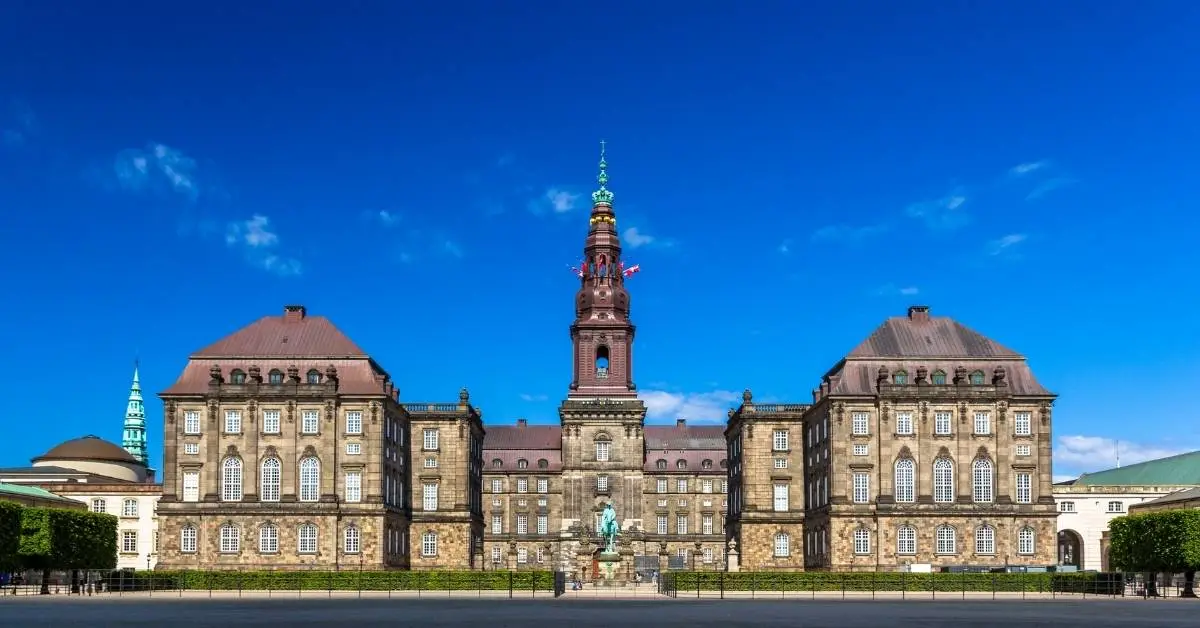
Denmark’s parliament has accepted a Church of Denmark priest on site at Christiansborg, provided by Folkekirken via Københavns Stift at no additional cost to Folketinget, and classified as pastoral service to staff rather than official chaplaincy—a subtle institutional shift that embeds state-church presence inside the legislative branch without a parliamentary vote.
The presidium of Folketinget unanimously approved the arrangement on 21 June 2026. The priest will offer confidential conversations and crisis support to MPs and employees starting in the new parliamentary year. According to Folketinget’s official press release, the priest is provided by Folkekirken via Københavns Stift, so there are no additional costs for Folketinget or taxpayers. As an internal Presidium decision financed by Folkekirken and not the state budget, it did not take the form of a law proposal or floor vote. Under Folketinget’s rules, Presidium decisions on internal arrangements do not require a floor vote.
A Quiet Expansion of Church Presence
For internationals who moved here expecting Nordic secularism, the move is a reminder that Denmark remains one of the few EU countries where the national parliament operates under a constitution explicitly supporting a specific church. Sweden abolished its state church in 2000. Norway formally separated in 2012. There is no publicly documented permanent majority-church priest attached to the Riksdag or Storting. Denmark now has one attached to Folketinget.
According to Statistics Denmark’s StatBank table KM5, around 72 percent of Denmark’s residents were registered members of Folkekirken in 2024, down from about 80 percent in 2010. Survey data indicate that only a minority of residents born outside Denmark identify as Lutheran or Protestant. The priest at Christiansborg serves MPs and staff, not the general public, and there is, at present, no publicly announced multi-faith chaplaincy at Folketinget.
No Vote, No Debate, Just a Presidium Notice
The decision came as a short announcement from the five-member Presidium, consisting of the Speaker and four vice-speakers. Because Folkekirken covers the cost and the role falls under an internal arrangement, it did not require a law proposal. That kept the matter away from the floor of the Folketing, where MPs from secular or minority backgrounds might have raised objections.
The priest is from Københavns Stift, binding the arrangement to the territorial diocese that already covers the parliament buildings. The presidium notice states the priest is available to Folketingets medlemmer og ansatte, and does not mention any parallel secular or multi-faith counselling arrangements.
Party Fallout and Public Protest
The decision has triggered departures from the Social Democrats. Bjarke Larsen, a party member, announced his exit on social media, citing the Prime Minister’s statements that Folkekirken should play a central role in spiritual build-up in the coming years. He wrote that the church-backed agenda would proceed without him. Another member, Signe Wenneberg, also left, expressing discomfort with the direction.

According to a public post by philosopher Svend Brinkmann, having a priest inside the buildings housing Danish democracy blurs the line between personal faith and public authority. Author and former MP Uffe Elbæk, writing in Altinget, described it as part of a “nyreligiøs vækkelse på Christiansborg,” warning of an unsettling trend. Secular advocacy groups have called for neutral psychologists or counsellors instead of clergy from a constitutionally privileged church.
How the Christiansborg Priest Arrangement Works
The priest will take up duties in the new parliamentary year inside Christiansborg. The arrangement sits alongside existing publicly funded chaplaincy in hospitals, prisons, and the armed forces, which are predominantly staffed by Folkekirken clergy. Commentators describe this as a new type of regular priestly presence for sitting MPs, distinct from occasional ceremonial events at Christiansborg.

Analyses of public spending indicate Denmark devotes more resources to its state church than countries like Sweden and France, though exact comparable percentages are contested. The Folketinget priest adds no new line item to the state budget, but it does add institutional heft to the church’s presence in political life.
What Internationals Can Do
Residents with citizenship can pressure their MPs through party channels and public debate. Non-citizens can submit input through public hearings on church-state reforms and support civil society organisations advocating separation or expanded recognition of minority faiths. Expat MPs can raise questions in committee about multi-faith or secular counselling options alongside the Folkekirken priest.
For anyone wanting to understand their rights in relation to Folkekirken, borger.dk has some English pages on membership and exit procedures. nyidanmark.dk offers general guidance for internationals on interaction with public institutions. The Ministry of Ecclesiastical Affairs publishes information on the church’s legal status, though most material is in Danish.
The priest arrangement reflects a broader pattern in Danish political culture. Liberal social policy coexists with a deeply entrenched, low-intensity Lutheran tradition that shapes institutional norms even as active religiosity declines. For MPs and staff who want spiritual support, the priest is now on site. For those who expected a strictly secular parliament, the line just moved.