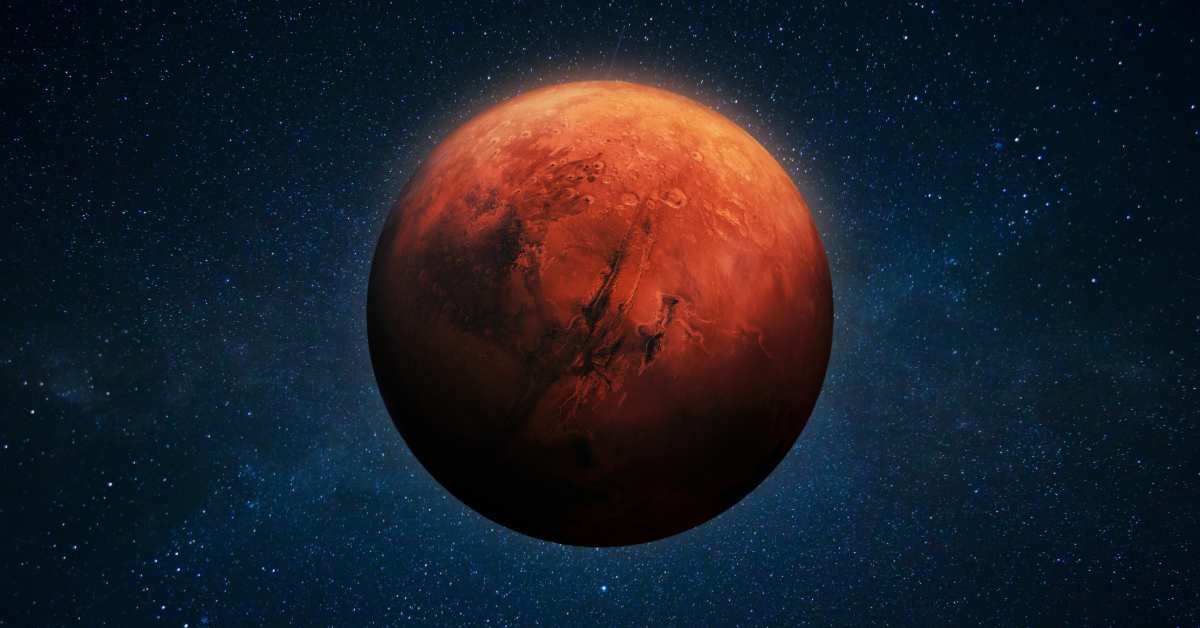
Danish Scientists and researchers from Technical University and NASA have discovered chemical signatures on Mars that may be evidence of ancient microbial life, bringing science closer than ever to answering the age-old question: has there ever been life on the Red Planet?
Possible Traces of Life Detected on Mars
Danish scientists working with Denmark’s Technical University (DTU) and NASA’s Jet Propulsion Laboratory (JPL) have released new findings that suggest Mars may once have harbored microbial life. The study, published in the peer-reviewed journal Nature, is based on data collected by NASA’s Perseverance rover, which has been exploring the surface of Mars since 2020. This brings Danish scientists one step closer to answering one of the biggest questions about life on Mars.
The rover, equipped with a Danish-developed PIXL instrument mounted on the end of its robotic arm, analyzed rock formations in an ancient, now-dry river delta located in Jezero Crater. The instrument detected chemical compounds typically associated with biological processes on Earth—specifically, combinations of oxygen, phosphorous, hydrogen, and organic carbon. Danish technology and expertise play an important role in exploring other planets.
The particular area studied, also known as “Cheyava Falls” within the Bright Angel rock formation, lies on the dried-out Neretva Vallis riverbed. In these rocks, researchers discovered “leopard-spotted” patterns—mineral deposits in sediment that resemble microbially induced textures found in Earth’s fossil record.
Closer Than Ever to Answering a Fundamental Question
These newly classified “potential biosignatures” are among the strongest indicators yet found on Mars suggesting the past presence of life. While researchers stress that the findings are not conclusive, the lack of alternative non-biological explanations strengthens the hypothesis.
On Earth, similar chemical signatures are often interpreted without hesitation as the remnants of early life, especially when found in sediment similar to the Martian formations studied here. Yet, because the data comes from a planet with no known life today, Danish scientists remain cautious.
One of the major challenges is confirming whether the chemical patterns could have arisen through purely geological processes. So far, the team has ruled out plausible non-biological causes. However, full confirmation requires a much closer look—something only possible through laboratory analysis on Earth.
DTU’s Crucial Role in Unlocking Martian Mysteries
DTU’s Space Institute played a key part in building the PIXL instrument, which was used to scan the Martian surface for chemical clues. The team supplied three core technologies critical to the mission’s success:
– A hyperspectral camera capable of capturing images in ultraviolet, visible, and infrared light, which helps determine the geological composition of the rocks.
– Structured laser systems that measure distances between the rover and its targets with extreme precision.
– A terrain-relative navigation system that ensures PIXL scans the intended area and avoids potential collisions with jagged terrain.
All of these technologies are essential for the operation of PIXL and played a significant role in collecting and interpreting the data now published in Nature.
Looking Ahead: Bringing Samples Back to Earth
Despite the extraordinary findings, researchers maintain that definitive confirmation of past life on Mars can only be achieved through direct analysis of physical samples. This is the goal of the upcoming Mars Sample Return mission, a joint effort by NASA and the European Space Agency (ESA).
This mission aims to retrieve rock and soil samples collected by Perseverance and bring them back to Earth—possibly as early as the 2030s—for detailed laboratory examination. These samples could answer not only whether microbial life ever existed on Mars, but also reveal how planetary conditions may have supported it for billions of years.
If confirmed, such a discovery would have far-reaching implications for our understanding of life beyond Earth, potentially reshaping how we search for life throughout the universe.
A Step Closer to Historic Discovery
Launched in July 2020, Perseverance has spent more than five years traversing Mars’ surface, analyzing its geology and gathering samples. To date, it has already collected over 20 sample tubes, stored in sealed containers for future return.
According to figures from NASA and DTU, the PIXL instrument alone has helped catalog over 1,000 chemical compositions across multiple Martian rock formations.
The findings mark a major milestone in planetary science and open up exciting possibilities for the future. While not yet a confirmation of extraterrestrial life, this research edges humanity ever closer to unlocking one of its most profound cosmic mysteries.