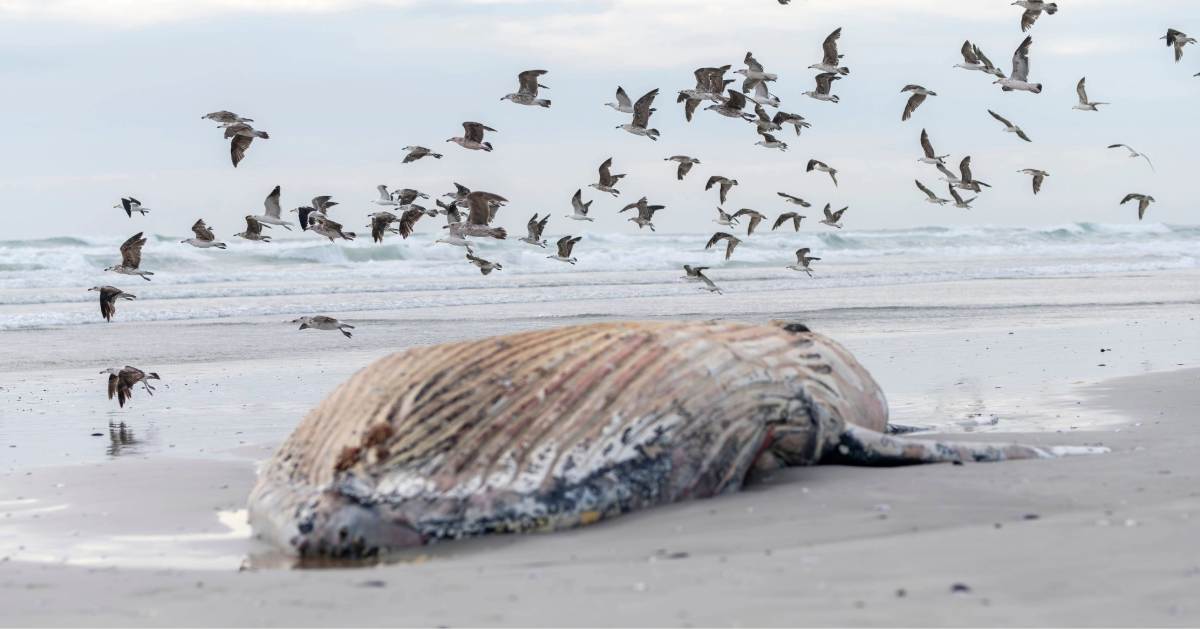
A dead sperm whale stranded near Blåvandshuk in southwestern Jutland has drawn crowds of beachgoers walking far out into shallow waters to get close to the massive animal. Authorities are now issuing a clear warning to stay away from the whale due to dangerous currents, cold water, and the risk of explosion from built-up gases inside the carcass.
Dangerous Curiosity Draws Crowds to Stranded Whale
A sperm whale washed up on Friday about one and a half kilometers from Blåvandshuk in the Wadden Sea. The animal died in shallow waters, and low tide conditions made it visible from shore. By Saturday, several visitors had walked hundreds of meters out into the water to see the whale up close.
Authorities quickly realized they had a problem. Jane Hansen, head of office at the Danish Environmental Protection Agency, made the warning clear. People must not try to reach the whale. The situation is very dangerous.
The Wadden Sea presents multiple hazards. Strong currents can sweep people off their feet without warning. Sandbanks and channels shift constantly. The cold weather adds another layer of risk. Even experienced swimmers can find themselves in trouble quickly.

Explosion Risk From Decomposing Marine Mammals
Beyond the environmental dangers, the whale itself poses risks. Dead whales accumulate gases as they decompose. These gases build up inside the body cavity and can reach dangerous pressure levels.
Hansen confirmed there is a small risk of explosion. While not highly probable, it remains a real concern. When whale carcasses explode, they can spray decomposing tissue and fluids over a wide area. Anyone nearby could be injured by the force or covered in hazardous material.
Similar incidents have occurred elsewhere. In Taiwan, a dead sperm whale exploded while being transported through a city in 2004. The blast covered streets, storefronts, and bystanders with blood and organs. In the Faroe Islands, a marine biologist was once knocked over when he cut into a beached whale and gases erupted violently.
For these reasons, authorities strongly advise keeping a safe distance. The whale may look harmless from shore, but approaching it puts people at serious risk.
Sperm Whales Are Ocean Giants
Sperm whales rank as the largest toothed animals on Earth. They can grow up to 20 meters long and weigh as much as 41 tons. Other whale species like blue whales and fin whales grow larger, but those are baleen whales. Sperm whales hold the record for toothed creatures.
These marine mammals can live up to 70 years. They inhabit all the world’s oceans and dive deeper than almost any other mammal. They hunt for squid at depths reaching 2,000 meters or more.
Despite their size and power, sperm whales face threats. They are classified as a vulnerable species and protected under international law. Human activities like fishing, ship strikes, and ocean noise pollution all pose dangers to their survival.

Second Stranding in One Week
The Blåvandshuk stranding happened just days after another sperm whale beached itself near Aalbæk in North Jutland. That incident marked the first time in ten years a sperm whale ran aground in Denmark. Having two strandings within a week might seem unusual, but experts say otherwise.
Charlotte Bie Thøstesen works as a natural history specialist at the Fisheries and Maritime Museum in Esbjerg. She explained that the North Sea acts as a trap for sperm whales. The area is too shallow for these deep-diving animals. When they enter by mistake, they often cannot find their way back to deeper waters.
The North Jutland whale was dragged ashore and examined. Experts cut it apart to determine the cause of death. They found a fishing net lodged in the whale’s esophagus. The animal had swallowed the net and could not expel it. This blocked its ability to eat and ultimately caused its death.
The jaw was quickly removed from that whale. Sperm whale teeth are made of valuable ivory. Leaving the jaw intact would have invited theft or vandalism. Authorities wanted to prevent illegal trade in whale ivory.
No Plans to Move the Blåvandshuk Whale
Unlike the whale in North Jutland, the one near Blåvandshuk will stay where it is. Hansen confirmed the agency plans to leave it in place for now. The whale lies far from shore, and moving it would be difficult and expensive.
Instead, authorities will monitor the situation. They will keep watch to ensure no one tries to approach the animal or remove parts of it. The teeth and other body parts remain protected by law.
Eventually, nature will take its course. Scavengers and decomposition will gradually break down the carcass. Tides and currents may move it further out to sea or break it apart. In time, nothing will remain but bones scattered on the seabed.

Why Whales Strand Themselves
Scientists still debate why whales beach themselves. Several theories exist, but no single explanation covers all cases. Some strandings result from illness or injury. A sick whale may lose its sense of direction or become too weak to navigate properly.
Others happen because of human activity. Underwater noise from ships, sonar, and industrial equipment can confuse whales. Loud sounds may damage their hearing or disrupt their echolocation. This makes it hard for them to navigate safely.
In shallow areas like the North Sea and Wadden Sea, geography plays a role. Whales that normally live in deep ocean waters may wander into coastal areas by accident. Once there, they struggle to find their way back. The gently sloping seabed and tidal patterns confuse them further.
Social bonds also matter. Whales are highly social animals. If one member of a pod strands, others may follow. They try to stay with the distressed animal and end up beaching themselves too.
What Happens to Stranded Whales
When a whale strands alive, rescue efforts sometimes succeed. Volunteers and experts may work for hours to keep the animal wet and cool. They wait for high tide and try to guide it back to deeper water. Success rates vary, and many whales die despite these efforts.
Dead whales present different challenges. They are too large to move easily. A full-grown sperm whale weighs dozens of tons. Heavy equipment and specialized teams are needed to transport them.
In some cases, authorities decide to let nature handle disposal. The carcass decomposes naturally over weeks or months. Scavengers like birds, crabs, and fish feed on the remains. Bacteria break down the soft tissues. Eventually, only the skeleton remains.
In other cases, especially near populated areas, removal becomes necessary. The smell of decomposition can be overwhelming. Health concerns arise. Authorities then cut the whale into sections and transport it to a landfill or processing facility.
Protecting Marine Life and People
The warnings about the Blåvandshuk whale serve two purposes. First, they protect people from real dangers. The combination of environmental hazards and explosion risk makes approaching the whale genuinely unsafe.
Second, they protect the whale itself. Even though it is dead, the carcass has scientific value. Researchers can learn about the animal’s health, diet, and cause of death. Disturbing the remains or removing parts destroys this information.
Danish law protects marine mammals, alive or dead. Taking any part of a stranded whale without permission is illegal. This includes teeth, bones, or any other body parts. Violations can result in serious fines.
The law exists for good reasons. It prevents commercial exploitation of protected species. It ensures that scientists can study strandings properly. It also reduces the spread of diseases that dead marine mammals may carry.
Authorities ask the public to respect these rules. If you see a stranded whale, report it to local officials. Keep your distance and warn others to do the same. Enjoy observing from a safe location but do not approach.
The Blåvandshuk whale will remain under watch for the foreseeable future. Authorities hope their warnings will keep curious visitors at a safe distance. The incident reminds us that nature is both fascinating and dangerous. Respecting that balance keeps everyone safer.
Sources and References
The Danish Dream: Massive Whale Stranding Shocks North Jutland Coast
The Danish Dream: Best Travel Insurance in Denmark for Foreigners
DR: Klar advarsel: Gå ikke ud til død hval