Denmark officially counts 1,419 islands, but only 78 are inhabited and just 443 are named, making the kingdom one of the most island-rich nations on Earth.
If you have lived in Denmark for any length of time, you have probably realised something strange. The country feels small, yet it keeps expanding into the sea. Ferries, bridges, and tiny harbour towns hint at a geography most newcomers underestimate.
So how many islands does Denmark have, really? The short answer is 1,419, according to the Danish Ministry of Foreign Affairs. The longer answer involves Greenland, the Faroe Islands, artificial reclamation projects, and a few islets nobody has bothered to name.
How Many Islands Does Denmark Have in Total?
The official figure is 1,419 islands across the Kingdom of Denmark. Of those, 78 are inhabited and 443 carry official names. The rest are tiny, rocky, or simply too unremarkable for the cartographers to bother.
That number excludes Greenland’s own archipelagos, which would push the total far higher. The Kingdom of Denmark, or Rigsfællesskabet, includes Denmark proper, the Faroe Islands, and Greenland. Add the Faroes and you get 18 more inhabited islands in the North Atlantic.
Where the Number Comes From
The 1,419 figure comes from official Danish geographic surveys cited by the Ministry of Foreign Affairs. Wikipedia and Visit Denmark both repeat it, though some sources list closer to 1,000 named landmasses. The discrepancy depends on what you count as an island versus a skerry.
For a piece of land to qualify as an island in Danish law, it must stay above water at average tide. It also has to be surrounded by free-flowing seawater. That definition leaves out sandbars and reefs that vanish at high tide.
Denmark, the Faroe Islands, and Greenland Combined
I find this part fascinating as an expat. Most Danes will tell you Denmark is “small,” then casually mention that their kingdom stretches from the North Sea to the Arctic Circle. The Kingdom of Denmark covers more than 2.2 million square kilometres when you include Greenland.
Greenland alone is the world’s largest island, at roughly 2,166,000 square kilometres. The Faroe Islands add 18 small, dramatic islands in the North Atlantic. Together with Denmark proper, the kingdom is one of the most geographically scattered countries in Europe.
Greenland: The Giant in the Realm
Greenland has its own government, language, and flag, but remains part of the Danish Realm. The island has been at the centre of global politics since Donald Trump revived talk of buying Greenland. The Danes I speak with mostly find the idea absurd, and slightly insulting.
In 2021, researchers from the University of Copenhagen discovered a small gravel island off northern Greenland. They proposed naming it Qeqertaq Avannarleq, meaning “the northernmost island.” Whether it survives erosion is another question entirely.
The Faroe Islands: Eighteen Specks in the Atlantic
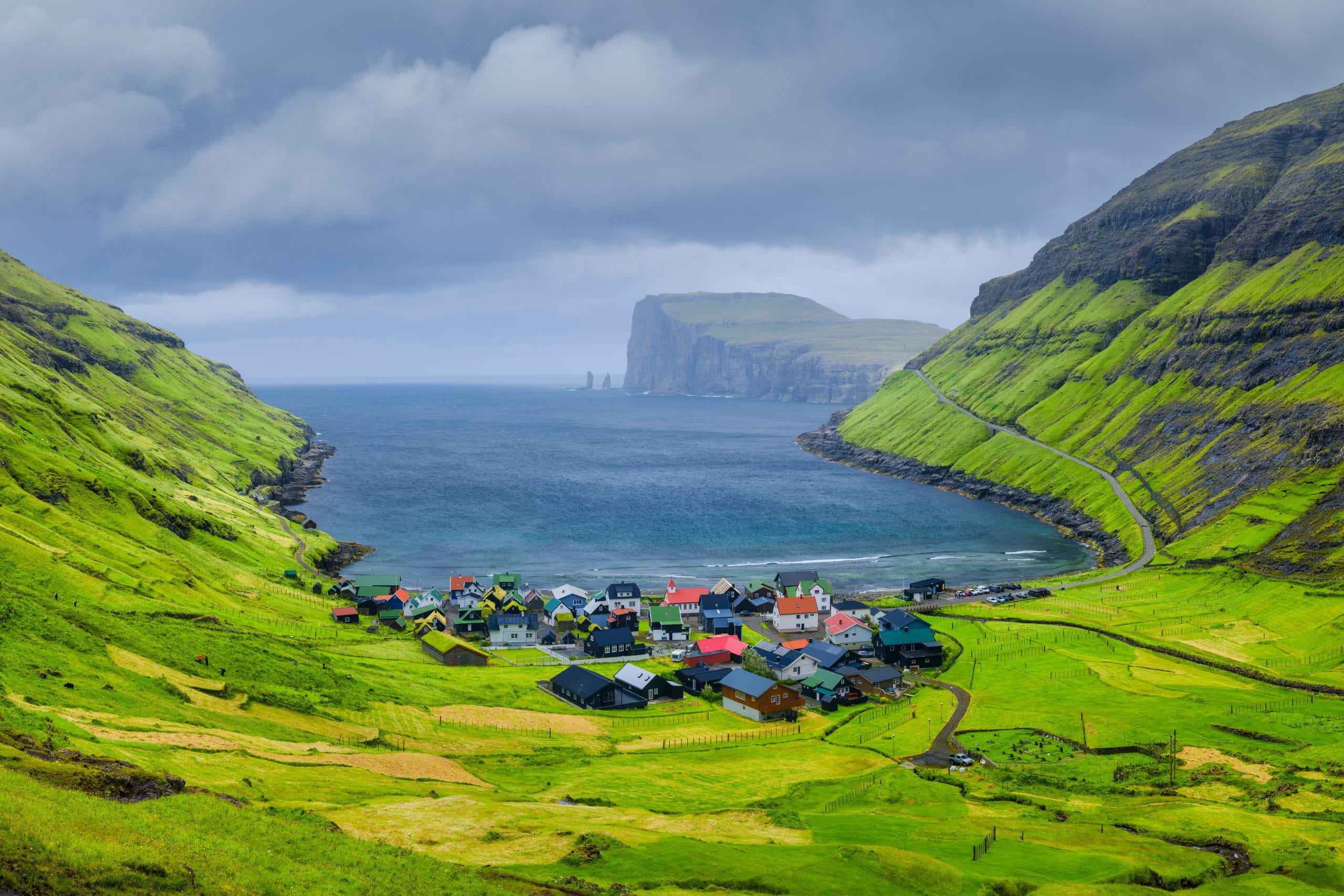
The Faroes sit roughly halfway between Norway and Iceland. They include 18 main islands, 17 of which are inhabited. Tórshavn, the capital, is one of the smallest in the world.
The Faroese have their own parliament, the Løgting, and their own language. They are now planning an ambitious underwater tunnel project to connect more islands. It is the kind of engineering ambition that explains why Danish infrastructure punches above its weight.
Major Islands in Denmark Worth Visiting
If you live here, sooner or later you will be invited on a “summerhouse weekend.” That usually means a ferry ride to one of the bigger islands. Here are the ones every expat should know.
Zealand (Sjælland)
Zealand is the largest island in Denmark proper, with over 2.3 million residents. It hosts Copenhagen, Roskilde, and Helsingør, where Shakespeare set Hamlet. The Øresund Bridge links it to Sweden via the artificial Peberholm islet.
Zealand is also where Danish politics happens, for better or worse. As an expat, I think of it as the brain of the country, dense, opinionated, and constantly arguing about housing prices. The Sommerland Sjælland park is a popular family escape from the city.
Funen (Fyn)
Funen is Denmark’s third-largest island, although Danes love to call it the second. It is the birthplace of Hans Christian Andersen and the home of Odense, Denmark’s third-largest city. The South Funen Archipelago is the kind of place Danes retreat to when Copenhagen exhausts them.
Funen is also famous for its castles, including Hvedholm and Hvidkilde. Per Visit Denmark, the island has more castles per square kilometre than any other region. Svendborg is a charming maritime town worth a weekend.
Bornholm
Bornholm sits alone in the Baltic Sea, closer to Sweden and Poland than to Copenhagen. The island is famous for its round churches, smoked herring, and granite cliffs. The Hammershus ruins are the largest medieval fortress in northern Europe.
I recommend going in late spring, when the cliffs are warm and the herring smokeries are smoking. The NaturBornholm centre walks you through 1.7 billion years of geology. It also hosts key Danish military assets, which makes it more strategic than tourists realise.
Samsø
Samsø is the small island that went carbon-negative. Since 1997, it has produced more renewable energy than it consumes, mostly through wind and biomass. According to the Samsø Energy Academy, the island became a model for European energy transition.
For expats interested in Denmark’s climate strategy, Samsø is essentially a working laboratory. The Samsø Museum shows the older side of the island, before turbines became the export. It is also a great place to disappear for a weekend.
Als and the North Jutlandic Island
Als sits in Southern Jutland, just above the German border. It covers 321 square kilometres and is connected to Jutland by two bridges. Sønderborg, the main town, is a quiet base for hiking and water sports.
Further north, the so-called North Jutlandic Island, or Vendsyssel-Thy, is technically an island. The Limfjord cut it off from mainland Jutland after a storm in 1825. Most Danes still think of it as part of the mainland, which says something about Danish geographic stubbornness.
Langeland and Other South Funen Gems
Langeland is a long, narrow island in the South Funen Archipelago. It is known for beaches, wild horses, and cold-war bunkers. Ærø, just to the west, has cobbled streets and yellow houses that feel frozen in 1860.
Together with Tåsinge and Strynø, these islands make up some of the best sailing waters in northern Europe. As a foreigner, I find this archipelago less polished than Bornholm but more honest. You meet farmers, not influencers.
Small and Uninhabited Islands in Denmark
If 78 islands are inhabited, that leaves around 1,341 that are not. Most are tiny, marshy, or simply too windswept for permanent life. Some host only sheep, seabirds, or the occasional Danish hermit.
Examples include Avernakø, Egholm near Aalborg, Endelave, Lilleø, and Askø. Many of these have summerhouses, but no year-round population. According to Visit Denmark, you can rent a kayak and reach dozens of them in a single summer.
The Smallest Inhabited Islands
Some of the smallest inhabited islands in Denmark have fewer than 50 residents. Anholt, sitting in the middle of the Kattegat, has around 145 inhabitants and Denmark’s largest desert. Yes, Denmark has a desert, and most Danes do not know about it.
The 27 “small islands” represented by the Sammenslutningen af Danske Småøer have a combined population of just over 5,000. As reported by DR, these communities lobby together for ferry subsidies and schools. Without that political weight, many would have disappeared by now.
Artificial Islands: Denmark Keeps Building
Denmark does not just count its islands. It builds new ones, often in defiance of public opinion. The largest current project is Lynetteholm, a 271-acre artificial peninsula off Copenhagen.
The Danish Parliament approved Lynetteholm in 2021, despite protests from environmental groups. The project is expected to house 35,000 residents and cost billions of kroner. Phase two is due for completion by early 2026.
Peberholm and the Øresund Connection
Peberholm is the artificial island between Denmark and Sweden that anchors the Øresund Bridge. It was built from material dredged during construction in the late 1990s. Today, it is a protected nature reserve where over 500 plant species have arrived on their own.
I have always loved this story. Engineers built a rock, then nature took it over. It is one of the rare cases where a Danish infrastructure project ended up more biodiverse than the coast it replaced.
How Many Islands Does Denmark Have Compared to Other Countries?
Denmark is often ranked among the most island-dense countries in Europe. Sweden has roughly 270,000 islands, but most are uninhabited rocks. Finland has around 188,000, mostly in lakes.
What makes Denmark unusual is the ratio of inhabited islands to total population. With 78 populated islands and only 5.9 million residents, Denmark has one of the highest rates of island living per capita. Per Statistics Denmark, the average ferry-dependent islander travels by boat over 100 times a year.
Why Islands Still Matter for Expats
If you are considering moving to Denmark, the islands are more than tourist destinations. Several offer subsidised housing and tax incentives for people willing to settle. Ærø, Læsø, and Samsø all have active municipal campaigns to attract young families.
I have met expats who bought a house on Bornholm for less than a Copenhagen parking space. They get fresh herring, slow Wi-Fi, and a community where everyone knows your name. For some, that is heaven. For others, it is a slow nightmare.
Quick Facts: How Many Islands Does Denmark Have?
- Total islands: 1,419 across the Kingdom of Denmark
- Inhabited islands: 78
- Named islands: 443
- Largest island by area: Greenland, 2.16 million km²
- Largest island by population: Zealand, over 2.3 million
- Smallest official inhabited island: Hjortø, with around 7 residents
- Newest artificial island: Lynetteholm, under construction
- Faroe Islands: 18 islands, 17 inhabited
Final Thoughts From an Expat
If you set out to visit every island in Denmark, one a day, you would need nearly four years. Some are connected by bridges, like Funen and Æbelø, while others require a ferry, a kayak, or pure luck with the weather. A few may erode away before you reach them.
My honest advice is to pick three. Bornholm for drama, Funen for charm, and Samsø for the future. After years here, I still find new islands on the map, and that is the strange privilege of living in a country that keeps refusing to be as small as it claims.
FAQ: How Many Islands Does Denmark Have?
How many islands does Denmark have in total?
Denmark has 1,419 islands according to the Danish Ministry of Foreign Affairs. Of those, 78 are inhabited and 443 carry official names. The remainder are small, unnamed, or uninhabited landmasses.
How many inhabited islands are there in Denmark?
There are 78 inhabited islands in Denmark proper. Adding the Faroe Islands brings the total to 95. Greenland adds several more inhabited landmasses, although it is itself the world’s largest island.
Is Greenland part of Denmark’s island count?
Greenland is part of the Kingdom of Denmark but is usually counted separately. It is the world’s largest island, covering 2.16 million square kilometres. Greenland has its own government and a strong push toward eventual independence.
What is the largest island in Denmark?
By population, the largest island is Zealand, home to Copenhagen and over 2.3 million residents. By area, Greenland is the largest island in the Kingdom of Denmark. Within Denmark proper, Vendsyssel-Thy and Zealand are the two largest by surface area.
Are new islands still being discovered in Denmark?
Yes. In 2021, Danish researchers found a previously unknown gravel island off northern Greenland. They suggested calling it Qeqertaq Avannarleq, meaning “the northernmost island.” Erosion may eventually wash it away.
How many islands do the Faroe Islands have?
The Faroe Islands consist of 18 main islands, 17 of which are inhabited. They sit roughly halfway between Norway and Iceland. The Faroes have their own parliament and language under the Danish Realm.
Is Denmark building new artificial islands?
Yes. Lynetteholm, a 271-acre artificial peninsula, is being built off Copenhagen. The project will house 35,000 people and is set for completion around 2070. Peberholm, near the Øresund Bridge, is another well-known artificial island.