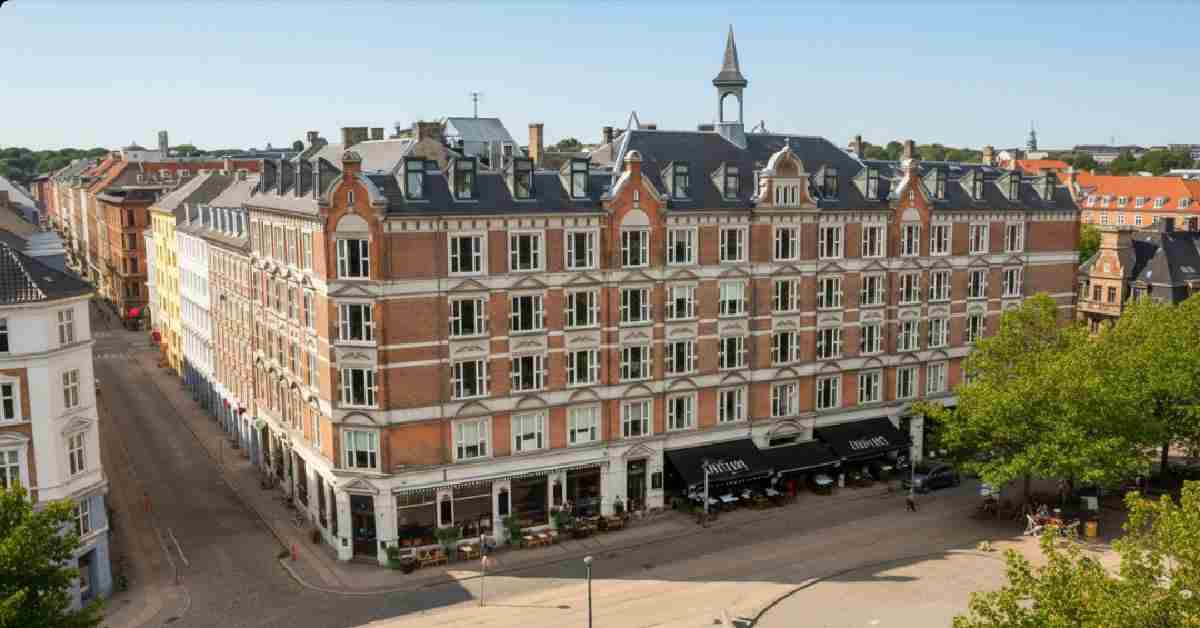
Halmtorvet is a square in Copenhagen’s Vesterbro district, born as a hay market and reborn as one of the city’s liveliest meeting points. This guide covers its history, the Meatpacking District next door, where to eat, and how to get there.
I have walked across Halmtorvet hundreds of times. It sits just behind Copenhagen Central Station, in the heart of Vesterbro. The name translates to “Hay Market,” a plain nod to its rough, agricultural past.
That past still hangs in the air, but the square today is something else entirely. It is cafés, granite fountains, and the constant hum of Copenhagen life. For expats, it is one of the best places to understand how this city reinvents itself.
Here are the key points on Halmtorvet:
- Historical roots: Halmtorvet began as a 19th-century hay and livestock market, tied to the cattle trade and the slaughterhouses of Vesterbro.
- The Meatpacking District: The square borders Kødbyen, Copenhagen’s former meatpacking zone, now packed with restaurants, bars, and galleries.
- Accessibility: Halmtorvet sits a five-minute walk from Copenhagen Central Station, with trains, buses, the metro, and bike lanes nearby.
- Best time to visit: May through September brings outdoor dining and markets. Winter adds Christmas lights and a quieter charm.
The History of Halmtorvet: From Hay Market to City Square
The square earned its name honestly. Farmers once hauled hay and straw here to sell to a growing city. Horses still powered Copenhagen, and they needed feed.
As reported by Wikipedia, the market moved to its current spot in the late 1800s. The city was bursting past its old ramparts, and Vesterbro filled fast with workers and industry.
The cattle trade and Øksnehallen
By 1900, this corner of Vesterbro was Copenhagen’s livestock and slaughter district. The grand brick hall called Øksnehallen, finished in 1901, was a cattle market building. Oxen were traded under its iron rafters.
Today Øksnehallen is a 5,000 square meter exhibition space. It hosts art shows, design fairs, and Copenhagen Fashion Week events. The bones of the industrial past hold up the culture of the present.
From red-light edge to renewal
For decades Halmtorvet had a hard reputation. It sat beside Istedgade, long known for sex work, drugs, and grit. Older Copenhageners still remember when you walked through quickly.
That changed around 2003. The city redesigned the square with a long granite fountain, new lighting, and rows of linden trees. The gentrification was real, and not everyone celebrated it, but Halmtorvet became a place to linger.
Why Halmtorvet Matters to Expats in Copenhagen
I tell newcomers that Halmtorvet is a crash course in modern Copenhagen. It shows you how Danes turn old industry into public space. Nothing gets demolished if it can be repurposed.
The square also reflects the housing story expats live every day. Vesterbro went from cheap and rough to one of the most sought-after postcodes. If you are reading about housing prices, this neighborhood is exhibit A.
A square built for hanging around
What strikes most visitors is how unhurried Halmtorvet feels. The fountain runs the length of the square, and people sit along its edge in summer. Kids splash, dogs drink, and someone always has a beer.
This is Danish public life at its most relaxed. No one polices the space or pushes you to spend. It is the kind of free, open square that makes Copenhagen feel liveable.
Kødbyen: The Meatpacking District Next to Halmtorvet
You cannot write about Halmtorvet without Kødbyen, the Meatpacking District. It sits directly behind the square, split into the White Meatpacking and the Brown Meatpacking. The white modernist buildings date from the 1930s.
Meat is still cut here in the mornings. By evening the same district fills with diners and drinkers. According to VisitCopenhagen, it is one of the city’s main nightlife and dining hubs.
Where to eat and drink
Fiskebaren built its name on Nordic seafood and oysters. Nearby you find pizza joints, natural wine bars, and Kødbyens Mad og Marked food market in season. For broader options, see my notes on where to eat in Copenhagen.
On the square itself, Café Bang og Jensen and Mesteren og Lærlingen are local fixtures. The latter sits in a former butcher’s shop and keeps the gritty charm. These places anchor the social scene more than any landmark.
Galleries and creative spaces
Kødbyen also drew galleries when rents were still low. V1 Gallery and others turned cold storage into white-walled art rooms. The mix of food, art, and nightlife gives the district its restless energy.
If contemporary art pulls you, pair this with a trip to Refshaleøen. Both prove the same point. Copenhagen loves turning industrial ruins into culture.
When to Visit Halmtorvet: A Seasonal Guide
Halmtorvet works year-round, but the seasons change the mood completely. From May to September, the square comes alive. Outdoor tables spill out, and the long Danish daylight stretches past 10pm in June.
Summer is also festival season across the city. Check my guide to the best music festivals if you plan a warm-weather trip. Kødbyen’s food market runs strongest in these months.
Winter at Halmtorvet
Do not write off the cold months. The square gets festive lighting, and the cafés lean into hygge with candles and blankets. A glass of gløgg by the fountain has its own quiet appeal.
Winter is also when locals reclaim the place from tourists. It is darker and slower, but more honest. That contrast is part of why I keep coming back.
How to Get to Halmtorvet
Few Copenhagen attractions sit this close to a transport hub. Copenhagen Central Station is a five-minute walk away. As stated by VisitCopenhagen, the station is the busiest rail node in Denmark.
From there you reach trains, regional services, and buses with ease. The full Copenhagen public transport network links Halmtorvet to the whole region. The metro and S-train stations are minutes away.
By bike
The Danish way to arrive is by bicycle. Vesterbro is laced with protected bike lanes, and Halmtorvet has plenty of parking racks. My cycling in Copenhagen guide covers the basics.
City bikes and rental apps make it easy even without your own wheels. Pedaling in from Frederiksberg or the city center takes minutes. It beats waiting for any bus.
What to See Around Halmtorvet
The square is a launchpad, not a dead end. Within a short walk you hit some of Vesterbro’s best corners. This is dense, walkable Copenhagen at its finest.
I usually send first-timers on a loop. It captures the food, the green space, and the street life in one easy stroll.
Nearby streets and parks
Head to Sønder Boulevard for a green strip lined with cafés and play areas. Then loop toward Værnedamsvej, often called Copenhagen’s most French street.
Green space is close too. Enghaveparken and the historic Skydebanehaven both reward a detour. For more ideas, see Copenhagen’s hidden gems.
Markets and shopping
The area suits slow browsing more than big-name retail. You find design shops, vintage stores, and food stalls rather than malls. The street food and farmers markets guide maps the best stops.
Plan around it with my things to do in Copenhagen list. Halmtorvet fits any itinerary. It is central, free, and never far from a good meal.
Is Halmtorvet Safe?
Yes, by any reasonable measure. The square shed most of its rough edge years ago. Like all of central Copenhagen, it is calm and well-lit.
The station area can feel busier at night, and Istedgade still has its scenes. Keep normal city awareness and you will be fine. I have never felt unsafe here, even late.
Final Thoughts on Halmtorvet
Halmtorvet is not a single attraction you tick off. It is a living square that carries Copenhagen’s whole arc in one space. Hay market, cattle yard, red-light edge, then gentrified hub.
For expats, that layered story is the draw. Sit by the fountain, grab a coffee, and watch the city work. It tells you more about Denmark than any museum could.
Frequently Asked Questions About Halmtorvet
What does Halmtorvet mean in English?
Halmtorvet means “Hay Market” in Danish. The name comes from the square’s 19th-century origins, when farmers sold hay and straw to feed the city’s working horses. The livestock trade later shaped the whole district.
What is the best time to visit Halmtorvet?
The best time is May through September. The square fills with outdoor dining, street life, and long daylight hours. Summer also brings food markets in nearby Kødbyen and festivals across Copenhagen, adding extra energy to a visit.
How do I get to Halmtorvet?
Halmtorvet sits a five-minute walk from Copenhagen Central Station. From there you can use trains, buses, the metro, and S-trains. Cycling is the local favorite, since Vesterbro has protected bike lanes and plenty of parking racks.
What is there to do near Halmtorvet?
The Meatpacking District, Kødbyen, sits right behind the square with restaurants, bars, and galleries. Øksnehallen hosts exhibitions and fashion events. Nearby you find Sønder Boulevard, Værnedamsvej, and the green space of Enghaveparken, all within a short walk.
Is Halmtorvet safe for tourists?
Yes, Halmtorvet is generally safe. The area gentrified heavily in the 2000s and is now a relaxed, popular square. As in any city, stay aware near the busy station at night, but most visitors feel comfortable there.
What language is spoken at Halmtorvet?
Danish is the official language. However, English is spoken almost everywhere in this part of Copenhagen, especially in cafés and restaurants. Most staff switch to English instantly, so language is rarely a barrier for visitors or new expats.
Is Halmtorvet expensive to visit?
The square itself is free to enjoy, with public seating around the fountain. Food and drinks in Kødbyen match typical Copenhagen prices, which run high. For budgeting context, see whether Copenhagen is expensive before you plan your trip.
Sources and References
Wikipedia: Halmtorvet
VisitCopenhagen: Meatpacking District
VisitCopenhagen: Official City Guide