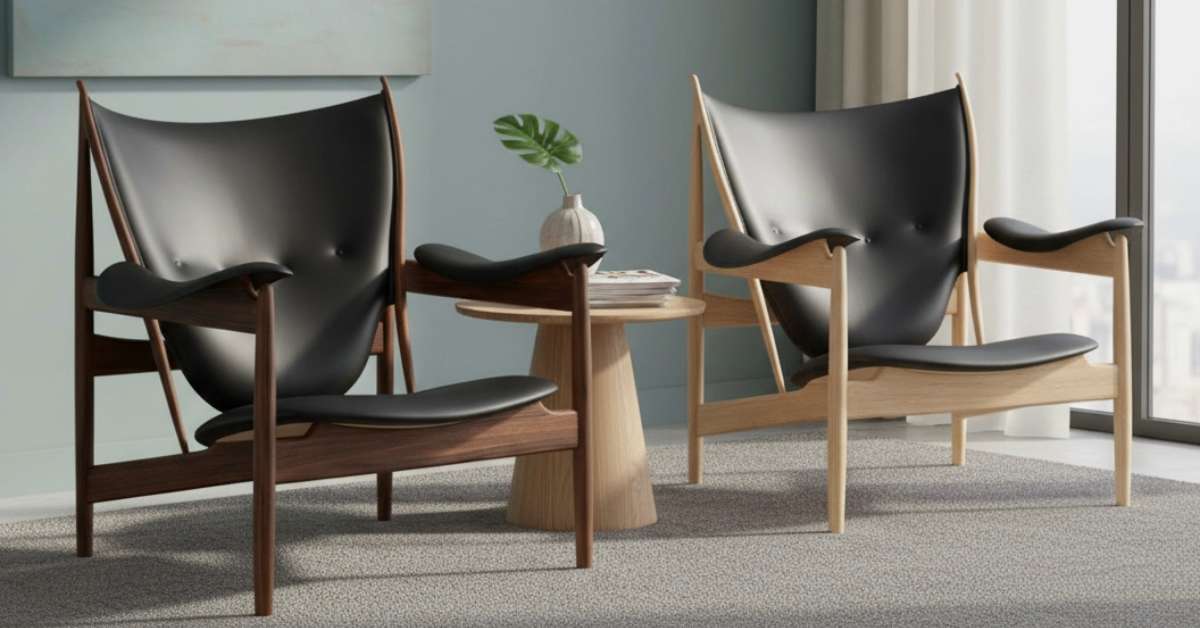
Few chairs have shaped Danish design history quite like Finn Juhl’s Chieftain Chair. Introduced in 1949, this sculptural masterpiece redefined furniture as an artistic expression, combining bold organic form with masterful craftsmanship. Examining its origins, materials, and cultural impact, this article reveals why the Chieftain Chair remains one of the most powerful and enduring statements in mid-century modern design.
Key Points
- A Milestone in Danish Design: The Chieftain Chair by Finn Juhl, designed in 1949, revolutionized Danish design with its sculptural elegance and commanding presence, symbolizing bold innovation in mid-century modern furniture.
- The Vision behind the Chieftain Chair: Finn Juhl aimed to create a chair that embodied artistic expression and leadership in Danish design, drawing inspiration from tribal thrones and historical symbols to emphasize regality and innovation.
- Masterful Materials and Exceptional Craftsmanship: Each Chieftain Chair is meticulously handcrafted using high-quality woods like walnut or oak, with over 40 hours dedicated to its skilled construction and upholstery, ensuring durability and artisan value.
- Why the Chieftain Chair is a Timeless Masterpiece: Its iconic sculptural form, historical significance, and ongoing relevance make the Chieftain Chair a staple in luxury interiors and a treasured collector’s item, symbolizing Danish cultural heritage.
- An Investment in Timeless Danish Design: Purchasing a Chieftain Chair is an investment in artistry and legacy, blending aesthetics with functionality, and complementing Scandinavian interiors with its organic elegance and warm presence.
A Milestone in Danish Design
Few pieces of furniture have made as profound an impact on Danish design as the legendary Chieftain Chair by Finn Juhl. Revered for its sculptural elegance and commanding presence, the Chieftain Chair is more than just a seating solution—it’s a statement of artistic identity and craftsmanship. Designed in 1949 by Denmark’s visionary designer Finn Juhl, this chair exemplifies the bold innovation that transformed Denmark into a worldwide center for mid-century modern design.
Finn Juhl crafted the Chieftain Chair not merely as furniture, but as a symbolic fusion of form and freedom. At 1.04 meters wide and 92.5 cm in height, the chair was never intended for subtlety—it was built to dominate a room with grace. Unlike the minimalistic functionalism popular in 1940s Danish furniture, the Chieftain Chair introduced an organic aesthetic deeply rooted in sculptural form, sleek curves, and seamless joinery. Finn Juhl’s ambition transcended conventional craftsmanship by imbuing the chair with a sense of movement and fluidity, akin to fine art.
The Vision behind the Chieftain Chair
When Finn Juhl first sketched the Chieftain Chair, his goal was not just to design furniture but to shape an idea—an armchair that exemplified the potential of Danish design to lead global design innovation. The chair debuted at the Copenhagen Cabinetmakers’ Guild Exhibition in 1949 and immediately became an icon, coining new possibilities in furniture construction.
This wasn’t just another chair from Denmark—it was a departure from functional orthodoxy, inviting emotion and expression into the design language. Juhl drew inspiration from tribal thrones and historical power symbols, which is perhaps why the Danish media quickly dubbed it the “Chieftain Chair.” The title was sealed when King Frederick IX of Denmark visited the exhibit, taking a seat in the chair, further affirming its regality and prestige.

Masterful Materials and Exceptional Craftsmanship
Every detail of the Chieftain Chair reflects master-level craftsmanship and a commitment to quality materials. The wooden frame, usually constructed in high-grade American walnut or oak, is elegantly sculpted, featuring broad, sweeping armrests and a dramatic curve of the backrest—hallmarks of Finn Juhl’s distinctly organic approach. The frame isn’t just sturdy; it’s a demonstration of seamless joinery that lets wood flow into leather with uninterrupted harmony.
The seat and backrest are upholstered in top-grain leather or premium fabric, offering a tactile richness that complements the smooth texture of the wood. The leather, often available in luxurious shades like cognac, black, or deep burgundy, slowly conforms to the user’s shape over time, offering not just beauty but comfort tailored to the individual.
Each Chieftain Chair requires over 40 hours of skilled handcrafting. This includes meticulous wood carving, upholstery stretching, and quality inspection—a testament to its lasting value and durability. Combined, these elements create a furniture piece that’s both a pleasure to sit in and a marvel to behold.
Meet the Visionary: Finn Juhl
Finn Juhl (1912-1989) stands as one of the most influential figures in the golden age of Danish design. Originally trained as an architect at the Royal Danish Academy of Fine Arts in Copenhagen, Juhl never received formal training in furniture making. And yet, his intuitive understanding of design principles allowed him to revolutionize furniture, essentially becoming the father of organic modernism in Denmark.
While other Danish designers focused primarily on function, Juhl approached furniture as living sculpture. His work drew from modernist thinkers and emphasized artistic freedom—a quality that was virtually radical in Denmark during the 1940s and 50s. The Chieftain Chair was perhaps his greatest embodiment of this vision, blending architecture, craftsmanship, and abstract expressionism into one.
Notably, Finn Juhl was the first Danish furniture designer to gain serious recognition in the United States. His work furnished rooms in the United Nations in 1951, marking a powerful entry of Danish design into the North American consciousness. Today, many of his designs, including the Chieftain Chair, are part of permanent museum collections such as The Museum of Modern Art (MoMA) in New York and the Designmuseum Danmark in Copenhagen.

Why the Chieftain Chair is a Timeless Masterpiece
The Chieftain Chair is more than just historically significant—it remains as relevant today as it was over 70 years ago. Its distinguished profile, commanding presence, and emphasis on form-as-function have made it a staple in luxury interiors, design studios, museums, and discerning homes across the world. With limited production and attention to artisan techniques, each chair serves as a one-of-a-kind masterpiece—something rarely achieved in modern furniture today.
In an age dominated by mass production and disposable trends, the Chieftain Chair by Finn Juhl connects us to a time when furniture was made with passion, purpose, and pride. Owning a Chieftain Chair is like owning a piece of Denmark’s design history—a tangible token of the nation’s contributions to global design and culture.
An Investment in Timeless Danish Design
Choosing to purchase the Chieftain Chair by Finn Juhl is not just a matter of acquiring furniture—it’s an investment in artistry, legacy, and lifestyle. In the world of interior decoration, few pieces command the same level of admiration and cultural significance. Rooted in the ethos of Danish design, this chair is a synthesis of aesthetics and functionality, embodying the warmth, minimalism, and organic harmony so cherished in the interiors of Denmark.
For lovers of Scandinavian simplicity, the Chieftain Chair is a dream addition. It complements the clean lines, light woods, and natural materials that define the Danish home interior design culture. More than a chair, it becomes the room’s centerpiece—often placed in living rooms, reading nooks, or home offices where its sculptural form can be appreciated from every angle. Even in modern or eclectic homes, it serves as a striking contrast piece, adding history and texture to contemporary designs.
Unrivaled Comfort Meets Scandinavian Quality
One of the main reasons to buy the Chieftain Chair is that it effortlessly combines beauty and ergonomic comfort. Its broad seat and tilted backrest offer a relaxed, almost throne-like sitting experience that encourages hours of lounging without strain. The open arms provide freedom of movement, while the sculptural support subtly contours to the body—qualities that explain how the design has remained desirable for over seven decades.
Every Chieftain Chair is still handmade, ensuring that each piece is unique and manufactured with attentiveness to the smallest detail. This dedication to craftsmanship echoes the Danish design principle of “form follows function,” ensuring that the chair is not just beautiful but built to last a lifetime. In fact, many original chairs made in the 1950s still exist today in perfect condition—a testament to their enduring quality.

A Cultural and Artistic Collector’s Item
Owning a Chieftain Chair is akin to owning a piece of Danish cultural heritage. It represents the breakthrough moment when Danish furniture moved beyond utilitarianism and entered the world of sculpture. With such historical importance, collectors and museums alike value this chair as not only furniture but a true work of art.
In 2013, the original Chieftain Chair made headlines when an early edition was sold at auction for over $240,000 USD. While contemporary reproductions are more accessible, this sale underlines the chair’s high regard in design circles. For design aficionados and collectors, adding a Chieftain Chair to a collection is both an aesthetic and cultural triumph.
Perfectly at Home in Scandinavian Interiors
Danish interior design emphasizes hygge—a concept that embodies comfort, warmth, and wellbeing. The Chieftain Chair, with its generous proportions and warm wood tones, is perfectly in tune with this philosophy. Whether placed near a fireplace, beside a picture window, or within a minimalist setup, it adds a grounding and welcoming presence.
Compared to many modern chairs, the Chieftain Chair brings soul into a space. It is not cold or mechanical; instead, it offers a deeply organic essence that appeals to senses and memory. For Danish homes, where every item is chosen with care and intention, a chair like this becomes an heirloom—passed down through generations, preserving not just utility, but story.
In this way, the Chieftain Chair is not merely a purchase—it’s an acquisition of cultural identity, artistry, and enduring value.
Conclusion: The Timeless Appeal of the Chieftain Chair by Finn Juhl
The legendary Chieftain Chair by Finn Juhl stands as a testament to the creativity and craftsmanship that define Danish design. Revered for its sculptural elegance and status as a functional piece of art, the chair embodies the harmonious blend of form and function. Finn Juhl’s vision of transforming furniture into living sculpture has endured for more than seven decades, earning a place in both luxury interiors and design museums worldwide. Not only does the Chieftain Chair serve as an iconic collector’s piece, but it also enhances any living space with a sense of history and modern elegance.
Frequently Asked Questions
What makes the Chieftain Chair by Finn Juhl unique?
The Chieftain Chair is unique due to its combination of sculptural form and functional design. Its distinct shape and organic lines defy conventional furniture styles, making it a standout piece in any collection. The careful craftsmanship and use of premium materials also ensure that it remains a timeless icon.
How is the Chieftain Chair constructed?
The chair is meticulously handcrafted, primarily using high-grade American walnut or oak for the frame, combined with top-grain leather or fabric for upholstery. Each chair takes over 40 hours to complete, ensuring quality and durability—characteristics synonymous with Danish design.
Where can I purchase the Chieftain Chair?
You can purchase the Chieftain Chair through authorized sellers such as the official House of Finn Juhl website, as well as platforms like Selency and 1stDibs, which offer both new and vintage options.
What is the price range for a Chieftain Chair?
As of 2023, new chairs start at approximately $15,000 USD, with prices varying based on the choice of materials and customization options. Vintage or original mid-century editions can command much higher prices, especially those with documented provenance.
Why is the Chieftain Chair considered an important piece of design history?
Designed during a pivotal time in the mid-century modern movement, the Chieftain Chair challenged the norms of furniture design with its artistic and sculptural approach. Capturing the spirit of freedom and expression in post-war Denmark, it symbolizes a shift towards organic modernism, earning its place as a milestone in the history of design.
Can the Chieftain Chair fit into contemporary interiors?
Absolutely. The chair’s timeless design and organic form make it adaptable to various styles, from minimalist to eclectic. Its presence adds depth, sophistication, and a touch of history to modern living spaces.
Is the Chieftain Chair comfortable?
Yes, the Chieftain Chair is celebrated not only for its striking appearance but also for its comfort. Its ergonomic design offers ample seating space and support, making it perfect for extended relaxation or use in lounges and reading areas.
Does the Chieftain Chair require special care?
Maintaining the Chieftain Chair involves regular dusting and conditioning of the leather using appropriate products. Being mindful of its placement—avoiding direct sunlight or excessive humidity—will also help preserve its beauty and longevity.