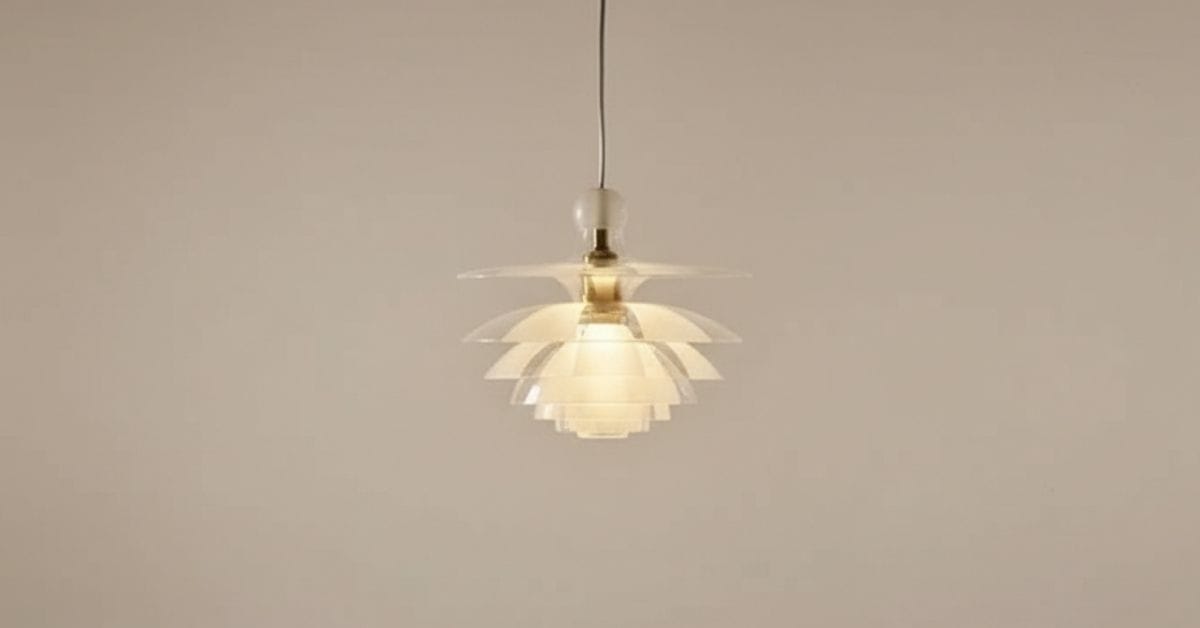
Among the most iconic lighting pieces in the world of Danish Design, the PH Septima Glass Pendant by Poul Henningsen stands as a timeless emblem of Scandinavian ingenuity and elegance.
Key Points:
- A Masterpiece of Danish design: Introduced in 1928, the PH Septima is a sculptural lighting work that exemplifies Danish craftsmanship, innovation, and minimalism, making it a highly sought-after collectible.
- The Architect of Light: Poul Henningsen: Poul Henningsen, a Danish designer and critic, revolutionized lighting with his multi-shade system that diffuses light gently and eliminates glare, significantly impacting Scandinavian modernism.
- A Design Inspired by Nature and Math: Featuring seven concentric shades inspired by Nordic light and mathematical precision, the PH Septima creates a floating, ethereal glow with its intricately layered, hand-blown glass design.
- Materials and Craftsmanship Behind the Beauty: Made from high-quality borosilicate glass and stainless steel, the pendant combines translucency and structural integrity, enhancing its aesthetic and functional appeal.
- A Symbol of Cultural and Design Legacy: Restored and reissued in 2020 after WWII disruptions, the PH Septima symbolizes Danish cultural heritage and timeless design, with limited annual production making it a rare collector’s item.
A Masterpiece of Danish Design
Introduced in 1928, this pendant light is not merely a source of illumination; it’s a sculptural work of art that epitomizes the refined craftsmanship, experimental innovation, and sophisticated minimalism that Denmark is renowned for in the design world. With its intricate, layered structure and crystalline finesse, the PH Septima is celebrated as one of Henningsen’s crowning achievements and remains a highly sought-after collectible and modern design object.
The Architect of Light: Poul Henningsen
To understand the brilliance behind the PH Septima, one must first delve into the genius of its designer, Poul Henningsen (1894–1967). Henningsen, a Danish author, critic, architect, and designer, is one of the most influential figures in 20th-century lighting design. His lifelong mission was to study the mechanics of light and create fixtures that offered both functional and aesthetic value. This led to the development of his groundbreaking multi-shade lighting system, which diffused light gently and eliminated glare, revolutionizing interior lighting.
Henningsen worked closely with Louis Poulsen, the famed Danish lighting manufacturer, beginning in the 1920s. His commitment to human-centric design and refined illumination principles helped shape Louis Poulsen into the global standard-bearer of Scandinavian modernism. By 1931, more than 100,000 of Henningsen’s other luminaire models were sold, reflecting his immense popularity and practical genius.
A Design Inspired by Nature and Math
The PH Septima Glass Pendant is particularly revered for its seven concentric shades, a design based on Henningsen’s earlier three-shade system but elevated in complexity and sophistication. Drawing inspiration from the play of light in icy Nordic conditions, Henningsen conceived this piece to create a floating, almost ethereal light emission, reducing harshness while preserving brightness.
Measuring approximately 35 cm (13.8 in) in diameter and weighing around 3.5 kg (7.7 lbs), the Septima features finely detailed hand-blown Italian borosilicate glass shades that are adorned with alternating clear and frosted sections. This intricate pattern further softens the light, casting enchanting shadows without creating strong contrasts or glare. Each of the layered shades sits delicately within metal brackets, ensuring the fixture’s stability while preserving its visual lightness.
The term “Septima,” derived from Latin, means “seventh,” a subtle nod to the unique seven-shade construction. This multilayered configuration is more than decorative, it’s a meticulously calculated system intended to optimize downward diffusion and atmospheric lighting.
The Materials and Craftsmanship Behind the Beauty
At the heart of the PH Septima’s allure is its blend of translucency and structure, made possible by marrying the delicate properties of glass with intelligent geometry. The shades are made from premium borosilicate glass, celebrated for its clarity, strength, and resistance to thermal shock. This type of glass not only reduces the weight of the fixture but also enhances the optical purity of light dispersion.
The alternating clear and sandblasted patterns on the glass give the pendant a ghost-like translucence, creating an evocative visual performance whether lit or unlit. Supporting this glass poetry are stainless steel fittings and fixtures that maintain the pendant’s structural integrity while preserving the minimalist aesthetic championed by Danish design.
A Symbol of Cultural and Design Legacy
Although initially designed in the late 1920s, the PH Septima was not mass-produced for many years. The global economic depression and the danger of damage to its fragile glass construction during WWII forced Louis Poulsen to halt production. It wasn’t until the 21st century that the pendant was resurrected and brought back to life in 2020, thanks to Louis Poulsen’s efforts to preserve and re-release essential pieces of Danish design history.
This resurrection wasn’t merely nostalgic; it was a recognition of ongoing global demand for authentic Scandinavian design. With only a limited number produced annually, owning a PH Septima is akin to possessing a piece of design heritage an object that bridges the past and present of Denmark’s artistic ingenuity.
Today, the PH Septima stands proudly in museums, luxury residences, and architectural showpieces across the world. It reflects not just superior lighting design, but also a cultural narrative woven into the fabric of Denmark itself, a reminder of how thoughtful, beautiful objects can elevate daily living and spirit alike.
Why Buy the Classic PH Septima Glass Pendant by Poul Henningsen?
A Harmonious Fit with Danish Home Interior Design
The allure of the PH Septima Glass Pendant goes beyond its shimmering beauty, it lies in the pendant’s perfect congruence with the principles of Danish design. Hallmarked by simplicity, functionality, and emotional resonance, Danish interiors are curated with intentionality and a sense of wellbeing. The PH Septima celebrates these same ideals with a lighting solution that is not only ornamental but subtle and serene.
In Danish homes, lighting plays a crucial role given the long dark winters and the importance of cultivated coziness, what Danes famously refer to as hygge. The PH Septima creates soft, diffused light that is essential for building warm, intimate atmospheres. Unlike harsh overhead lighting, Henningsen’s pendant illuminates a room with grace, softness, and consistency, making it an ideal centerpiece above dining tables, in living rooms, or entryways.
Its sculptural elegance makes it an excellent complement to Danish modern furniture, clean lines, tactile wood surfaces, and organic silhouettes, which favor minimalism and harmonious form. The PH Septima lends vertical rhythm to a space, drawing the eye upward while integrating seamlessly into the overall design narrative.
Exclusive Design with Lasting Value
Owning a PH Septima is not just a testament to personal taste, it is an investment in enduring craftsmanship. Since its reintroduction by Louis Poulsen in 2020, the pendant has been produced in limited quantities using artisan techniques and materials of the highest quality. With each piece crafted using hand-blown borosilicate glass, no two fixtures are entirely identical, offering a unique character to every pendant light.
The longevity of the design and the precision manufacturing from Denmark ensure that the PH Septima doesn’t merely endure, it ages gracefully. Many of Henningsen’s original designs from nearly a century ago are still in use today, a testament to the durability and timelessness of his vision. In fact, over 100,000 PH-designed lamps are still in global circulation, many of which have become cherished heirlooms handed down through generations.
When viewed as a long-term investment, both in financial and design terms, the PH Septima delivers unparalleled value. Its prestige continues to grow, not just among design enthusiasts but also in auction markets and curated collections worldwide.
A Statement in Contemporary and Traditional Interiors
Though born out of a 1920s vision, the PH Septima is surprisingly adaptable to diverse architectural and interior styles. Whether installed in a classic Danish villa, a modern Scandinavian loft, or a cosmopolitan penthouse, the pendant transcends time and trends. Its intelligent illumination enhances environments rather than overpowering them, a quality that resonates with modern tastes for restrained luxury and calming environments.
For homeowners interested in cultivating interiors with soul and value, few lighting pieces rival the PH Septima. It is both an atmospheric sculpture and an engineering marvel, delivering not only elegance but also moral satisfaction through its sustainable materials, considerate design, and historical richness. In an age of fleeting design cycles, the PH Septima remains reliable, admired, and eternally relevant.
Conclusion
The PH Septima Glass Pendant by Poul Henningsen is more than just a lighting fixture; it is a masterpiece that encapsulates the spirit of Danish Design. Known for its ethereal beauty, intricate craftsmanship, and intelligent light diffusion, this pendant is a testament to Henningsen’s innovative vision and design philosophy. It exemplifies timeless elegance while enhancing any interior space with its warm and gentle illumination. Whether sought after for its stunning aesthetics or its collectible value, the PH Septima continues to capture the hearts of design aficionados around the globe.
Summary
– The PH Septima Glass Pendant was designed by Poul Henningsen in 1928 and is celebrated as an enduring classic of Danish Design.
– Known for its seven-layered borosilicate glass shades, the pendant diffuses light softly to eliminate glare and unify brightness.
– Its design aligns with the principles of hygge, essential for Danish interiors, creating cozy ambiances with its atmospheric lighting.
– This intricate piece of art is available through official retailers like Louis Poulsen’s website or niche design stores like the Danish Design Store and YLighting.
– The pendant offers more than decorative appeal; it’s a treasured investment, admired for its historical significance and enduring appeal.
FAQ
1. Who is Poul Henningsen?
Poul Henningsen was a Danish designer, architect, and critic renowned for his groundbreaking work in lighting design. He dedicated his career to studying how lamps can provide harmonious, glare-free illumination, making him a pivotal figure in Scandinavian modernism.
2. Why is the PH Septima considered special?
The PH Septima is considered a masterpiece due to its innovative multi-shade design, which provides even, diffused light without glare. It integrates seamlessly into various interiors while elevating the ambiance with its elegant, timeless aesthetics.
3. What materials is the PH Septima made from?
The pendant features hand-blown Italian borosilicate glass with alternating clear and frosted sections supported by stainless steel brackets. This selection of high-quality materials ensures both durability and sophisticated light dispersion.
4. How does the PH Septima fit into Danish interior design?
The PH Septima exemplifies the core elements of Danish design: simplicity, functionality, and comfort. Its soft, ambient light complements the desire for coziness (hygge) in Danish homes, making it an ideal centerpiece for creating a warm atmosphere.
5. Is the PH Septima available in different sizes?
Yes, the current PH Septima options available through Louis Poulsen include models like the PH Septima 1, varying in size to fit different spaces and aesthetic needs.
6. What maintenance does the PH Septima require?
The PH Septima requires regular cleaning to maintain its pristine appearance. Use a soft, lint-free cloth to gently dust the glass shades and metal parts, and avoid harsh cleaners that could damage the frosted finish or affect the glass clarity.
7. How has the PH Septima changed since its original release?
The core design principles of the pendant have remained consistent with Henningsen’s original vision. However, today’s production benefits from modern manufacturing advances in glassblowing and enhanced material durability, ensuring greater availability and improved quality control.
Investing in a PH Septima isn’t just about owning a piece of furniture, it’s about welcoming a work of art that embodies the heart of Danish design into your home.