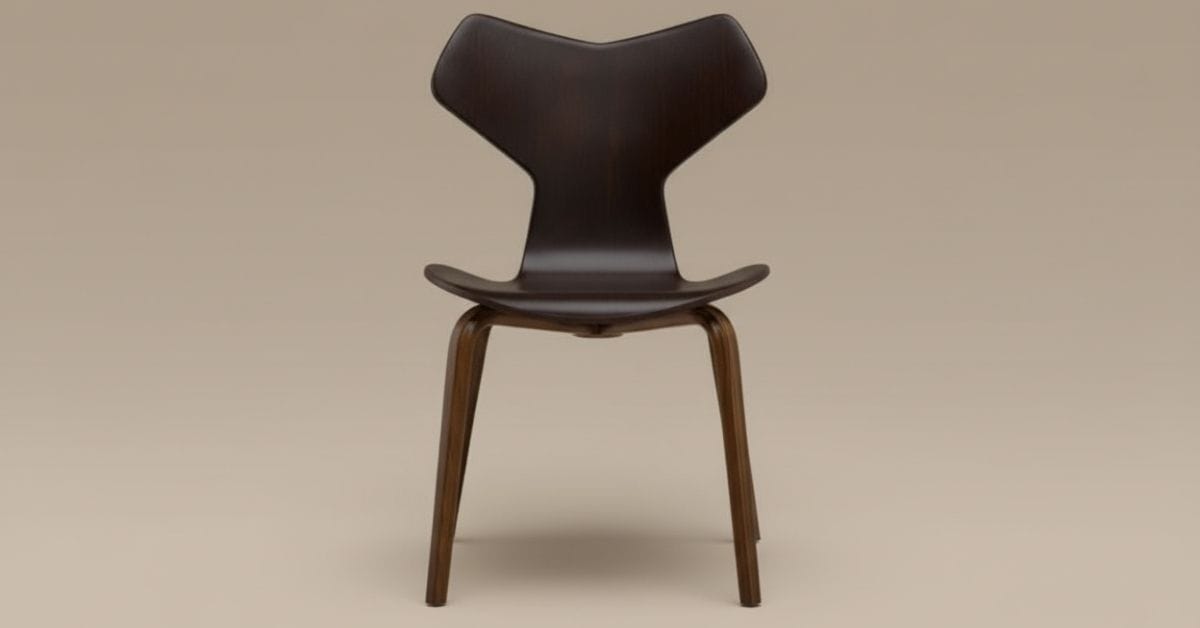
The Model 3130 Chair, better known as Grand Prix Chair by Arne Jacobsen is one of the most celebrated pieces in the world of Danish design, a work of art that blends sculptural finesse with practical ingenuity.
Key Points:
- Introduction and Significance of the Grand Prix Chair: Designed by Arne Jacobsen in 1957, the Grand Prix Chair became a symbol of Danish modernism, recognized for its organic form and award-winning design.
- Design Philosophy and Ergonomics: The chair exemplifies Danish minimalism, blending sculptural elegance with ergonomic comfort, based on Jacobsen’s study of human posture.
- Material Innovation and Craftsmanship: Made from molded veneer with options for wooden or metal legs, the chair showcases innovative bending techniques and high-quality craftsmanship.
- Cultural and Design Legacy of Denmark: It embodies Denmark’s emphasis on simplicity, functionality, and durability, making it a cultural icon celebrated worldwide.
- Where to Purchase and Its Enduring Relevance: Available through trusted retailers like Fritz Hansen, the Grand Prix Chair remains relevant over 65 years, symbolizing timeless design and sustainability.
Introduced in 1957, the Grand Prix Chair quickly became a hallmark of mid-century modernism and a timeless symbol of Denmark’s design excellence. It was awarded the highest distinction at the XI Triennale di Milano the same year – hence the name “Grand Prix.” Its striking, organic form and strong character have ensured its enduring popularity in both private and public interiors across the globe.
Jacobsen’s creation is not merely a piece of furniture; it is an embodiment of the Danish design ethos: minimal, functional, and infused with natural elegance. With its rich material choices and careful craftsmanship, the Grand Prix Chair continues to elevate interiors with quiet sophistication and historical depth.
The Vision Behind the Chair
At the heart of the Grand Prix Chair’s success is the vision of Arne Jacobsen, one of Denmark’s most influential architects and designers. Born in Copenhagen in 1902, Jacobsen was a pioneer of modernist architecture and design, with a practice that seamlessly wove architecture, interiors, and furniture into a holistic expression of form and function.
Arne Jacobsen’s style was deeply rooted in the Bauhaus tradition and the Scandinavian emphasis on simplicity, harmony, and user-centric design. His collaborations with Danish furniture manufacturer Fritz Hansen resulted in several iconic pieces, but the Grand Prix Chair was a defining moment. With this chair, he pursued a stronger sculptural identity than in previous works like the Ant Chair, introducing a sharper profile and a more pronounced backrest design.
What truly distinguishes the Grand Prix Chair is that it doesn’t compromise comfort for style. Its ergonomic shape, derived from Jacobsen’s meticulous study of human posture and movement, provides superior support and visual delight – cornerstone of functionalist design.
Material Innovation and Craft Detail
One of the standout qualities of the Grand Prix Chair is its inventive use of materials and bending techniques. The seat and backrest are molded from a single sheet of laminated veneer, a process that was cutting-edge at the time and allowed the form to mimic natural human contours. This gives the chair an elegant, flowing silhouette without losing its structural integrity.
Initially designed with wooden legs for a warm, unified appearance, the chair later evolved to include models with tubular steel legs, increasing its versatility and lightness. However, the all-wood version remains the most iconic, signifying Jacobsen’s commitment to the tactile and visual warmth of natural materials.
Available in various wood finishes such as oak, walnut, ash, and beech, the chair is also offered in upholstered versions, expanding its usability in both residential and contract settings. Today, the chair is still manufactured using high-grade FSC-certified wood, reflecting the enduring Danish commitment to sustainable and quality craftsmanship.
A Design Landmark of Denmark
To appreciate the importance of the Grand Prix Chair, one must understand its place in Denmark’s cultural and aesthetic identity. Danish design, emerging in the post-war period, emphasized human-centric solutions, craftsmanship, and the power of simplicity. This chair, with its refined lines and thoughtful ergonomics, became a definitive product of that movement.
The Grand Prix Chair is more than a design object – it is a cultural artifact. It appears in design museums, architectural installations, and curated interiors worldwide, speaking to its universal appeal. And yet, despite its global fame, it remains deeply Danish in soul – subtle, high-quality, and purpose-driven.
Key Facts that Define Its Legacy:
- The Grand Prix Chair won the prestigious Grand Prix at the XI Triennale di Milano in 1957, giving it both its name and international acclaim.
- It was one of over 400 furniture designs envisioned by Arne Jacobsen during his prolific career.
- The chair has been in continuous production for over 65 years, a testament to its lasting relevance and desirability.
Sculptural Elegance Meets Everyday Functionality
While its bold, pointed backrest might seem like a design flourish, it was meticulously evolved to reflect human movement and bodily support. The chair is exceptionally versatile – equally suited for a dining room setting, a modern office, or a public gathering space. It bridges the gap between sculptural object and daily utility, making it a beloved choice for architects, designers, and homeowners alike.
Despite its design-age roots in the 1950s, the Grand Prix Chair integrates seamlessly into contemporary spaces. Its ageless lines echo the clarity and intention found in modern interiors, particularly those influenced by Nordic minimalism. Whether placed around a large wooden dining table, used as an accent piece in a stylish corner, or featured in a creative workspace, the chair commands attention without ever overpowering the harmony of its surroundings.
A Testament to Arne Jacobsen’s Enduring Genius
In the pantheon of furniture design, Arne Jacobsen holds a distinguished place for his bold yet humanistic approach. The Grand Prix Chair uniquely captures his philosophy – one where elegance arises from purpose and design serves both beauty and utility.
This chair is more than the sum of its materials. It is the legacy of Denmark’s design tradition, a work that continues to inspire generations. Whether centuries from now or in the modern-day minimalist apartment, the Grand Prix Chair will remain a glowing symbol of what it means to create something beautiful, practical, and timeless.
Why You Should Own the Grand Prix Chair by Arne Jacobsen
A Defining Piece in Danish Home Interiors
When considering furniture that blends style, history, and function, the Grand Prix Chair by Arne Jacobsen remains an undisputed icon. It is not simply a design artifact; it is a way of life – one that aligns perfectly with Danish design culture. In Denmark, furniture isn’t chosen purely for appearance; it’s selected for how it enhances everyday living. The Grand Prix Chair reflects the national emphasis on simplicity, comfort, and long-lasting quality.
Danish homes are typically minimalist, warm, and thoughtfully designed – qualities embodied in the Grand Prix Chair’s organic shape and natural materials. This chair doesn’t shout for attention; it integrates seamlessly while elevating the aesthetic of the space it inhabits. It’s a perfect addition to a modern dining room, a cozy reading corner, or a minimalist workspace.
Measured and intelligent in its form, the Grand Prix Chair complements neutral color palettes, wooden floors, and natural light – key features in Danish interior design. Whether in a Copenhagen apartment or a rustic countryside home, it adds modern elegance without disrupting the tranquility of the environment.
Functionality That Endures
The chair’s ergonomic seat and refined backrest are not only stylish, they also deliver lasting comfort. What sets this piece apart is its flexibility. The all-wood version, with sculpted wooden legs, offers warmth and a unified aesthetic, while the metal-legged variant introduces industrial contrast and stackability, making it ideal for compact living or multifunctional spaces.
Notably, the stackable design of the steel-leg version provides practical benefits for both residential and commercial use. This versatility has made it a favorite in Danish homes and across Europe for over six decades. Moreover, with the global rise in interest around Scandinavian minimalism and functionalism, this chair continues to find relevance among architects, designers, and discerning homeowners.
Quality That Lasts a Lifetime
For those looking to invest in a chair that will last – not just physically but aesthetically – the Grand Prix is a wise choice. Manufactured today by Danish design house Fritz Hansen, the chair adheres to strict quality controls, ensuring that every piece reflects the original craftsmanship envisioned by Jacobsen.
Fritz Hansen maintains the integrity of production through sustainable practices, using FSC-certified wood and low-emission processes. This attention to environmental responsibility aligns well with modern lifestyle values and continues the legacy of care found in traditional Danish design.
Choosing the Grand Prix Chair is a decision that supports quality design, sustainability, and timeless beauty. Unlike furniture subject to fleeting trends, this chair transcends seasons and styles – it matures with time, becoming more cherished the longer it is used.
A Timeless Addition to the Modern Home
Bringing a Grand Prix Chair into your home means investing in more than furniture – it’s embracing a piece of cultural heritage. In a world where disposable furniture leads to environmental waste and loss of character, choosing a piece from the mind of Arne Jacobsen speaks to refined taste and appreciation for lasting design.
Whether you’re curating a modern urban apartment, refreshing a family home, or designing a serene workspace, this chair offers beauty and balance rooted in the ideals of Danish design. It is a long-term companion, marrying functionality with flair, and encapsulating the essence of Denmark’s design reputation.
With over 65 years of consistent production and a strong place in both museums and homes, the Grand Prix Chair is more than a seat—it is a design legacy that you can live with.
Conclusion
The Grand Prix Chair by Arne Jacobsen is a testament to the brilliance of Danish design. Celebrated for its sculptural elegance and ergonomic comfort, the chair embodies the perfect fusion of art and utility – a hallmark of Jacobsen’s design philosophy. Its enduring relevance is due to its versatile aesthetics, exceptional craftsmanship, and the inspiration it draws from Denmark’s minimalist and functionalist heritage. Whether as a centerpiece or a functional seating solution, the Grand Prix Chair remains an investment in quality, style, and cultural legacy.
Summary
– Designed by Arne Jacobsen in 1957, the Grand Prix Chair won the prestigious Grand Prix award and quickly became a symbol of modern Danish design.
– The chair showcases a unique blend of ergonomics and aesthetics, with features like a molded veneer backrest and optional metal-legged versions.
– Danish design principles of simplicity, functionality, and beauty are reflected in its form and material choices.
– It is available through reputable retailers such as Fritz Hansen, Danish Design Store, and 1stDibs, ensuring global access to this iconic piece.
– Its timeless design makes it suitable for various interiors, emphasizing the importance of investing in quality and sustainable craftsmanship.
Frequently Asked Questions
1. Who is the designer of the Grand Prix Chair?
The chair was designed by renowned Danish architect and designer Arne Jacobsen, a key figure in modernist design.
2. What materials are used in the Grand Prix Chair?
The seat and backrest are made from molded veneer, available in finishes like oak, walnut, beech, and ash, with the legs available in wood or metal options.
3. What makes the Grand Prix Chair comfortable?
Its ergonomic design provides excellent support with contours that align naturally with the human body, ensuring comfort over extended use.
4. Can the Grand Prix Chair be used in office settings?
Yes, its versatile design makes it suitable for a range of settings, including offices, dining rooms, and meeting spaces.
5. What is the significance of its name “Grand Prix Chair”?
The chair earned its name after winning the Grand Prix award at the XI Triennale di Milano in 1957, achieving international acclaim.
6. Is the Grand Prix Chair environmentally friendly?
Yes, it is produced by Fritz Hansen using FSC-certified wood and sustainable manufacturing practices, aligning with eco-friendly standards.
7. Are there modern variants or updates to the original Grand Prix Chair?
Yes, modern versions offer a variety of upholstery options and finishes, allowing for personalized adaptations to suit different interiors.
8. What is the cultural significance of the Grand Prix Chair in Denmark?
The chair is an exemplar of Danish design excellence, representing Denmark’s global influence in combining artistic and functional design elements.
Embracing the Grand Prix Chair means acquiring a piece that not only elevates your space but also enriches it historically and culturally. It’s an investment in the enduring principles of design that celebrate both form and function.