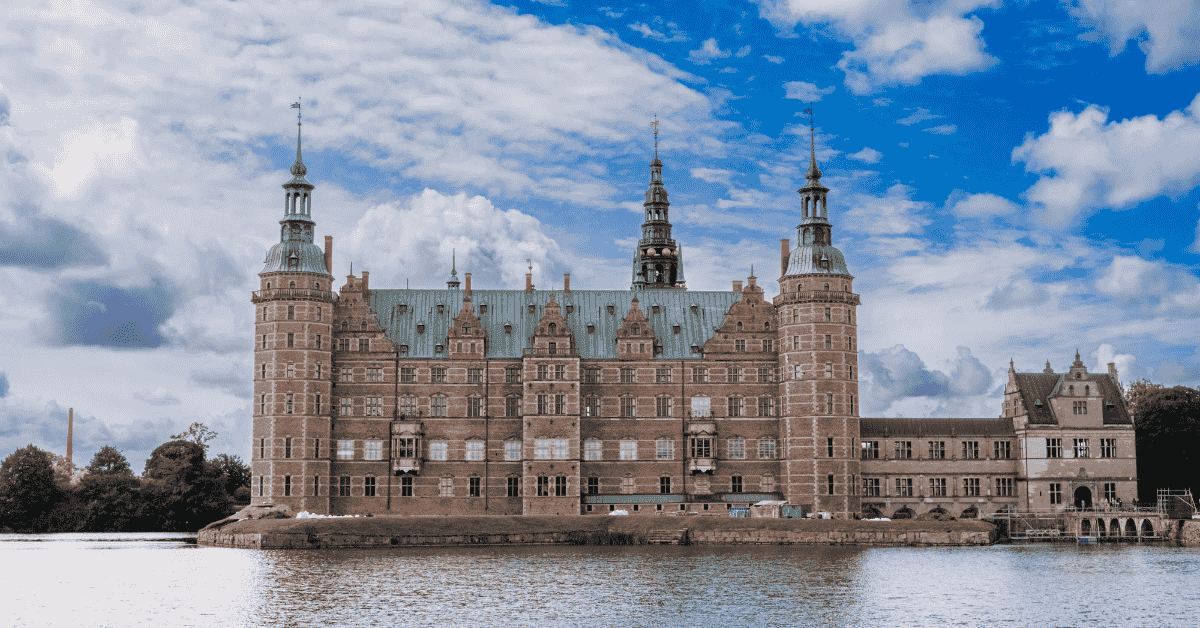
Frederiksborg Castle is Denmark’s grandest Renaissance palace, sitting on three islets in a lake in Hillerød, North Zealand. Built by King Christian IV, it now houses the Museum of National History and ranks among the best day trips from Copenhagen.
I have lived in Denmark long enough to lose count of the castles. Most blur together after a while. Frederiksborg Castle does not. It is the one I send every visiting friend to see first.
Why Frederiksborg Castle Belongs at the Top of Your List
Frederiksborg Castle is the largest Renaissance building in the Nordic region. It floats on three small islets in Castle Lake, in the town of Hillerød. The reflection alone is worth the train ticket.
People call it the “Versailles of the North,” which oversells it slightly. Versailles is bigger. But Frederiksborg has something Versailles lacks. It tells the whole story of Denmark under one roof.
- What it is: Denmark’s largest Renaissance castle, built by King Christian IV in the early 1600s.
- What is inside: The Museum of National History, with over 500 years of Danish portraits and paintings.
- Where it is: Hillerød, around 40 kilometers north of Copenhagen.
- Why go: A chapel that survived a fire, a famous 1610 organ, and Baroque gardens by the lake.
A Short History of Frederiksborg Castle
The castle carries the name of King Frederik II. He bought the estate in 1560 and called it Frederiksborg. But the palace you see today is the work of his son.
Christian IV and the Danish Golden Age
King Christian IV demolished the older buildings and started fresh around 1600. The main structure was completed by 1620. He was Denmark’s great builder king, and this was his showpiece.
Christian IV used Frederiksborg as a royal residence for decades. He filled it with Dutch Renaissance detail, red brick, copper spires, and sandstone trim. The result still looks confident and slightly show-off, which fits the man.
The Coronation Chapel
From 1671 to 1840, Danish kings were anointed in the castle chapel. This was the era of absolute monarchy, when the king answered to no parliament. The chapel made that power visible.
The walls still display the coats of arms of knights of the Order of the Elephant. It is Denmark’s oldest royal order, and the heraldry reads like a guest list of European nobility. Look up and you understand how seriously these people took status.
The Great Fire of 1859 and the Carlsberg Rescue
On a December night in 1859, a fire gutted much of Frederiksborg Castle. The chapel survived, but the royal apartments were destroyed. For a moment, the building’s future looked grim.
Then a brewer stepped in. As noted by the Museum of National History, J.C. Jacobsen, the founder of Carlsberg, funded the reconstruction. In 1878 he turned the rebuilt castle into a national museum. So beer money, in a real sense, saved one of Denmark’s defining landmarks.
Inside Frederiksborg Castle: What to See
You can walk the highlights in two hours. To do the museum justice, give it a half day. Here is where to spend your attention.
The Chapel and the Compenius Organ
The chapel is the heart of Frederiksborg Castle. It survived the 1859 fire intact, gilding and all. Standing inside it feels like stepping into the 1600s.
It also holds the Compenius organ, built in 1610 by Esaias Compenius. It is one of the best-preserved Renaissance organs in the world. Free recitals are usually played several times a week, and the sound is worth timing your visit around.
The Great Hall and the Royal Portraits
Upstairs sits the Great Hall, a long ceremonial room rebuilt after the fire. The ceiling and tapestries are pure theater. This is where the monarchy entertained and intimidated in equal measure.
The royal portrait collection here is the largest in Denmark. Kings, queens, scientists, and writers line the walls in sequence. You can trace 500 years of Danish faces in a single afternoon.
The Museum of National History
The whole castle functions as the Museum of National History. It chronicles Danish history through art, furniture, and objects. Works by Carl Bloch and Jørgen Sonne hang among the rooms.
For an expat, this is the most efficient history lesson in the country. You see the Reformation, the wars with Sweden, and the slow birth of democracy. It connects nicely to Denmark’s wider heritage sites if you want to keep exploring.
The Baroque Gardens and Castle Lake
Cross the lake and the mood shifts completely. The Baroque Garden climbs a hillside in clean geometric terraces. It was designed by Johan Cornelius Krieger in the 1720s and rebuilt in 1996.
The monogram hedges spell out the initials of Danish kings, best seen from the top. In summer the cascades and trimmed lines look immaculate. As described by VisitDenmark, the gardens are free to enter and open year round.
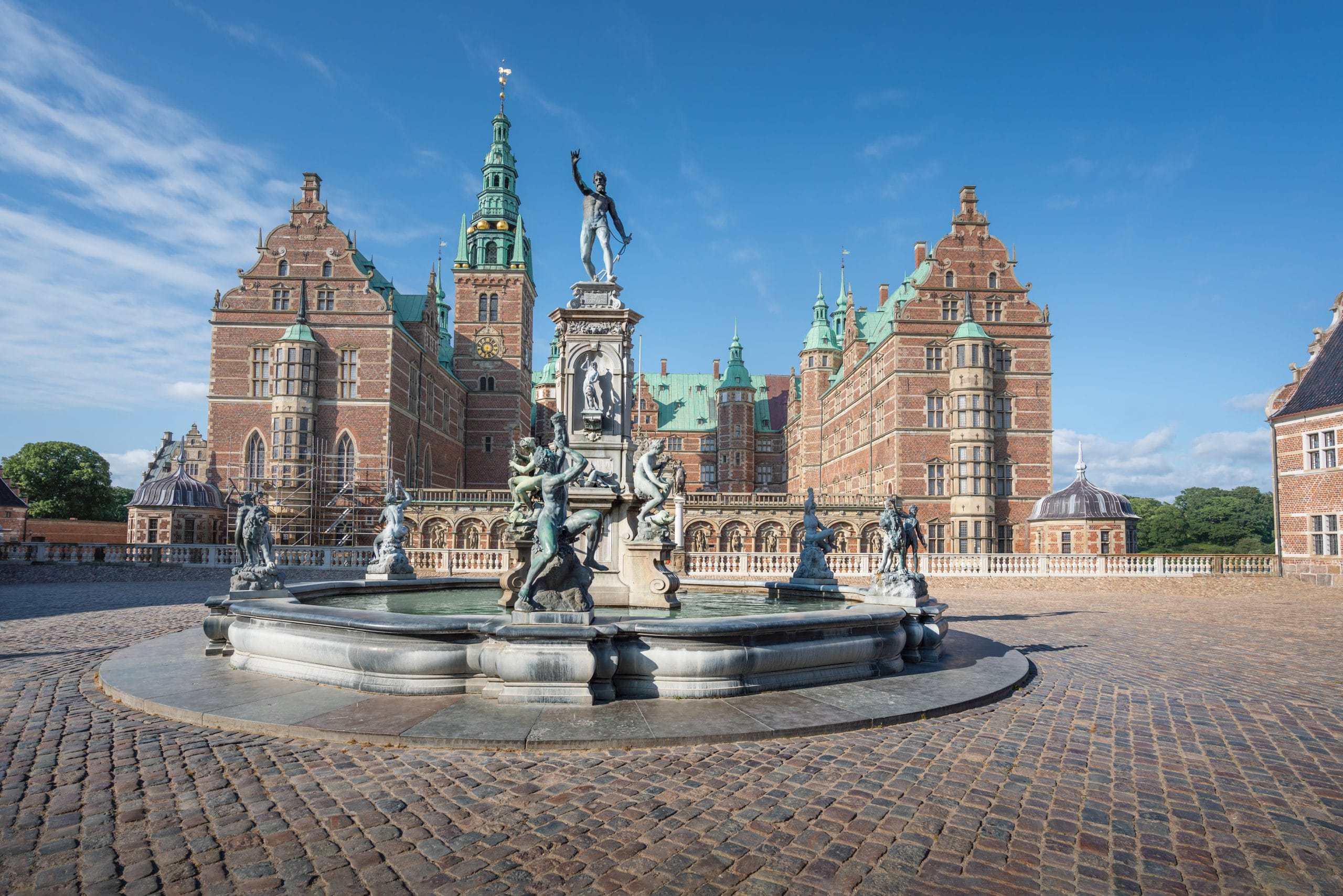
Down in the courtyard, the Neptune Fountain anchors the entrance. The original was looted by Swedish troops in 1659. The version you see today is a faithful copy, which is a very Danish kind of revenge.
How to Visit Frederiksborg Castle from Copenhagen
This is one of the easiest day trips in the country. You do not need a car. The journey is part of the pleasure.
Getting There by Train
Take the S-train line A from central Copenhagen to Hillerød. The ride runs about 40 minutes and trains leave often. Check live times on Rejseplanen before you go.
From Hillerød station, it is a 15 to 20 minute walk through town. Local buses 301 and 302 also drop you near the gate. The walk through the old streets is the better choice in decent weather.
Tickets, Hours, and Prices
An adult ticket costs around 95 DKK, and visitors under 18 enter free. The castle and museum open daily, with longer hours from April to October. Always confirm current prices on the official site before traveling.
Buy your ticket online to skip the queue on busy weekends. The same ticket covers the chapel, the Great Hall, and the full museum. The gardens stay free regardless.
Tips From a Long-Time Expat
Wear shoes you can walk in. The grounds are big and the floors are old. Bring a layer, because the stone rooms stay cool even in July.
Go midweek if you can, and arrive near opening time. Afterward, walk into Hillerød for lunch or head to nearby Gribskov forest. Pair it with Marienlyst Castle and Kronborg Castle for a full North Zealand castle run.
Frederiksborg Castle Compared to Denmark’s Other Great Castles
Denmark has more castles than most people expect. Each one sells a slightly different story. Frederiksborg leans hardest into Renaissance grandeur and national history.
If you want Shakespeare and sea defenses, go to Kronborg. If you want crown jewels in central Copenhagen, choose Rosenborg or Jægerspris. For a fuller picture, our guide to the best Danish castles maps out the rest, from Egeskov to the haunted halls of Dragsholm.
Why Frederiksborg Castle Still Matters
Frederiksborg Castle is more than a postcard. It is where Denmark decided how to remember itself. The fire, the brewer, and the museum tell a story about a small nation that refuses to forget.
For newcomers, that matters more than the gold leaf. Understanding Frederiksborg Castle helps you understand the country you now live in. It sits alongside Denmark’s broader cultural landmarks as a place that rewards a return visit.
Frequently Asked Questions About Frederiksborg Castle
Is Frederiksborg Castle worth visiting?
Yes, Frederiksborg Castle is one of Denmark’s most rewarding cultural sites. It combines the largest Renaissance palace in the Nordic region with a national history museum. The chapel, royal portraits, and lakeside Baroque gardens justify the trip on their own.
How do I get to Frederiksborg Castle from Copenhagen?
Take the S-train line A from central Copenhagen to Hillerød station. The ride takes about 40 minutes. From there, walk 15 to 20 minutes or catch bus 301 or 302 to the castle gate.
How much does it cost to enter Frederiksborg Castle?
An adult ticket costs around 95 DKK, while visitors under 18 enter free. The ticket covers the chapel, the Great Hall, and the full museum. The Baroque gardens are free to enter all year.
How long should I spend at Frederiksborg Castle?
Plan for at least half a day to see Frederiksborg Castle properly. Two hours covers the highlights and the chapel. Add time for the museum collection and a walk through the gardens.
What is Frederiksborg Castle famous for?
It is famous for being Denmark’s grandest Renaissance castle and home of the Museum of National History. The coronation chapel and the 1610 Compenius organ are key draws. It was rebuilt after the 1859 fire with Carlsberg funding.
When is the best time to visit Frederiksborg Castle?
Spring and summer are ideal, when the Baroque gardens are in bloom. Weekday mornings are quietest and best for photos. Winter offers a calmer indoor visit with shorter daylight hours.
Is Frederiksborg Castle good for families?
Yes, the castle and museum welcome children with family activities and tours. Under 18s enter free. The open gardens and lakeside paths give kids room to move after the indoor rooms.
Can you take photos inside Frederiksborg Castle?
Photography is allowed in most areas of the castle. Some exhibitions may carry restrictions, so check the signs. The lake reflection and the courtyard are the standout shots.
Sources and References
Museum of National History: Frederiksborg Castle Official Site VisitDenmark: Frederiksborg Castle Rejseplanen: Public Transport Journey Planner