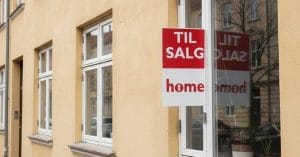
The European Court of Justice is deciding whether Denmark’s “ghetto law” discriminated against residents from non-Western backgrounds, potentially forcing the state to pay compensation to thousands who were removed from their homes.
EU Court Could Rule Denmark Discriminated in Forced Evictions
Earlier today, the European Court of Justice began reviewing whether Danish authorities violated human rights by enforcing the so-called *ghetto law*. The case could decide if Denmark’s housing policy unlawfully targeted immigrants from non-Western countries. Should the court rule against Denmark, thousands of displaced residents may be entitled to compensation.
In areas like Gellerupparken near Aarhus, more than 200 apartments have already been demolished. Brabrand Housing Association plans to tear down another 408 homes, although that now depends on the EU court’s decision.
The 2018 Law and Its Intentions
The law, officially meant to limit “parallel societies,” was passed by a broad majority in Denmark’s Parliament in 2018. It followed a speech from then-Prime Minister Lars Løkke Rasmussen, who declared his goal to eliminate so-called ghettos entirely. The legislation created an official list of residential areas, such as Gellerupparken in Aarhus, Vollsmose in Odense, and Mjølnerparken in Copenhagen.
A housing area could be labeled a “ghetto” if at least half of its residents were immigrants or descendants from non-Western countries. If a neighborhood remained on the list for several years, housing associations could be forced to sell or demolish buildings.
In Mjølnerparken alone, more than a thousand residents have been relocated. Many appealed the forced moves first in Denmark’s Eastern High Court, then to the European Court of Justice, arguing that the law amounted to discrimination based on ethnic origin.
Mixed Results and Local Frustrations
According to researchers at Aalborg University, the ghetto law has technically fulfilled its political aims. In 2018, fifteen neighborhoods were designated for special attention. Today, that number has fallen to just five. Experts say the policy worked as intended, though it left many communities displaced and demoralized.
In 2023, Mjølnerparken was removed from the ghetto list. However, this occurred only after the housing association sold part of the development to a private company, which renovated the apartments. Rents skyrocketed from roughly 7,000 to 19,000 Danish kroner per month afterward, turning the area into a symbol of both policy success and social inequality.
What Defines a “Parallel Society”
Under the 2018 law, an area qualifies as a “parallel society” if it has at least 1,000 residents and over 50 percent are from non-Western countries. In addition, at least two of four economic and social conditions must apply, including high unemployment rates, low income levels, high crime rates, or limited educational attainment.
Critics argue this definition inherently focuses on ethnic background, making it incompatible with principles of equality under EU law. Because Denmark is part of the European Union, the court’s interpretation will have binding consequences.
Possible Domino Effect on Urban Plans
If the European Court finds the ghetto law discriminatory, the ruling could trigger new lawsuits and delay massive redevelopment projects across Denmark. In Vollsmose, nearly 3,000 residents were relocated, and several buildings were demolished or converted into private ownership.
Similarly, parts of Gellerupparken remain in limbo. Some residents have refused to move out of buildings slated for demolition. The uncertainty has already delayed the construction of new schools and public spaces planned for the site.
Even after the European Court’s decision, the issue will return to the Danish Eastern High Court for final judgment. The case could still reach the Supreme Court, extending the process for years. Until then, both housing associations and residents remain caught between urban renewal and claims of widespread discrimination.
Sources and References
The Danish Dream: Is Denmark in the EU?
The Danish Dream: Buying Property in Denmark for Foreigners
DR: Tusindvis tvunget ud af deres hjem: Domstol kan dømme Danmark for diskrimination