Police cases involving children aged 10 to 16 who broke traffic rules on e-scooters rose 128 percent to 701 in 2025, according to new figures from Rigspolitiet.
The numbers were published on November 15, 2026, and reported by TV 2. They cover children and teenagers caught breaking the traffic rules on e-scooters and similar small electric vehicles.
The figures come from Rigspolitiet and were passed to the insurer If. In a press release distributed via Ritzau, If states that cases among 10 to 16-year-olds went from 307 in 2024 to 701 in 2025. Police have already registered 724 cases so far in 2026, more than in all of last year.
Andreas Grønbæk, head of personal injury at If, describes the development as worrying. Per the release, he points out that some of the vehicles can go much faster than permitted, which raises the risk of serious injury, including head injuries.
Hospitals and police report more e-scooter cases
TV 2 reports that hospitals around the country have recorded more accidents. Aarhus University Hospital registered 43 e-scooter accidents in 2024, and by October 2026 the figure had risen to 75. Figures from Ulykkes Analyse Gruppen at Odense University Hospital show 169 e-scooter accidents in 2021 and 811 registered since that year.
If says the rise in police cases may be linked to police paying more attention to the area, not least because many of the scooters are illegal. As noted by TV 2 Østjylland, Østjyllands Politi appealed to parents of teenagers riding e-scooters in August 2026.
Færdselsstyrelsen concluded in a 2025 evaluation of the trial scheme that the accident risk on e-scooters is eight to nine times higher than on bicycles, based on cases registered by police. E-scooters, electric skateboards and hoverboards have been allowed on Danish cycle paths since two trial schemes took effect on January 1, 2019. According to DR, the trial still has no end date, while Tænketanken Trafiksikkerhed argues it should be ended and the vehicles banned from traffic.
What the e-scooter rules mean for international parents in Denmark
The rules are set out by Rådet for Sikker Trafik, the Danish Road Safety Council. The speed limit is 20 km/h, and the scooter itself must not be able to go faster or be adjustable to do so. Riders must be at least 15 years old, and anyone under 15 must be accompanied by an adult aged 18 or over.
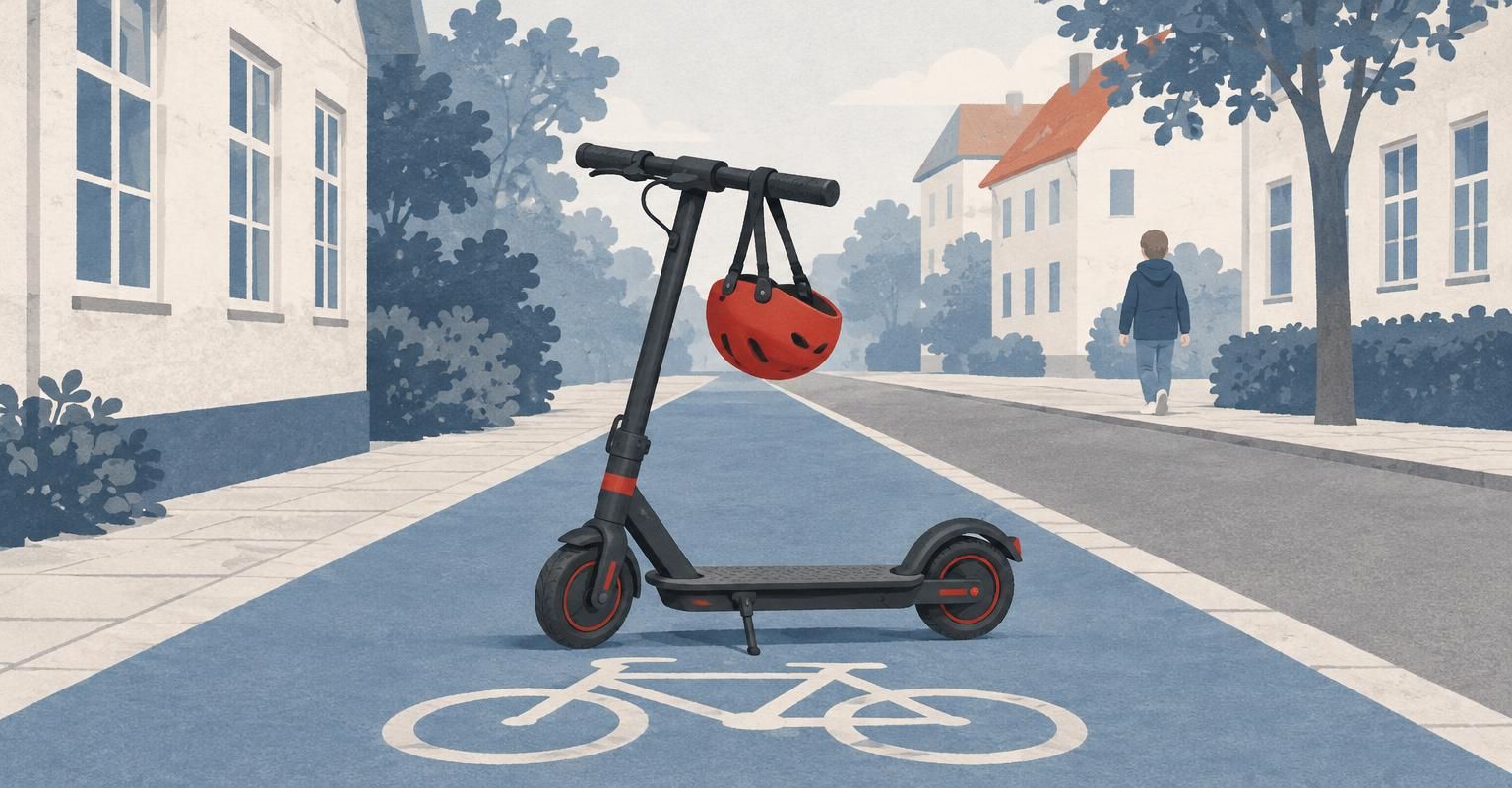
A cycle helmet is mandatory on an e-scooter, and the fine for riding without one is 1,500 kroner. Riders must follow the cycling rules, which means using the cycle path where one exists and obeying cyclist signals and signs. Riding on sidewalks, footpaths or pedestrian crossings is not allowed, only one person may ride, and lights must be on front and back around the clock. The alcohol limit is 0.5, with a zero limit for illegal drugs.
For families who have moved to Denmark, the practical point is that an e-scooter bought abroad or online may exceed the 20 km/h construction limit and therefore be illegal here. TV 2 Kosmopol reports that If warns insurance cover can be affected if someone is injured on an illegal scooter.
The sources do not state that any rule has changed, and no new legislation has been announced alongside these figures. What the numbers show is that police are registering more cases involving children, and that hospitals in Aarhus and on Funen are seeing more injuries. Rådet for Sikker Trafik has urged parents to check their children’s scooters, and has said no child under 15 should be able to ride one.