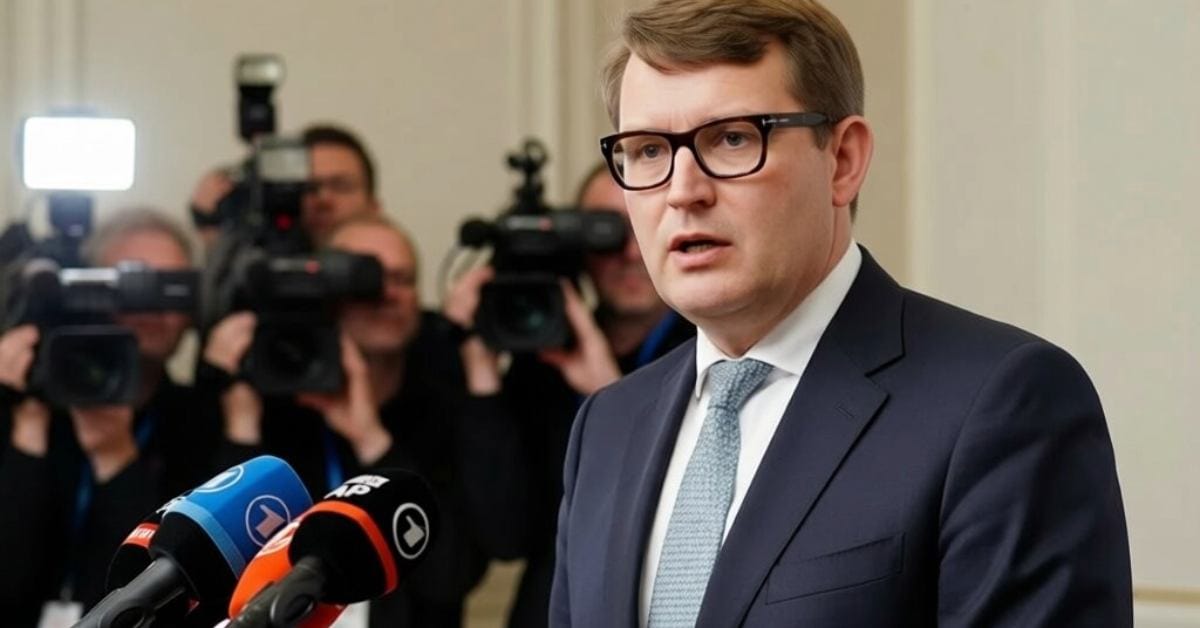
Old Facebook posts from Denmark’s finance minister Troels Lund Poulsen are circulating again, showing fierce attacks on the exact economic policies he now defends as part of the government.
I’ve watched Danish politicians twist themselves into pretzels before. But Troels Lund Poulsen’s transformation from Social Democrat basher to loyal coalition partner is something else entirely.
The Venstre heavyweight spent 2022 hammering away at Mette Frederiksen’s economic policies. Too much spending. Too little fiscal responsibility. Stoking inflation while ordinary Danes watched their real wages shrink. His Facebook posts from that campaign documented by DR read like textbook opposition rhetoric.
Now those same posts are haunting him. As finance minister and deputy prime minister in a Social Democrat led government, Lund Poulsen defends virtually identical policies as responsible and necessary.
The Memory of Social Media
This is where living in Denmark gets interesting for those of us who’ve been here a while. The political culture values consensus and compromise. But social media has changed the game. Your old statements don’t fade into newspaper archives anymore.
Lund Poulsen’s predicament illustrates the challenge perfectly. Facebook preserves everything. Journalists and opposition parties can pull up your strongest condemnations and play them back verbatim. The contrast becomes impossible to spin away.
I’ve covered enough Danish election cycles to recognize the pattern. Politicians promise one thing during campaigns. Then parliamentary arithmetic forces compromises nobody predicted. What strikes me now is how the digital archive makes these U turns so much more painful and public.
From Opposition Warrior to Government Player
Lund Poulsen built his reputation as Venstre’s economic attack dog. He served as finance spokesperson, employment minister, and tax minister before landing his current role. Sharp criticism of Social Democratic spending was his signature move.
The 2022 campaign saw him at peak intensity. He accused Frederiksen’s government of fiscal recklessness. He warned that their policies would fuel inflation and burden businesses. He promised Venstre would never join forces with the Social Democrats after the mink scandal.
Then came the SVM coalition. Suddenly Lund Poulsen was defending the government’s 2030 economic plan. The spending levels he’d called irresponsible became prudent. The reform pace he’d labeled too slow became adequate.
The Politics of Broken Promises
Living here as an expat, I’ve learned that Danes generally accept political pragmatism. Coalition governments require compromise. Everyone understands that. But there’s a limit to how much voters will forgive. Venstre has been bleeding support to Liberal Alliance and the Denmark Democrats since entering government. The polls tell a story of betrayed expectations.
Venstre’s defense hinges on claiming they’ve pulled the Social Democrats rightward. Lund Poulsen argues the SVM coalition pursues different policies than a pure Social Democratic government would. There’s some truth to that. The 2030 plan includes tax relief on inheritance and business transfers. It emphasizes labor supply reforms over pure spending increases.
But the economic fundamentals haven’t shifted much. Denmark still maintains one of the world’s highest tax burdens at around 45 percent of GDP. Public spending hovers near 50 percent of GDP. These numbers look remarkably similar to what Lund Poulsen was condemning three years ago.
The Inflation Excuse
Lund Poulsen and his party hammer one point repeatedly. Inflation has dropped. Employment remains strong. Therefore the government’s economic course is vindicated. As noted by economists and the National Bank, Denmark’s inflation mainly stemmed from energy shocks and supply chain disruptions after COVID and Ukraine. Domestic fiscal policy played a minor role.
The government is taking credit for global trends beyond its control. That bothers me. It’s the kind of rhetorical sleight of hand that erodes trust in political discourse.
Meanwhile the opposition from both flanks attacks the contradictions. Liberal Alliance and New Right call out Venstre for abandoning tax cutting principles. The Socialist People’s Party and Red Green Alliance warn that SVM’s reforms increase inequality. Everyone can point to those old Facebook posts.
What This Means for Expats
For those of us who chose Denmark, this matters beyond Danish partisan squabbles. Political credibility affects how governments handle everything from immigration policy to business conditions. When politicians can flip positions without consequence, it becomes harder to predict policy direction or trust campaign promises.
The Venstre case also reveals something about Danish political culture under pressure. The old consensus model is cracking. Parties are fragmenting. The predictable left right dynamics are scrambling.
I don’t know if resurfaced Facebook posts will permanently damage Lund Poulsen’s credibility. Danish voters have short memories sometimes. But the episode shows how digital media has permanently altered political accountability. Your words follow you now. The archive doesn’t forget.
Sources and References