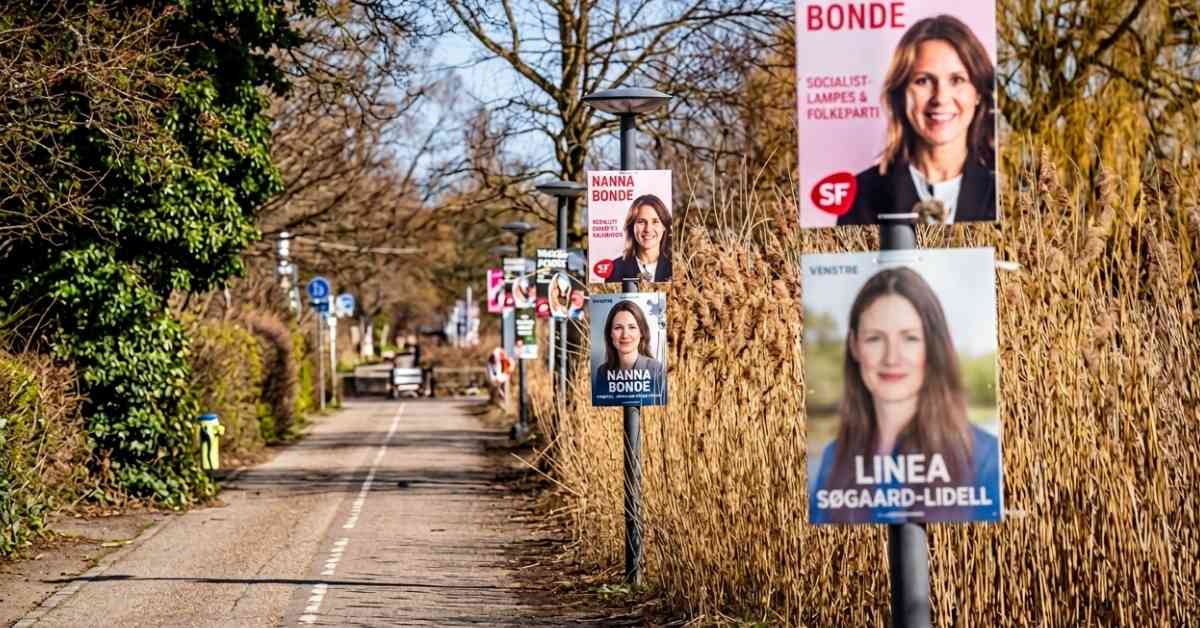
Denmark’s party leaders played a live TV “letter game” spelling out which coalition partners they’ll accept after the March election left parliament so fragmented that forming any government now requires creative cross-bloc arithmetic.
Days before polls closed on 24 March 2026, TV2 brought party chiefs together to arrange political party letters on screen. Each letter represents a party: A for Social Democrats, V for Venstre, and so on. The exercise was meant to show viewers which combinations might actually work in the real negotiations now underway. What it really showed is how messy Danish politics has become.
No party won a majority. No traditional bloc can govern alone. The result is a parliamentary jigsaw puzzle where even large parties must stretch across old left-right lines or accept minority status. For expats living here, this is not an academic question. The party controlling immigration, tax, employment or education will directly shape your work permit, your residence card, your childcare fees and whether your kids get language support at school.
Why coalition horse trading matters to foreign residents
I have watched enough Danish elections to know that the real decisions happen after the votes are counted. The televised letter game made that explicit. Party leaders publicly ruled out some combinations and hinted at others. They drew red lines before formal talks even began.
The outgoing government was itself a centrist experiment. Mette Frederiksen’s Social Democrats governed with the center-right Venstre and the new Moderates party. That coalition crossed traditional boundaries and took months of record-long negotiations to assemble. It became the template for what many now call Denmark’s “new normal”: broad coalitions that blur accountability but claim to deliver stability.
The problem for expats is that Denmark’s political system makes you a bystander. Unless you hold Danish citizenship, you cannot vote in national elections. You have no say over which parties control the ministries that regulate your legal status. Yet you are fully exposed to the policy outcomes.
What gets traded away behind closed doors
Coalition negotiations are where the details get decided. Smaller parties extract concessions in return for their support. Those concessions can be very specific. A party might demand tougher points requirements for permanent residence. Another might insist on raising the income threshold for skilled work permits. A third might push to cut family reunification exemptions or eliminate English language services in public agencies.
Immigration and integration rules become bargaining chips. I have seen it happen before. The strict framework Denmark built over two decades, layer by layer under pressure from nationalist parties, now sits in the hands of whoever assembles the next majority. Even incremental tweaks can materially change your prospects if you are waiting for permanent residence or trying to bring family members to Denmark.
The centrist comfort zone and its limits
The political center remains the kingmaker. Social Democrats, Venstre, Moderates and the Social Liberals hold the arithmetic middle ground. That tends to favor incremental change over radical swings. Business groups prefer it because it protects the flexicurity labor model and controlled skilled migration. Integration experts argue it offers predictability.
But predictability is not the same as fairness. Critics on the left say centrist mega-coalitions keep harsh immigration laws in place and water down climate action. Critics on the right say they ignore voter demands for lower taxes and stricter border control. Expat advocacy groups warn that behind-closed-door deals can suddenly trade away residence rights in return for support on unrelated budget items.
Some compare the fragmentation to other countries, asking whether Denmark leans left or right. The answer is neither. Denmark leans toward whoever can assemble 90 seats in the Folketing.
What you can do while the letters get shuffled
You cannot vote in this unless you are a citizen. But you can prepare. Make sure your visa, work permit and residence registration are current and compliant with the rules on nyidanmark.dk. If you are eligible for permanent residence or citizenship, consider applying now under existing criteria. That can lock in rights before any coalition tightening takes effect.
Watch which parties are likely to control key ministries. The immigration and employment portfolios shape schemes like the Positive List and Pay Limit rules. The education ministry affects international schools and university English programs. Even tax policy, often seen as boring, directly impacts whether Denmark remains financially attractive to skilled workers.
The letter game on TV was theater, but it previewed the real negotiations. Denmark is 5.8 million people spread across a country smaller than its Arctic territory Greenland, yet it has a parliament split among more parties than ever. That fragmentation means coalition arithmetic now determines who governs, and coalition arithmetic means everything is negotiable. Including the rules that govern your life here.