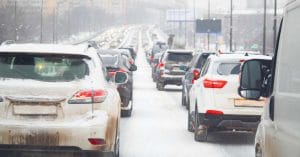
Three cars collided in a severe accident in Odense on April 11, 2026, but details on injuries, causes, and road closures remain unclear hours after the incident. Police have not yet released follow-up statements, leaving drivers and residents waiting for answers. The crash fits a troubling pattern of serious accidents across Fyn, where icy roads and weather conditions have repeatedly turned routine drives deadly this spring.
The collision happened on a road in Odense, Denmark’s third-largest city, according to TV2. That much is certain. What comes next is frustratingly vague. No information on how many people were hurt, whether anyone died, or what caused three vehicles to smash together has emerged from Fyns Politi, the local police district that handles these investigations. No press releases. No updates. Just silence.
I have covered Denmark long enough to know this delay is not unusual. Danish police often wait until they have completed initial assessments before saying anything publicly. That caution protects accuracy, but it leaves a vacuum. Drivers heading through Odense tonight have no idea if roads are still closed or if they should avoid certain routes. Families wonder if their loved ones are involved. The lack of real-time information turns a traffic accident into a guessing game.
A Dangerous Trend on Fyn
This crash does not stand alone. Recent weeks have seen multiple serious accidents across Fyn, the island where Odense sits. A man in his late 20s was thrown from his car in a solo crash on Odensevej in Glamsbjerg early one Sunday morning, suffering serious injuries that sent him to Odense Universitetshospital. Police suspected icy roads, not alcohol or drugs. Vagtchef Henrik Strauss from Fyns Politi confirmed there was no indication the driver had been impaired by substances.
Another solo accident in Odense left two men seriously injured, with both ejected from their vehicle. One was critically hurt. That crash closed a road completely, according to Ugeavisen Odense. The pattern is clear: Fyn’s roads are slippery, and drivers are paying the price.
Weather keeps coming up. Glatføre, the Danish term for icy road conditions, has been blamed for multiple crashes. It is April, but Denmark still sees winter-like conditions bleeding into spring. Roads that should be clear turn treacherous overnight. Drivers who let their guard down end up in the hospital or worse.
What We Know About Road Safety Here
Denmark has a strong road safety record by European standards. Pre-2026 data showed the country’s road fatality rate hovering around 2.0 deaths per million, well below the EU average of 4.5. That is something to be proud of. But local spikes still happen, and when they do, the consequences are brutal.
Trafikstyrelsen, Denmark’s transport authority, mandates winter tires in adverse conditions. The rules are there. Whether drivers follow them is another question. I have seen cars sliding through intersections in Odense on balding summer tires in February. Enforcement is patchy. Compliance is voluntary until it is not.
The three-car crash on April 11 could easily involve weather as a factor. No confirmation yet, but the timing and location fit. Odense sits at the center of Fyn’s road network, where commuters and freight traffic converge. When conditions turn bad, multi-vehicle pileups become more likely. One car loses control, another cannot stop in time, and a third gets caught in the mess.
What Happens Next
Fyns Politi will investigate. They always do. For serious crashes, independent reviews follow. Engineering firms like Cowi get called in to examine whether the accident could have been prevented. Arbejdstilsynet, Denmark’s working environment authority, steps in if workplace factors are involved, as they did after a construction worker died in a Munkebjerg Park walkway collapse in Odense recently. That incident was unrelated to traffic but showed how Danish authorities approach safety failures with multiple layers of scrutiny.
The problem is timing. Investigations take days, sometimes weeks. Road users need information now, not after forensic reports are filed. If the road is still closed, say so. If weather was a factor, warn drivers. Transparency does not require complete answers, just honest updates.
I hope no one died in this crash. The silence from police suggests they are still piecing together what happened, which could mean injuries are serious enough to delay statements. Odense Universitetshospital has handled multiple trauma cases from Fyn accidents recently. Their emergency department knows this routine too well.
Denmark prides itself on efficient government services and public safety. That reputation holds up in many areas. But when three cars collide on a Friday evening and the public hears nothing for hours, the system feels less efficient and more opaque. Drivers deserve better. So do the people caught in these crashes.
Sources and References
TV2: Tre biler kollideret i voldsom ulykke i Odense
The Danish Dream: PM Frederiksen: Denmark Must Demonstrate Its Defense Capabilities
The Danish Dream: Government to Ban Mobile Phones in Schools
The Danish Dream: Erik Reitzel: Architectural Possibilities