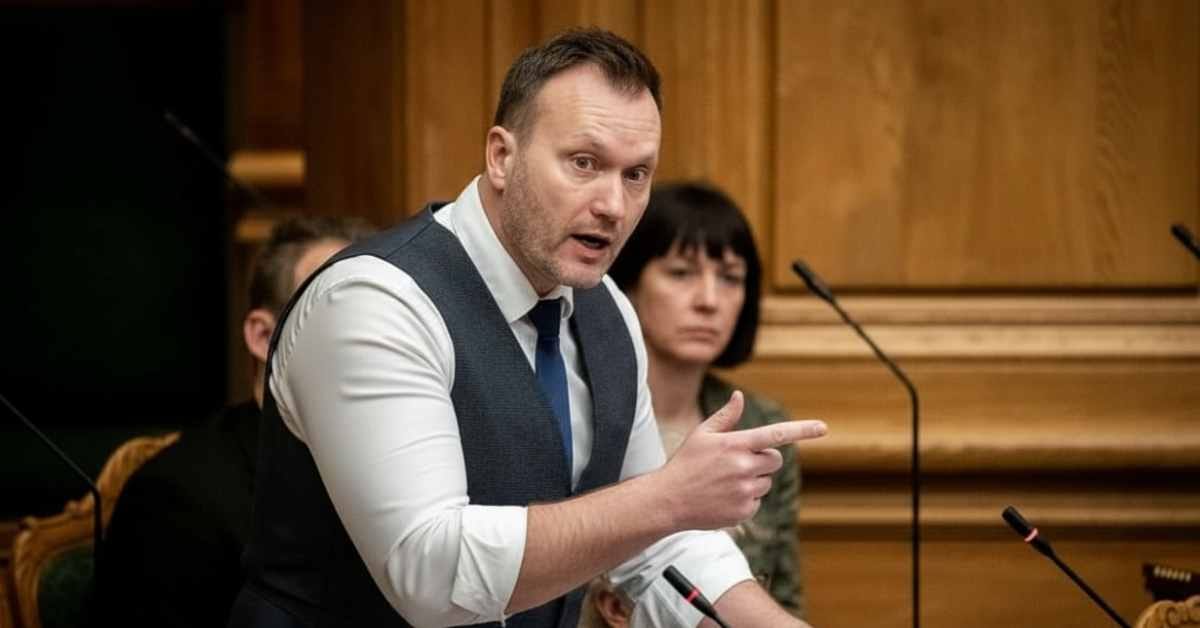
Lars Boje Mathiesen’s Borgernes Parti just scraped over Denmark’s 2.0% electoral threshold in the 2026 election, winning four seats and entering Parliament alongside Alternativet. It’s the first time since 1953 that every party on the ballot won representation. The result hands Boje a slice of power, but whether he’ll use it to help the blue bloc or blow up coalition talks remains the real question.
Borgernes Parti cleared the threshold with 2.1% of the vote. That’s razor thin. One of those four seats goes to Boje himself in the Østjyllands Storkreds constituency where he ran.
As reported by TV 2, Boje framed his win as vindication for the bullied and dismissed. He told reporters this was a victory for everyone told they weren’t good enough, for those shut out by Denmark’s political establishment. He made clear he doesn’t owe anyone anything.
That attitude is precisely what makes his four mandates both interesting and potentially toxic for the right wing parties that might need them.
The Blue Bloc Needs Him, But Can It Trust Him
The math is straightforward. According to Voxmeter polling from the week before the election, the blue bloc without Borgernes Parti sat at 33.6%. Add Boje’s mandates and that rises to 36.8%, translating to 66 seats. Still short of the 90 needed for a majority, but better positioned than they were after the 2022 election.
The problem isn’t the seats. It’s the man holding them.
Boje was tossed out as chairman of Nye Borgerlige after just one month in late 2024, then expelled from the party entirely. As reported by TV 2, both former colleagues and political opponents describe him as someone unable to make compromises. If an agreement requires him to concede on substance, he loses interest. That’s not spin. That’s pattern.
An election researcher quoted by TV 2 put it plainly. Boje can either become decisive for the blue parties or a headache for them. Two years ago, few would have predicted he’d play any role in Danish politics. Now he’s a potential kingmaker who might prefer chaos to coalition discipline.
A Party Built on Deregulation and Defiance

Borgernes Parti calls itself the motorists’ party. The platform leans libertarian with a sharp edge. According to TV 2 reporting, the party wants maximum word limits on legislation, a three out one in principle requiring Parliament to repeal three laws for every new one passed, and voluntary development aid contributions through the tax system.
The party also dismisses what it calls climate fanaticism as fundamentally a tool for taxation and population control. That positions Borgernes Parti well to the right of Venstre and the Conservatives on environmental policy, appealing to voters frustrated with green transition costs and regulatory complexity.
But policy platforms matter less than coalition behavior when you’re sitting on four mandates in a fragmented Parliament. Boje got those seats by collecting roughly 20,000 voter signatures just before Christmas 2025, becoming ballot eligible in January. His polling since then has swung from 1.0% to 2.2%, always hovering near the threshold. Measurement uncertainty on small percentages runs high, and Boje spent weeks with a ball on both sides of the line.
He made it across. Barely.
Alternativet Also Survives
Alternativet cleared the threshold too, winning 2.6% and five seats. That’s down from 3.3% and six seats in 2022, but still enough to stay in Parliament. The party has been around longer and carries less personal baggage than Boje’s operation, but its decline reflects broader green party struggles across Europe.
As noted by DR, this marks the first time since Denmark introduced the 2.0% threshold in 1953 that every party on the ballot won representation. Twelve parties are now in the Folketing. That’s a splintered Parliament even by Danish standards.
What Happens Next
The red bloc won 84 mandates. The blue bloc took 77. Neither can govern alone. Moderaterne sits in the middle with 14 seats, making Lars Løkke Rasmussen once again the man everyone needs.
Mette Frederiksen’s Social Democrats took a historic beating, as covered in previous Danish election analysis. She says she’s ready to take responsibility and roll up her sleeves, but the numbers don’t favor her. A red green government would need Moderaterne or defections from the center right, neither of which looks likely.
A blue bloc government needs Moderaterne too, and probably Boje. That’s where things get messy. Troels Lund Poulsen from Venstre arrived at Christiansborg late on election night outlining two wishes for a future government, but those wishes mean nothing if Boje decides he’d rather grandstand than govern.
I’ve watched enough Danish coalition negotiations to know that four seats can become a wrecking ball when the person holding them prefers attention to agreement. Boje has already proven he can collect signatures and clear thresholds. Whether he can actually function as a coalition partner is the question that will define the next phase of this election.
The blue bloc just got four extra mandates. Whether that’s a gift or a curse depends entirely on what Lars Boje Mathiesen does with them.
Sources and References
The Danish Dream: Denmark’s 2026 election could shatter tradition
The Danish Dream: Social Democrats collapse as SF surges to power
The Danish Dream: Denmark’s shocking election could end political stability
TV 2: Borgernes Parti kommer i Folketinget